
I have a very solid ritual upon which my whole Saturday revolves. The first step is, of course, compiling and scheduling this here newsletter, setting it up and ready for a 10am drop. That deadline is important, because before then I need to be showered, coffee’d up and in front of the programme that is, in my humble opinion, the best food show on telly—Saturday Kitchen.
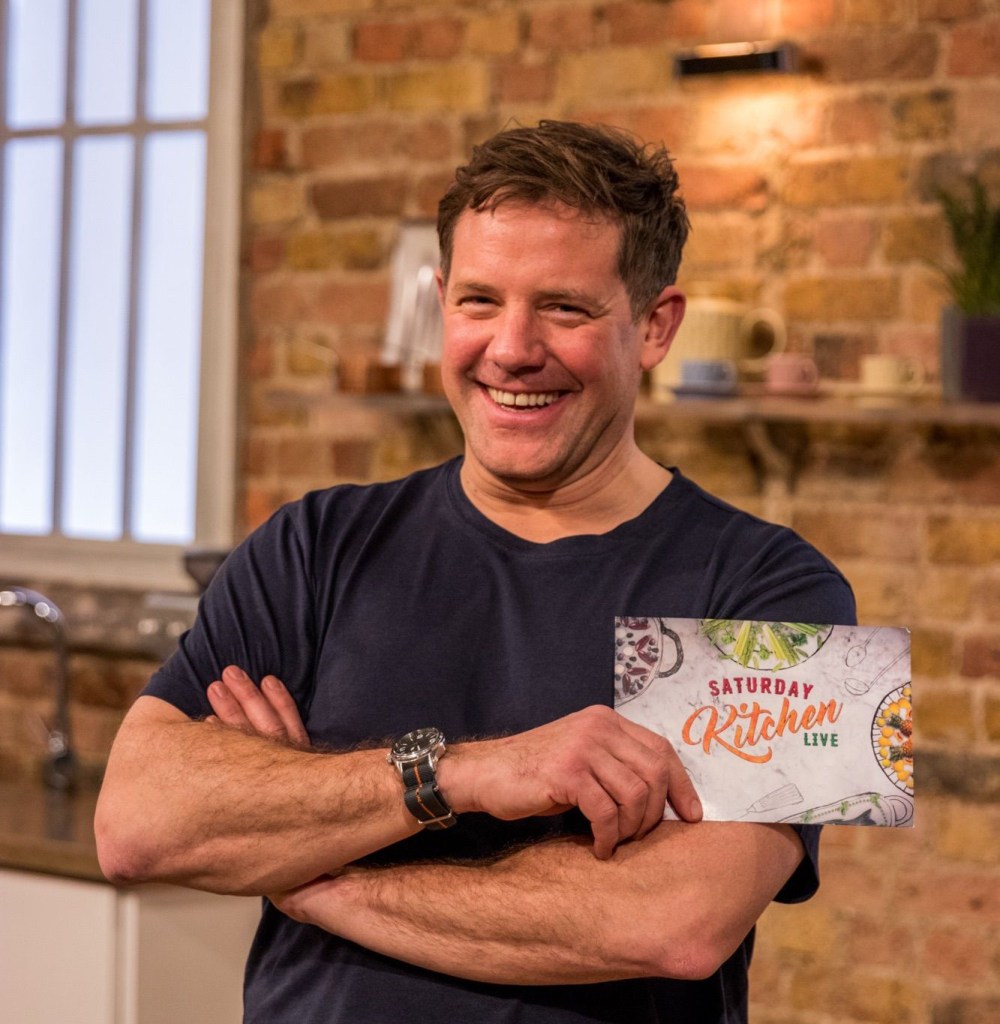
Celebrating its 20th anniversary*, part of the show’s charm is the way it has settled into a very specific rhythm and format. There’s your host, the avuncular Matt Tebbutt, presenting alongside a wine expert, two or three chefs, and a celebrity guest or two plugging their latest audio-visual product. There will be some recipes cooked live(ish) in studio, clips from the BBC Food Archives and a tiny bit of drama in the vote for Food Heaven (something the guest wants to eat) and food hell (something they really don’t—although I guess no-one is threatened with anything they’re actually allergic to. A call to 999 would make for a thrilling end to the show but it’s not exactly comfortable telly). It’s a show built for enjoying with a bowl of cereal or some toast, gradually contemplating the rest of the day and on occasion, finding inspiration enough in a cooking skit to go out and snag the ingredients for your own take on something yummy from Georgina Hayden or Theo Randall. It’s calming, centering, relaxing.
When I were a lad, back in the 1970s, Saturday morning telly was very different. It was all about the kids then. Cartoons and serials and maybe a film from the Children’s Film Foundation starring Keith Chegwin. A clear successor to the cinema screenings of the 50s and 60s, when the kids were hustled out of the house and down to the local ABC so Mum and Dad could ahem ‘tidy up a bit.’ I shudder to think how the staff coped, still tired after the late night Friday premieres, to be faced with an auditorium full of sugared up feral pre-teens demanding entertainment.
I was at the tail end of that generation. Even then I could tell the formula was getting a bit tired. Flash Gordon and the Double Deckers could only give so much of a thrill. The times were something something Bob Dylan. A revolution was a-coming, one which would ruin mummy-daddy cuddle time.
As permitted TV broadcast hours in the UK expanded, there was a sudden urgent need to fill that time. Initial offerings were piecemeal, a duplication of the sort of things kids at Saturday morning pictures shows would have recognised—cartoons, serials, short films and the like. Then, in 1974, Peter Tomlinson, a continuity announcer for ATV, decided to tie that mess into a more cohesive show, which would run all morning and add live studio hijinks from a dedicated gang of presenters. That show was Tiswas, and it would transform Saturday morning telly.
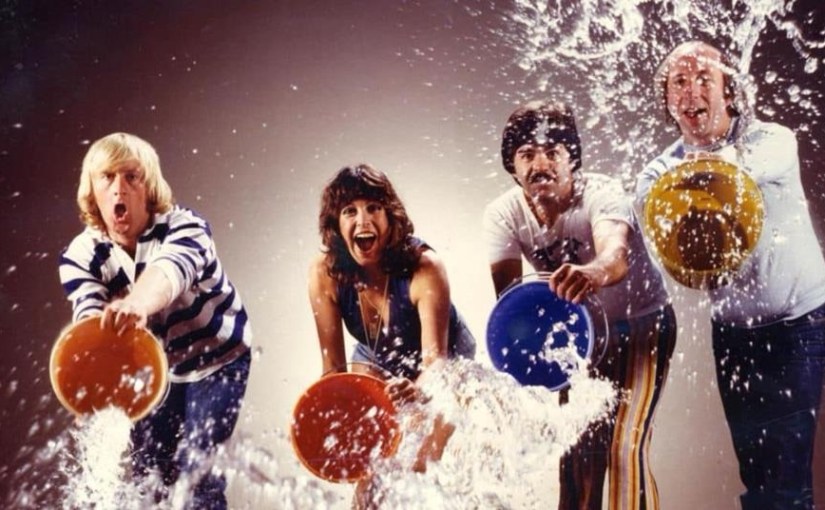
Initially only available in the Midlands, Tiswas’ onscreen anarchy was unprecedented. Proceedings were constantly in danger of collapsing into chaos. The studio audience, mostly local kids, were regularly drenched in hose blasts of gunge, or subjected to upturned buckets of water or shaving-cream pies delivered by the black-clad Phantom Flan Flinger. Guests who swung between the sublime and the WTF, (Lemmy and Mötörhead were frequent visitors, as were most of the era’s most hopeful and blissfully unaware pop starlets) were not immune from the proto-waterboarding. Tiswas proudly revelled in it’s reputation as a threeway car-crash of absurdist theatre, Monty Python tribute and a Brechtian fever dream. It was not traditional kid’s TV in any sense of the word. It was however, as host Chris Tarrent would regularly and loudly proclaim, what they want.
The BBC’s response to this wild bacchanal launched in 1976, and was a much more sedate prospect. Multi-Coloured Swap Shop took the live format with clips and added an innovation—a cross between eBay and a car-boot sale. Kids could offer their unwanted toys and games onscreen in the hope of receiving an often hilariously unrealistic upgrade. A half-built Airfix Spitfire in exchange for a box-fresh Commodore 64. That sort of thing.
It was all a bit staid, a bit polite. Keith Chegwin was involved. But it was live, so there was always that risk of controversy, the danger of some little toe-rag calling up your musical guest during phone-in question time and calling them a cunt.
With little else on offer, the two shows became a key indicator of playground battlelines. It was unfair and unrepresentative, but according to the rules of the jungle which held brutal sway at break time, your preferred Saturday show spoke volumes about who you were, your attitude to authority and how likely you were to enjoy getting a custard pie in the kisser.
This was how Saturday morning telly would look for decades, under different names, changes in cast and eventually producers. TVS in Maidstone took on the ITV side of affairs with the slightly more theatrical No. 73, while the Beeb killed off the swaps to regenerate their slot as Going Live. Any number of household names would rise to the surface of this bubbling stew of ideas, among them Sandi Toksvig and Philip Schofield. However, the general balance of affairs, the break-time divisions, remained in place. The ITV shows were a little less worthy, a little more anarchic.
You know, more fun.
Let me return things to the top of the article. I was talking about cookery shows, remember? In some ways, nothing has changed. Saturday morning remains the arena in which two rivals, each alike in structure, fight for ratings and influence. Only now, I would argue, the balance has shifted.
For the BBC, we have the aforementioned Saturday Kitchen, a show which genuinely feels like all involved in front of the camera have stumbled into the studio, not going to bed after a big night out and deciding to push on through. I mis-sold it as comfort TV at the top there—I often wonder how there aren’t more scalding, burn or knife-related mishaps on camera***. It’s frequently hilarious, gently nudging at the boundaries at what’s permitted on live pre-watershed telly.
On ITV, former SK host James Martin offers up his take on Saturday Morning. Filmed in a studio set up in his Hampshire home, the bones of the show are consistent with the accepted format. Recipes, chefs, guests, clips—although the latter all seem to have been gleaned from his numerous travelogues for the commercial network. Not having access to decades of food programming kinda puts a crimp on available content. It’s easy, gentle watching. But you never feel like someone’s going to fire mayonnaise at high velocity out of an improperly-secured blender or say ‘quim’ without realising what it means (shout-out to potato queen Poppy O’Toole there) or fall off a chair.
You see where I’m going with this, I hope. The BBC finally has the Tiswas it always wanted, ruling Saturday morning like some boozed-up pastry-slinging nutcase. ITV seem behind the curve or, simply content with their lot, catering to an audience who prefer their weekend fare on the bland side. But I’m not complaining. In a media landscape where food programming is devolving into thirty-second captioned TikTok clips, I’m delighted to see the two largest UK broadcasters choosing to spend 90 minutes of their mornings to take the subject seriously.
Channel Four, meanwhile, have a thing called Sunday Brunch. I caught two minutes of it once. A bench lined with gloomy d-listers watched as some bald bloke I didn’t recognise listlessly made a risotto. Come on guys, you can do better than that. At least get the guests drunk.
For those of you unaware of the utter lunacy with which I grew up, here’s a taste of Tiswas from 1980 featuring Tarrant, the Phantom Flan Flinger, Dennis Waterman and a thoroughly up-for-it Legs & Co. Prime entertainment. This is what they want!
*that is, in it’s current format as produced by Cactus TV. Saturday Kitchen has been running since 2002, initially hosted by Ainsley Harriott, then food goblin Antony Worrell Thompson**, who would defect to ITV in 2006 in an attempt to kickstart a new show, Saturday Cooks! Remember that? Me neither.
**The Worrell-Thompson SK would be the final nail in the coffin of kid’s programming on a Saturday morning, as it moved to BBC1 and into the existing 90 minute slot in 2004. The launch of a dedicated children’s programming channel, CBBC was another factor, of course. So, did Saturday Kitchen kill a tradition which had been in place since the 70s? Evidence is as evidence does, but times change alongside tastes, and the show regularly pulls in over a million viewers every Saturday morning. CBBC is lucky to generate a third of that. In a fractured televisual landscape, those aren’t figures to be ignored.
***I suspect a lot of this tightrope act remains trouble-free thanks to a highly skilled and experienced backline crew who’ve successfully contained 20 years of shenanigans. MVP of the show remains Head of Home Ex Michaela Bowers, who frankly deserves a place in the Honours List for her services to Matt Tebbutt Not Setting Himself On Fire Every Week.


It’s worth giving Sunday Brunch another try. It’s more anarchic than Saturday Kitchen IMO. And the sound mixing is better (something we often complain about re SK, because they don’t seem to manage the sound levels when everyone is talking or laughing together and it fuzzes or clips).
Also, why is Matt’s hair so badly dyed? All that money and he’s got orange hair. Why?
Satur-day, Satur-DAY! Satur-day, is TISWAS day… I miss TISWAS. Can we get Chris Tarrant to come and host one for charity? I’d volunteer for the cage!
Was it a happy accident that Lenny Henry was on SK this morning and conversation turned naturally to Tiswas? Yes, but I was pleased by the synchronicity!
Ha Ha: “tidying up”
My spouse’s parents would tell the kids, who at least once walked in on them, that they were “wrestling.”