It seems strange that the side of the country more likely to harbour our most rugged individualists, free-thinkers and ok let’s not mince words, wierdos, should be the one closest to mainland Europe. You’d think that the west, with an unencumbered view of the great abyss of the Atlantic would have that hint of the frontier spirit.
But on consideration, it makes sense. The east coast is a bulwark, a first line of defence against invasion. It has been for thousands of years, from the Vikings to the Dutch to the French to the Nazis. It hasn’t been entirely successful in that regard. Some might say it’s all a bit leaky sieve. But that means the east is also where our nation would have initially developed a taste for the thick stew of disparate cultural influences which would inform our language, our place names and to an extent, our character. Those influences are less dilute the closer to the coast you get — sea salt is an excellent flavour enhancer. It’s here, I think, in the fifty-mile-wide ribbon which runs from Kent up through Essex and around the ear of East Anglia that you find the more esoterically-minded of us. The fighters. The defenders. Ultimately, those who would defeat the colonisers by using their own weapons against them.
A confession, then, in case you haven’t figured it out. This is my land too.
Born in East London. A childhood spent in Cambridgeshire, with regular holidays spent in places like Caister-On-Sea (the location of a particularly miserable caravan holiday in 1977 in the week Elvis died, the news of which dampened the mood still further), Southend, Hunstanton. A move into Essex when I was twelve, bouncing to and fro around various parts of the county before, aged 19, I finally broke ties, moved down to Dorset for college, met C, and life found a way. There was a point before we finally broke containment and settled in the west where serious contemplation was given to settling in Essex for good. Pretty much all of my family live there still, in some examples walkable to each other. In this regard, I’m the outlier, the family oddity.
But the call of the east lures me back, and somehow it brings on a sense of comfort, of belonging. Holidays in the fortress and cradle of England’s culture feel like homecomings to me.
Let’s geo-locate. I’m writing to you from North Norfolk, Alan Partridge country if you believe the sneering imprecations on the county’s character written by a Mancunian. Here the skies are especially big, the beaches especially long. The open nature of the landscape is useful — you can see enemies coming from miles away. There are a fistful of larger towns and cities, but Norfolk remains extensively rural, quietly and determinedly insular. Small communities, loyal only to themselves. The law of the ribbon abides — to thine own self be true.
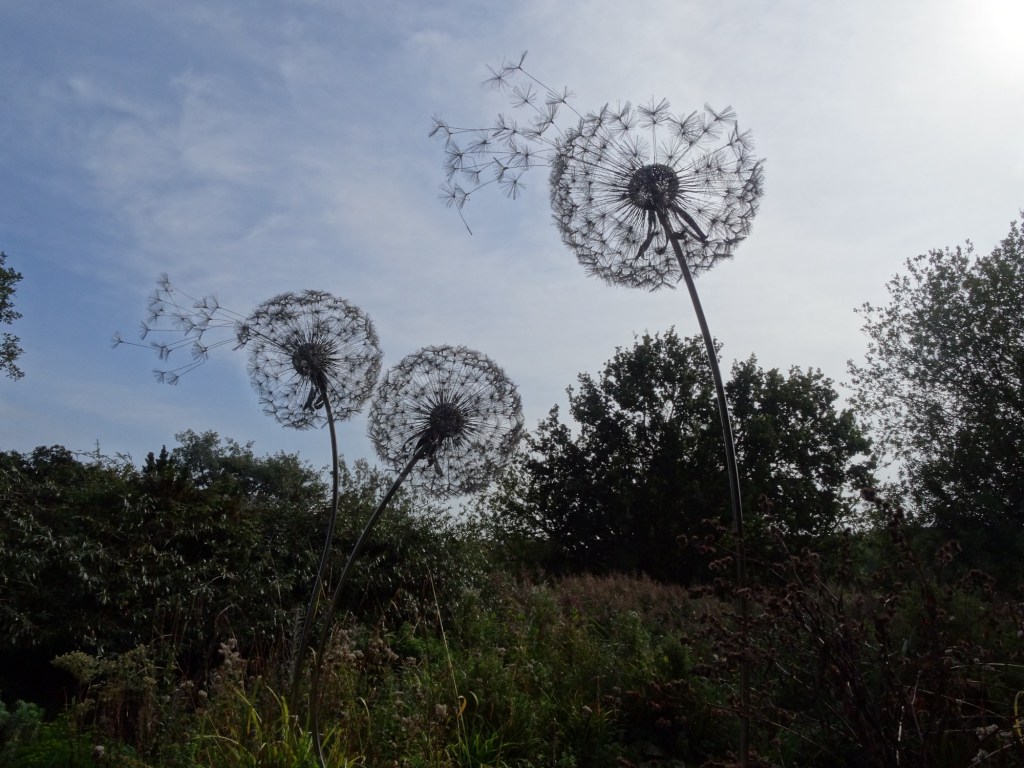
We’re in a converted stable block with clean, white walls, high airy ceilings and old farming implements on the wall which you could easily use to skewer invaders you don’t like the look of. As ever, C has chosen wisely. This is a good base from which to let Harvette stretch out and carry us around in her usual easy, unruffled manner. We’ll let the Sport Billies in their Audis roar past as we carefully navigate the winding, hedge-narrow roads. There’s no rush. We’re on an extended road trip, from the coastline to the city.
Let’s start with the latter. Welcome to Norwich.
Norwich is the county town of Norfolk, a city formed as the home of the Icini tribe in the early years. It rapidly became a place of power and status. Until the dawn of the industrial revolution it was the second most prosperous and largest town in Britain after That London. A lot of the original features are still preserved, included half-timbered gathering places like Dragon Hall, medieval streets and buildings and of course, the high-church glamour of Norwich Cathedral. It’s regularly voted one of the best places to live in the UK. On our visit, you could see why.
It’s a very pretty town — lively, artsy and comfortable in its own skin. A lot of work has been put into keeping the historical aspects of the architecture alive. It’s not unusual to wander down a cobbled street, to come face-to-face with a lovely old deconsecrated church which has been converted into a labyrinthine antiques centre. There are a lot of those here so if you like a bit of bric-a-brac you’re in luck. The best bet if you want the really surreal experience is to cross Fye Bridge and take the short walk up Magdalen Street to Loose’s Emporium, which is a mad, never-ending cornucopia of wonder.
If you’re a bibliophile, though, this place is a straight shot to the mainline of bliss. Norwich was the first International City Of Literature, built the first public library and the aforementioned Dragon’s Hall is home to the National Centre For Writing. The city elders have leant hard into this aspect, calling Norwich The City Of Stories in tourist literature.
Here’s a story for you. The Book Hive on London Street has a picture of comics wizard Alan Moore on its back wall, put up as a hex against the light-fingered low-lives who kept nicking the graphic novels. That would be warning enough, but the man himself responded, confirming he had set up infernal security and already cast several thieves into the abyss for their crimes. So, there is a bookshop in Norwich that is under the protection of an actual practicing wizard.
We bought three books in there, just to be on the safe side. Although it’s also really good and I have not been enthralled into writing that.
We need to talk about books, though. Specifically, the habit C and I have got into of topping up our TBR trolley when on holiday until the wheels groan under the strain. It’s made worse by the fact that all National Trust properties now have some manner of second-hand book-buying opportunity, from a few shelves in the cafe to fully-fledged shops in their own right. Blickling Hall, a half-hours drive from our digs, has the biggest in the Trust.
It needs a sign over the door saying ‘abandon hope all ye who enter here.’ I managed to—just— keep myself to the unwritten rule of ‘only buy what you can carry in one hand.’
Readership, I have big hands.
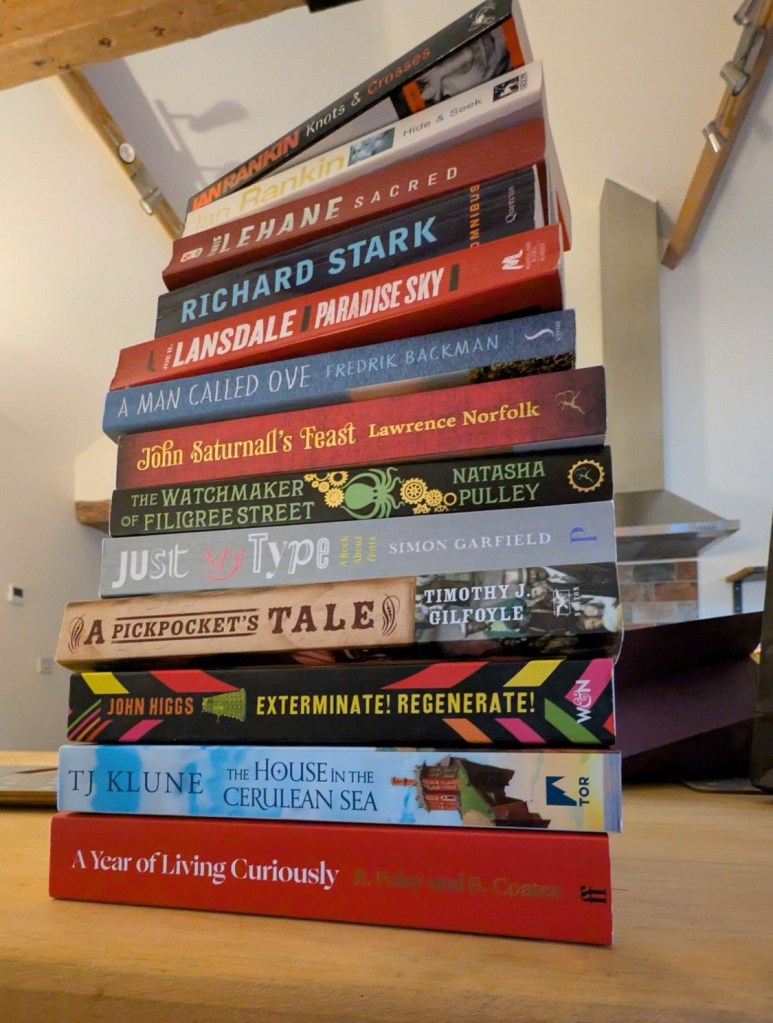
The whole Blickling estate is lovely, by the way, and on a sunny day the grounds and house are a delight. Just stay away from the bookshop if you value your bank balance.
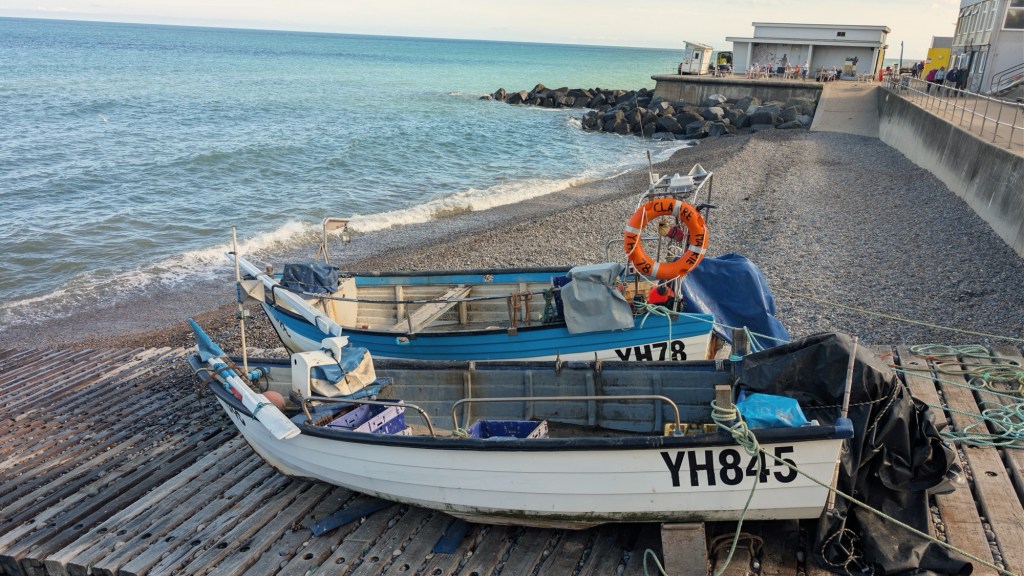
Let’s move on. From the city to the coastline in a reverse 10th Avenue Freezeout. The rural charms of Norfolk can’t be ignored, and yes of course the Broads are stunning, but I believe if you want the best of the county, you have to be prepared to get your toes sandy. The beaches here are, and I speak with the experience of someone who loves the seaside, among the best in the country. This is where you get the full big sky experience, soft glowing expanses of sand past the horizon and most importantly not many people. At least, never when I’ve been there. Maybe I exude beach-clearing pheremones.
Draw a line from Hunstanton to Cromer (a line which, usefully, is followed by the A149 coast road) and you will never be far from a glorious vista or magnificent seascape. The towns along the route offer a deliciously varied experience too. Hunstanton is old-school seaside, prom and pier. Holt is classy and arty. Wells-Next-The-Sea and Blakeney give a tousled hipstery vibe. Cromer is all of the above with killer crab sandwiches to boot. You can do the trip in a day, but we recommend you take your time and cruise it out, baby. Breathe that sea air, however turbulent. Even if it’s rainy and stormy, there will be sights to see, nice shops to visit and lovely food to eat.
Actually, here’s a suggestion, based on a trip taken with our closest buds Chris and Carol this week. Hie thee to Drove Orchards near Hunstanton, a fun little conglomo of different shops, cafes and office spaces. Grab a coffee and then backtrack a little way, following signs for the beach. You’ll eventually hook up with The Peddar’s Way, a coastal path taking you over a swathe of wetlands and rippling dunes. It’s probably a twenty minute walk before you finally crest the bank and reach Holme-Next-The-Sea beach.
I was going to include a picture, but frankly images don’t do the place justice. Sand the colour of honey, sea all the blues and greens in your head and a few you can’t imagine. I defy you not to spend a long minute there and not feel your cares detach off your shoulders to be blown away by the sea breeze.
Head back to Drove Meadows when you’re ready for fish and chips (I guess if you’re more organised than us and bring an insulated bag you could grab some and eat on the beach) or pizza, indulge in a little retail therapy, get some food and drink for the week from the brilliant farm shop on site. Drive back to your digs feeling like the world is just that little bit brighter.
There’s a phrase which gets used as a kind of dig at the good folk of East Anglia, one which they have charmingly repurposed as a badge of honour. Normal For Norfolk is not the insult you think it is when you get amongst the locals. We found them friendly, warm and welcoming. But then that’s the case everywhere we go in our adventures around Britain. We don’t tend to come across arseholes. They exist, certainly. We just seem to repel them.
In Norfolk, though, there’s an air of winning eccentricity. The law of the ribbon abides, as the descendants of the Icini face the North Sea knowing whatever comes their way can either be repelled or more likely, assimilated. They do diff’runt here.
And so do I. C and I have often talked about where we’d go once we could retire. The east coast has always been favourite for us. Based on our experiences this week, we may have found our sweet spot.
Go east, old man? Who knows, it might just happen.
See you next Saturday.