Frightfest: The Hit List (part 1)

As any horror fan knows, this Bank Holiday Weekend just past belonged to Frightfest, the biggest, nastiest, loudest and scariest horror film festival in the country, and one of the greatest on the planet. I’d love to tell you all about the shenanigans that went on this year, but due to work commitments I could only pop along for two films. Fortunately, I has contacts. So I asked my buddies in the Corpus Crew to help out.

Today, lists of favourites from Simon Aitken and Brenden Lonergan. Leading Man Clive gets tomorrow all to himself as he’s written a bleedin’ essay, bless his black and twisted little heart. Aaaaanyway.

Simon Aitken, director of Blood And Roses and star of his own X&HT Spotlight, gives us his top five:

5. Troll Hunter
4. Tucker & Dale Vs Evil
3. Rabies
2. Kill List
1. The Innkeepers

Ti West’s haunted house chiller The Innkeepers was genuinely scary. There was a nice build up at the beginning of getting to know the characters and the inn, that when the ghostly goings up started to happen you really cared. Also sent a nice chill up your spine. I highly recommend it.

Brendan Lonergan, special effects guru to the cogniscenti (seriously, look out for his work in John Carter at Christmas, and on a certain highly anticipated prequel/reboot that I’m not sure I can mention), agrees with Simon on his pick of the fest:

The Innkeeper is my number 1 Film. It’s the reason why I love Horror; a great antidote for all of this people skinning people alive and sawing peoples heads off shit (sorry, I’m just really sick of it).

Followed by Tucker and Dale vs Evil.

Third is Final Destination 5.

Saying I enjoyed Kill List would be wrong, a bit like saying you enjoyed Schindlers List. The wrong adjective, but a damned fine movie never the less.

Don’t Be Afraid Of The Dark, I liked also. It was nice to see more monster movies this year.

Oh, and I forgot The Woman. A very good movie, but once again, I watch movies for enjoyment, not to be constantly reminded of how shit the world is, you can get that on the news (but that’s just me).

Fright Night was kinda fun, but whenever I think of the original, the remake becomes one big crappy wasted opportunity.

Panic Button was also kind of fun. So I’ve given you my top five, and a couple of extra thrown in for good measure.

There you have it. If you have any thoughts or experiences you’d care to share on this year’s FrightFest, go ahead and comment. Thanks again to Simon and Brendan. Drop by tomorrow for more Frightfesty fun, as Leading Man Clive takes over X&HT!

The Real World: Film Vs. Animation

As CGI becomes more prevalent in the film realm, we’re seeing a shift, or at least a blurring, of the boundaries between live action and animation. Hateful as they are, filmed retreads of cartoon classics like Yogi Bear, Alvin and the Chipmunks and The Smurfs are paving the way for the science fiction idea of the synthespian. Motion capture is a sort of halfway house towards this goal, as blokes in leotards covered in ping pong balls create the base movement for the characters that will eventually end up on screen. Andy Serkis has made something of a career of this, which is a shame. It’s always a pity to see one of our most mobile and expressive actors peeking out from behind a monkey mask.

Yes, I know Disney have been doing this sort of stuff ever since Bedknobs and Broomsticks. If you were to really track the idea back, interaction between live action and animated characters goes back to Winsor McKay’s Gertie the Dinosaur in the early 1900s. Yes, ok, Who Framed Roger Rabbit. For gods sake, let’s not mention Cool World. The conceit now is that the characters are supposed to look photorealistic, as if they belong in the mise en scene. The fact that they don’t, and that we are ushered even more quickly into the uncanny valley when they appear, shows that this technique still has a way to go.

The fluid state of the boundary becomes even more pliant when live action directors move into animation. Tim Burton has always moved easily between the two disciplines, but then he started as an animator in the first place. Now other directors are trying out the medium, and the results are, to my mind, the purest distillation of their obsessions and tropes.

For example, Gore Verbinsky’s CV shows a restless and fertile imagination, trying all kinds of genre work before making the film that I think is his most complete and successful work: this year’s animation epic Rango. Here, his dark imagination is allowed full rein, and he gives us a film that is equal parts hilarious, horrific and lysergically surreal. It feels as if it sprang fully-formed from his brow and simply materialised on the screen – which would of course be an insult to the hundreds of talented people that worked on the film. But somehow it feels complete, free from studio interference. A pure, cool shot of water in a desert of mediocrity.

Similarly, Wes Anderson’s Fantastic Mr Fox has all his retro hipsterisms in full effect, creating a world that owes more than a little to Nick Park’s chunky steampunky look. His decision to animate in stop-motion is another cue to the analogue aesthetic. It doesn’t matter that the fur of Fox and his friends ripples under the skilled fingers of the animators. That’s kind of the point. The film looks hand-crafted, because that’s exactly how it was brought onto the screen. A world built in miniature, down to cotton-wool smoke and cellophane water. For all that, though, it’s the Andersonisms that shine through. It’s a coolly urbane film, despite being set in a rural world of farms, fields and tunnels.

Of course, the idea works both ways. Andrew Stanton, director of the upcoming John Carter, made his name at Pixar, notably on Wall-E.  He points out one of the advantages of working with actors instead of animated characters. Making a note on performance and then seeing it in action is a matter of moments, rather than weeks. His story-oriented approach, where most details are solidly locked down before a frame is shot, is a positive advantage in an effects-heavy movie like John Carter, and shows that the skills and philosophies learned in one film-making realm can have surprising effects in another.

Yesterday’s Today: X&HT Watched Super 8

NewImage

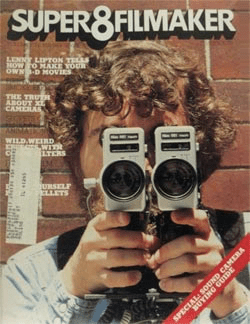
The nostalgia at the heart of JJ Abram’s Super 8 is both the reason for it’s existence and completely pointless. The film could very easily have been tweaked for the modern day. My experiences with Straight 8 show that there’s still a vibrant 8mm community out there that love and appreciate the format’s idiosyncrasies. The film-making kids that make up the prime cast could have very easily shot on new stocks with a camera they picked up cheaply on eBay. (even the yummy Eumig that does such sterling service as the hero camera in the film.)

But then, of course, we would not have a film that panders so deeply to our fanboy love for the 80s films that built the foundation for the modern summer blockbuster. For Abrams, Spielberg and films like ET and The Goonies are not just the starting point. They’re the engine of the film. They’re pretty much the whole point.

Continue reading Yesterday’s Today: X&HT Watched Super 8

X&HT Spotlight: Simon Aitken

This is the first in an occasional series where I big up, flatter and otherwise encourage you to bow down and worship in front of some of the many talented people that I am pleased and privileged to call my friends. And I mean that most sincerely.

Most of you know Simon Aitken as the director and prime mover behind quirky vampire romance Blood + Roses. (If you haven’t seen it yet: why not? Here’s the Amazon link. Go ahead, treat yourself.)

But he’s also a skilful camera operator and DOP, and I think he’s doing great work as part of the DSLR movement that’s changing the face and look of modern lo-to-no budget film-making.

A little background if I’ve just jargoned you into submission. The current range of high-end digital stills cameras can take full HD video as well, and the sensors they use to capture images compare favourably with video cameras costing two or three times more. They perform brilliantly in natural light, and the range of lenses you can get give a beautiful look with a narrow depth of field. For a minimal investment (in film terms) you can put together a rig that will provide you with gorgeous, painterly images.

Simon’s work with the Canon 7D is showing real flair and imagination. His latest short, Stakeout, is a prime showcase for his abilities. In conjunction with long-time acting and writing partner Benjamin Green, we have a terse little tale of double-cross and betrayal. Stakeout was shot using only available light – the kind of challenge that most DOPs would walk away from. Simon not only proves that it’s possible, but that the results can be gorgeous.

The Fighter, his first tryout with the 7D, was even more of a challenge. A showreel piece for actress Elizabeth Knight, this too was shot without any extra lights and a single zoom lens. The results are striking. I love the way the focus drops off in the background. Killer bokeh, which you’d struggle to get with a much more expensive rig.

Finally, it would be remiss of me if I didn’t mention the first project Simon and I worked on together. Monologue Triptych is a linked series of films based around the idea of confession and reconciliation. Ben Green stars again, and the witty, moving scripts are written by Ben Woodiwiss, with whom Simon would reunite for Blood And Roses.

I’ve chosen to highlight the last film in the sequence, Tercero, as it’s the one of which I’m most proud as a colourist. The films can be viewed in any order, but taken together they are a devastating portrait of a man who has cheerfully ruined his life, and now struggles to come to terms with all that he has lost.

A story to finish with. The screening of Monologue Triptych was a packed room. But it was marred by a projector fault for the first thirty seconds. Hence, just after Simon had specifically singled me out for my hard work on the film, the opening titles came up with an acidic green cast. I nearly sank through the floor, convinced that I’d somehow messed up. Apparently you could hear me whimpering for the rest of the show. (Simon adds: as far away as the projection room!)

Not my proudest moment.

You can see all of the Monologue Triptych films at Simon’s Vimeo page, alongside some of his other work. Please do watch and enjoy the work of a very talented gent.

Getting A Rise: Why X&HT Didn’t See Rise Of The Planet Of The Apes

NewImage

I was going to see it. Really, I was. I had the day all mapped out. Chores in the morning, then an amble into town to catch an early afternoon screening. I was quite looking forward to it.

But as the day wore on, my enthusiasm began to dwindle. By the time I got the doors of the Reading Vue, all I could manage was the feeling that there really were better things that I could do with my time. So I went into the Hobgoblin on Broad Street, and over a pint of Mr. Chubb’s Lunchtime Bitter, mused on the reasons why I’d suddenly lost all interest.

First of all, I considered, taking a sip while settling into a cosy snug at the back of the pub, Rise is a blatant attempt at starting a new franchise. Fox have of course been left without a cash cow as the Harry Potter films have finally finished, and have to be hunting around for a new series to start taking up the shortfall. Now, in my exceedingly humble opinion, franchises have turned the summer blockbuster market into an artistic void. Sequelitis has infected Hollywood like a bad case of knobrot, and the movies coming out of that policy are about as palatable. With 32 movies in the next year either based on existing properties, or reboots and remakes, the marketplace is choking on old fumes. Why should I encourage that behaviour? While I accept that my approach to these films is akin to The Pirate Code, I try to steer clear of them. There are many other better films out there that deserve my patronage.

One of them, I mused while enjoying the bright, hoppy fizz of the Lunchtime Bitter on my tongue, is the original Planet Of The Apes. A masterpiece of clever social commentary and solid storytelling, with one of the all-time killer twists. It spawned a raft of sequels, of course. All of which told the story of the fall and rise of apedom in a twisty, timeloopy fashion that made sense and, more importantly, ended in a satisfying way. Hence my concern about a new Ape franchise. The original films pretty much invented the concept in the form that modern audiences would understand, so in some ways it’s natural for Fox to glom onto the property as a moneyspinner. But the new story adds nothing to the canon. Which means, to my mind that there’s a good chance that any sequels will forge a different path. One that leads straight back to the Tim Burton version of events, and the monkey statue in Washington. Now, I could be wrong, but I’d rather not take the risk of encouraging that kind of behaviour.

Speaking of which, I reflected as I tilted the last mouthful of Lunchtime to my lips, it’s about time we stopped enabling Andy Serkis. Now, I mean this in a good way. He is a fine, thoughtful and innovative actor. But he’s been stereotyped. It used to be that when Hollywood needed a clever monkey, they went to effects wizard Rick Baker. Now, it’s all Andy Serkis crawling around a capture volume in a leotard covered in ping-pong balls. To all the smartypants yelling about Lord Of The Rings, I will simply respond with this algorithm: Gollum = shaved orang-utan.

Andy deserves better than this, Readership. It’s disrespectful of his art and talent. A boycott of his mo-cap monkeying is, I feel a harsh but fair measure. I’d rather see the man than a digitised performance any day.

I stepped out of the Hobgob into sunshine, the beer warm in my belly. A walk home along the Kennet beckoned, with perhaps a little visit to a book shop on the way. That somehow seemed like a much more pleasurable way to spend the day.

I love movies as much as anyone. But sometimes a pint of good English beer and a book are all you need to make your day.

The World Behind The Walls: X&HT Watched Arrietty

The Borrowers is a story that has been better served than most when it comes to big and small screen adaptations. Mary Norton’s classic tale of the endangered little people that live behind our walls is suffused with a sweet melancholy and sense of wonder in tiny everyday miracles. Hollywood has largely had the sense to hang onto that, and the 1992 BBC version took time to explore the nuances. The 1997 film version upped the slapstick and adventure quotient, but was still able to fit in quiet moments and a sense of warm sadness, of time passing and a culture slipping away un-noticed.

Continue reading The World Behind The Walls: X&HT Watched Arrietty

A New Phase

This landed in my Gmail today, with no further commentary.

What are we to make of this, Readership? Can it be that the years-in-the-making docoBANKSY has finally reached the point of completion?

What we seem to have here is a scan of a new sticker design, different to the Di-faced tenners that have been popping up worldwide for the past couple of years. This has to mark a new phase in the project.

Perhaps at last that damned elusive docoB has decided to share his vision with the world. As with everything that comes out of his SEKRIT lair, we will just have to wait and see. But I recommend you keep an eye open for the new stickers. I have a feeling we’ll be seeing a lot of them very soon….

The Warrior’s Code: X&HT Watched Captain America: The First Avenger

NewImage
Give me a tweaked uniform over spandex any day...

Captain America: The First Avenger is not a superhero film. There, I said it. Oh sure, it’s got a superhero in it, and a supervillain, and a lot of the trappings and furniture of your average cape film. But what we have here is more akin to the legend of America’s most decorated soldier, Audie Murphy.

Like Steve Rogers, Murphy struggled to get enlisted, a puny, underaged dweeb who just wanted to serve. But heart, soul and tenacity succeed where all else failed, and Murphy would eventually go on to fight throughout Europe, winning the Medal of Honour, Legion of merit and the French Legion of Honour along the way. He went on to be a film star, musician and advocate of veteran’s rights – a true American hero whose image was used extensively in the post-war years as a positive national self-image.

NewImage
Captain America? This guy was a MAJOR.


Steve Rogers is a lot like Murphy. Fearless, determined to serve, always conscious of the need to do the right thing in the face of overwhelming evil. He gets the superserum and (eventually) the suit, but he gets them because of who he is on the inside. It’s a fairly typical wish-fulfillment strategy, based on the old saw that you can get what you want as long as you want it badly enough, but it works in this context. In a way, he has Murphy’s career backwards. Captain America is a propaganda asset long before he gets a chance to fight.

To reiterate, I look on Captan America as a pulpy war movie with SF trimmings rather than your bog-standard superhero joint. Director Joe Johnston understands this kind of material well. He helmed “The Rocketeer”, after all, still one of my favourite movies. He brings the same design flair and sense of fun to Captain America. It’s a good looking film, with a good-looking cast that understands the light touch required to make period SF work. Chris Evans fills the uniform out nicely, Hayley Atwell shines as the kind of glamourous Girl Friday that Cap would come to depend on in the 60’s, Tommy Lee Jones is a delight as the gruff-but-fair colonel in charge of the missions. Hugo Weaving was really the only choice as the Red Skull. Even under a thickness of makeup that would make Julia Roberts blanch, his villain skills shine through.

It’s a shame then, that even though Johnston has said in interviews that Captain America would be the stand-alone piece in the jigsaw of Marvel films that will piece together to form next year’s Avengers movie, the ending hauls it into line. Up to that point, the film had stood on it’s own two feet. You didn’t need to know who Howard Stark would sire, or where the cube came from that gave the Skull’s infernal devices their power. They were Easter eggs for the fans, but didn’t spoil the flow. The last five minutes, in which Steve is brought brutally up to date, are clangingly out of place with the tone and feel of the rest of the film. It was the kind of scene that would have been better suited to a post-credit vignette. It’s a real shame, because up to then I had really enjoyed the ride.

There’s a lot to enjoy in Captain America: The First Avenger. It’s pretty, funny and sharp. Good, pulpy fun with enough to keep both the fans and the non-comic reader happy. The ending aside, it’s a great summer movie.

The Wisdom Of A Dog: X&HT Watched Beginners

NewImage

A couple of weeks ago, The Corpus Crew decided to get our script looked at by a professional script consultancy, just to poke under the bonnet, kick the tyres and let us know if there was anything that needed tweaking.

It was an un-nerving and humbling experience, to put it mildly. Everything had problems. The film was structurally weak, had no real flow, the dialogue was mannered and out of place. We left the meeting feeling as if we’d been repeatedly kicked in the nuts. We got what we wished for, I suppose.

I wonder, then, what the consultancy guys would have made of Beginners, a film that seems to have no real structure, uneven flow and deeply unrealistic dialogue. I guess I’d be no good at the whole script breakdown lark, because cards on the table right here and now: it’s instantly one of my top five films of the year.

Beginners is a film about transformation. It’s about how radical change can bring on radical change in all kinds of other directions. It’s the story of Oliver, a David Shrigley-style artist, still numb with grief after the death of his father, Hal some months earlier. He meets a French actress, Anna, a Manic Pixie Girl with troubles of her own. As she enters his life, we find out that Hal had gone through changes himself, coming out at the age of seventy-five.

The film pings backwards and forwards in time, letting us see the changes in Hal and Oliver evolve, and how they come to life in the midst of tragedy and newly discovered love. Batting around the timeline makes perfect sense, and this lack of linearity never feels forced or cripples the storyline.

The acting is uniformly excellent. Ewen McGregor still can’t do an American accent, but that really doesn’t matter here. He’s open and vulnerable without being a damp rag. Christopher Plummer is an old-school delight, raging against the dying of the light. Melanie Laurent is a revelation as Anna, vibrant and unpredictable but never kooky. She was a fearless standout in Inglourious Basterds, and she is equally brave and luminous here.

Beginners is also the first film since Up to get away with a talking dog, and not have it come across as cutesy or irritating. In fact Arthur is a pivotal part of the cast, and his (oh, alright, subtitled) dialogue is on the button. But Cosmo, who plays the lonesome pup, gives an informed and naturalistic performance. Yes, really. Not bad for a Jack Russel from a rescue home.

Beginners is an autobiographical film, based strongly on writer/director Mike Mill’s relationship with his father. It’s filled with little flashes of memory and recollection. It feels like a scrapbook, or a compiled reel of old Super 8. Bopping between the 50s and the present day opens up the storytelling, allowing the performance and script room to breathe.

You could argue that the film is slow in places, perhaps a little mannered, but if you’re in the mood for an antidote to all the summer blockbusters, you honestly couldn’t do better than this lovely, vibrant, life-loving film. It certainly got me thinking about the biology of film-making, the bones and spine that have to be in place before you can give a script heart and guts. Beginners may seem scattered and haphazard on the surface, but every shot has a place and reason. It’s assured, grown-up film-making that shrugs off tired ideas about structure in favour of a pleasingly freeform approach. It hit me right in the sweet spots.

Don’t miss this one, Readership. It’s equal parts hilarious and heartbreaking, joyful and sorrowful, tart and tender.

A Lot Of Sustain: X&HT watched Sex, Food, Death … and Insects

I have a longstanding soft spot for Robyn Hitchcock. He’s one of our greatest songwriters and a godsdamned National Treasure. I have seen him live, covering Sgt. Pepper in it’s entirety, a gig notable for the moment when he knocked the jack out of his Telecaster and I handed it back to him.

You could, I suppose, if you’re feeling lazy, tie him in with the great wellspring of British eccentric artists that tracks through William Blake and Lewis Carroll, through Barrett-era Pink Floyd, the Bonzos, Ivor Cutler, Spike Milligan. Surrealism and humour backed up by a steely determination to tread one’s own path, and talent and ability up the hoozit. Long time fan and collaborator Peter Buck off of R.E.M. has said that he can’t understand why someone hasn’t taken his songs and made big hits out of them. I’d love to see one of the X-Factor clonoids do Brenda’s Iron Sledge or (probably more appositely) Sheila’s Having Her Brain Out, but I don’t think I’ll hold my breath.

The 2006 documentary Sex, Food, Death … and Insects follows Hitchcock, Buck and other musical collaborators as they work through the songs that would make it onto the Robyn Hitchcock and the Venus Three albums Olé Tarantula and Propeller Time. These songs mark a continued resurgence in Robyn’s fortunes, and are equal part rippling psychedelia and heartfelt pop-folk. It’s tough to write a song that can sound warm and tender while keeping in the weird angles and off-note touches that make Hitchcock’s stuff so much fun. These songs nail it time and again.

The documentary has a pleasingly intimate air, bringing us into Hitchcock’s rambling house, where Olé Tarantula was recorded. The process is ramshackle, ad hoc and spontaneous, leading to songs filled with happy accidents and unexpected guest turns. John Paul Jones drops in for a cuppa and a couple of chiming mandolin solos. Robyn’s niece Ruby Wright adds lovely, quavering musical saw to the proceedings. It feels like a delightful way to make an album. Defences drop. The famously grumpy Peter Buck airs his grievances about being part of one of the biggest bands in the world, and how much more he prefers the Venus Three. Certainly, his guitar work evokes R.E.M. at their jangly, shiny best.

But Hitchcock is the revelation here. Wise, centered and at peace, he seems the very opposite of the stereotypical eccentric. He observes things in a different way to most of us, certainly. But because he is so observant, he has a well-stocked cupboard of imagery to play with, and it’s the way he recontextualises these that brings up the surreality in his songwriting. When he talks about rotating elephants in the song Belltown Ramble, he’s talking about a sign he saw above a Seattle car-wash, in the district of the title. There’s reason and method to everything he does. The insight we get from these moments, along with the wonderful music are what make Sex, Food, Death … and Insects such a satisfying watch.

Tell you what, have a couple of clips.

Thanks and blessings to the inestimable Timothy P. Jones, without whom this documentary would not have hit my DVD playing machine.