Frightfest part 3: The Quiz Of The Week

My call for contributions led to a suitably … esoteric response from ace storyboard artist and illustrator Jaeson Finn. He tweeted his top five to me, one at a time. Twitter’s 140-character limit meant that he couldn’t put the titles up as well, meaning that I had to guess which films he was on about.
So, hey, why not, I’m reproducing Jeason’s top five below in the form of a quiz. Answers in the comments, please. Get them all right, and you get a properly certified and not at all cribbed from Marvel X&HTrophy (worth it’s weight in pixels).

Have fun. You get me again next week, and I’m starting off with a look at two films I’ve seen recently with very strong and very unusual female main characters. But for now, live, from the Interwebs, it’s the Quiz Of The Week! Take it away, Jaeson!

Continue reading Frightfest part 3: The Quiz Of The Week

The Beast is Loose

By all the gods, it’s been a week. Engaging catch-up mode, as I try to, you know, up-catch to events.

The second issue of Dirty Bristow landed at X&HTowers on Wednesday, and oh my, it was worth the wait. This is one gorgeous package. The Bristow boys have always been upfront about making the mag as collectible and lovely as possible. They’ve outdone themselves. The double tracing-paper/card cover looks and feels great, with a matt finish that purrs luxury at your fingertips.

Inside, the open call for submissions under a theme has led to a gloriously all-over-the-place chunk of editorial. With no adverts, there’s a lot there to read and enjoy, and the quality of illustration throughout is a notch above top. If you want an idea of the tone, then the editors Jon Bounds and Danny Smith tell it like it is in the intro:

arty and unashamedly intelligent, no pretension or division between high and low culture and not governed by the Crown.

So, the second issue contains a cookery page that begins with the slaughter of a whole pig, a report from a My Little Pony convention, reprints of the work of acclaimed music scribe Dirk Collins, an entomology of the imaginary beasts of the West Midlands and, and, and I could go on for ages. I should perhaps mention a piece on the contribution yeast has made to the hungry drinker, especially as I wrote it. Even if those clever Bristows came up with a better title for the article than I did. They’re far too talented for their own good. I’m not sure I like them.

Dirty Bristow is available online at the Dirty Bristow website, logically enough. If you’re lucky, your copy might come with a cover-mounted cassette featuring songs and a ZX Spectrum game. Yes, a cassette. Yes, a Speccy game. Glorious, isn’t it?

Buy Dirty Bristow: Beast here.

Smells good, too.


The Real World: Film Vs. Animation

As CGI becomes more prevalent in the film realm, we’re seeing a shift, or at least a blurring, of the boundaries between live action and animation. Hateful as they are, filmed retreads of cartoon classics like Yogi Bear, Alvin and the Chipmunks and The Smurfs are paving the way for the science fiction idea of the synthespian. Motion capture is a sort of halfway house towards this goal, as blokes in leotards covered in ping pong balls create the base movement for the characters that will eventually end up on screen. Andy Serkis has made something of a career of this, which is a shame. It’s always a pity to see one of our most mobile and expressive actors peeking out from behind a monkey mask.

Yes, I know Disney have been doing this sort of stuff ever since Bedknobs and Broomsticks. If you were to really track the idea back, interaction between live action and animated characters goes back to Winsor McKay’s Gertie the Dinosaur in the early 1900s. Yes, ok, Who Framed Roger Rabbit. For gods sake, let’s not mention Cool World. The conceit now is that the characters are supposed to look photorealistic, as if they belong in the mise en scene. The fact that they don’t, and that we are ushered even more quickly into the uncanny valley when they appear, shows that this technique still has a way to go.

The fluid state of the boundary becomes even more pliant when live action directors move into animation. Tim Burton has always moved easily between the two disciplines, but then he started as an animator in the first place. Now other directors are trying out the medium, and the results are, to my mind, the purest distillation of their obsessions and tropes.

For example, Gore Verbinsky’s CV shows a restless and fertile imagination, trying all kinds of genre work before making the film that I think is his most complete and successful work: this year’s animation epic Rango. Here, his dark imagination is allowed full rein, and he gives us a film that is equal parts hilarious, horrific and lysergically surreal. It feels as if it sprang fully-formed from his brow and simply materialised on the screen – which would of course be an insult to the hundreds of talented people that worked on the film. But somehow it feels complete, free from studio interference. A pure, cool shot of water in a desert of mediocrity.

Similarly, Wes Anderson’s Fantastic Mr Fox has all his retro hipsterisms in full effect, creating a world that owes more than a little to Nick Park’s chunky steampunky look. His decision to animate in stop-motion is another cue to the analogue aesthetic. It doesn’t matter that the fur of Fox and his friends ripples under the skilled fingers of the animators. That’s kind of the point. The film looks hand-crafted, because that’s exactly how it was brought onto the screen. A world built in miniature, down to cotton-wool smoke and cellophane water. For all that, though, it’s the Andersonisms that shine through. It’s a coolly urbane film, despite being set in a rural world of farms, fields and tunnels.

Of course, the idea works both ways. Andrew Stanton, director of the upcoming John Carter, made his name at Pixar, notably on Wall-E.  He points out one of the advantages of working with actors instead of animated characters. Making a note on performance and then seeing it in action is a matter of moments, rather than weeks. His story-oriented approach, where most details are solidly locked down before a frame is shot, is a positive advantage in an effects-heavy movie like John Carter, and shows that the skills and philosophies learned in one film-making realm can have surprising effects in another.

Yesterday’s Today: X&HT Watched Super 8

NewImage

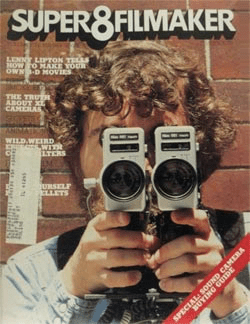
The nostalgia at the heart of JJ Abram’s Super 8 is both the reason for it’s existence and completely pointless. The film could very easily have been tweaked for the modern day. My experiences with Straight 8 show that there’s still a vibrant 8mm community out there that love and appreciate the format’s idiosyncrasies. The film-making kids that make up the prime cast could have very easily shot on new stocks with a camera they picked up cheaply on eBay. (even the yummy Eumig that does such sterling service as the hero camera in the film.)

But then, of course, we would not have a film that panders so deeply to our fanboy love for the 80s films that built the foundation for the modern summer blockbuster. For Abrams, Spielberg and films like ET and The Goonies are not just the starting point. They’re the engine of the film. They’re pretty much the whole point.

Continue reading Yesterday’s Today: X&HT Watched Super 8

X&HT Spotlight: Simon Aitken

This is the first in an occasional series where I big up, flatter and otherwise encourage you to bow down and worship in front of some of the many talented people that I am pleased and privileged to call my friends. And I mean that most sincerely.

Most of you know Simon Aitken as the director and prime mover behind quirky vampire romance Blood + Roses. (If you haven’t seen it yet: why not? Here’s the Amazon link. Go ahead, treat yourself.)

But he’s also a skilful camera operator and DOP, and I think he’s doing great work as part of the DSLR movement that’s changing the face and look of modern lo-to-no budget film-making.

A little background if I’ve just jargoned you into submission. The current range of high-end digital stills cameras can take full HD video as well, and the sensors they use to capture images compare favourably with video cameras costing two or three times more. They perform brilliantly in natural light, and the range of lenses you can get give a beautiful look with a narrow depth of field. For a minimal investment (in film terms) you can put together a rig that will provide you with gorgeous, painterly images.

Simon’s work with the Canon 7D is showing real flair and imagination. His latest short, Stakeout, is a prime showcase for his abilities. In conjunction with long-time acting and writing partner Benjamin Green, we have a terse little tale of double-cross and betrayal. Stakeout was shot using only available light – the kind of challenge that most DOPs would walk away from. Simon not only proves that it’s possible, but that the results can be gorgeous.

The Fighter, his first tryout with the 7D, was even more of a challenge. A showreel piece for actress Elizabeth Knight, this too was shot without any extra lights and a single zoom lens. The results are striking. I love the way the focus drops off in the background. Killer bokeh, which you’d struggle to get with a much more expensive rig.

Finally, it would be remiss of me if I didn’t mention the first project Simon and I worked on together. Monologue Triptych is a linked series of films based around the idea of confession and reconciliation. Ben Green stars again, and the witty, moving scripts are written by Ben Woodiwiss, with whom Simon would reunite for Blood And Roses.

I’ve chosen to highlight the last film in the sequence, Tercero, as it’s the one of which I’m most proud as a colourist. The films can be viewed in any order, but taken together they are a devastating portrait of a man who has cheerfully ruined his life, and now struggles to come to terms with all that he has lost.

A story to finish with. The screening of Monologue Triptych was a packed room. But it was marred by a projector fault for the first thirty seconds. Hence, just after Simon had specifically singled me out for my hard work on the film, the opening titles came up with an acidic green cast. I nearly sank through the floor, convinced that I’d somehow messed up. Apparently you could hear me whimpering for the rest of the show. (Simon adds: as far away as the projection room!)

Not my proudest moment.

You can see all of the Monologue Triptych films at Simon’s Vimeo page, alongside some of his other work. Please do watch and enjoy the work of a very talented gent.

Getting A Rise: Why X&HT Didn’t See Rise Of The Planet Of The Apes

NewImage

I was going to see it. Really, I was. I had the day all mapped out. Chores in the morning, then an amble into town to catch an early afternoon screening. I was quite looking forward to it.

But as the day wore on, my enthusiasm began to dwindle. By the time I got the doors of the Reading Vue, all I could manage was the feeling that there really were better things that I could do with my time. So I went into the Hobgoblin on Broad Street, and over a pint of Mr. Chubb’s Lunchtime Bitter, mused on the reasons why I’d suddenly lost all interest.

First of all, I considered, taking a sip while settling into a cosy snug at the back of the pub, Rise is a blatant attempt at starting a new franchise. Fox have of course been left without a cash cow as the Harry Potter films have finally finished, and have to be hunting around for a new series to start taking up the shortfall. Now, in my exceedingly humble opinion, franchises have turned the summer blockbuster market into an artistic void. Sequelitis has infected Hollywood like a bad case of knobrot, and the movies coming out of that policy are about as palatable. With 32 movies in the next year either based on existing properties, or reboots and remakes, the marketplace is choking on old fumes. Why should I encourage that behaviour? While I accept that my approach to these films is akin to The Pirate Code, I try to steer clear of them. There are many other better films out there that deserve my patronage.

One of them, I mused while enjoying the bright, hoppy fizz of the Lunchtime Bitter on my tongue, is the original Planet Of The Apes. A masterpiece of clever social commentary and solid storytelling, with one of the all-time killer twists. It spawned a raft of sequels, of course. All of which told the story of the fall and rise of apedom in a twisty, timeloopy fashion that made sense and, more importantly, ended in a satisfying way. Hence my concern about a new Ape franchise. The original films pretty much invented the concept in the form that modern audiences would understand, so in some ways it’s natural for Fox to glom onto the property as a moneyspinner. But the new story adds nothing to the canon. Which means, to my mind that there’s a good chance that any sequels will forge a different path. One that leads straight back to the Tim Burton version of events, and the monkey statue in Washington. Now, I could be wrong, but I’d rather not take the risk of encouraging that kind of behaviour.

Speaking of which, I reflected as I tilted the last mouthful of Lunchtime to my lips, it’s about time we stopped enabling Andy Serkis. Now, I mean this in a good way. He is a fine, thoughtful and innovative actor. But he’s been stereotyped. It used to be that when Hollywood needed a clever monkey, they went to effects wizard Rick Baker. Now, it’s all Andy Serkis crawling around a capture volume in a leotard covered in ping-pong balls. To all the smartypants yelling about Lord Of The Rings, I will simply respond with this algorithm: Gollum = shaved orang-utan.

Andy deserves better than this, Readership. It’s disrespectful of his art and talent. A boycott of his mo-cap monkeying is, I feel a harsh but fair measure. I’d rather see the man than a digitised performance any day.

I stepped out of the Hobgob into sunshine, the beer warm in my belly. A walk home along the Kennet beckoned, with perhaps a little visit to a book shop on the way. That somehow seemed like a much more pleasurable way to spend the day.

I love movies as much as anyone. But sometimes a pint of good English beer and a book are all you need to make your day.

A New Phase

This landed in my Gmail today, with no further commentary.

What are we to make of this, Readership? Can it be that the years-in-the-making docoBANKSY has finally reached the point of completion?

What we seem to have here is a scan of a new sticker design, different to the Di-faced tenners that have been popping up worldwide for the past couple of years. This has to mark a new phase in the project.

Perhaps at last that damned elusive docoB has decided to share his vision with the world. As with everything that comes out of his SEKRIT lair, we will just have to wait and see. But I recommend you keep an eye open for the new stickers. I have a feeling we’ll be seeing a lot of them very soon….

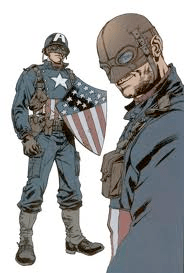
The Warrior’s Code: X&HT Watched Captain America: The First Avenger

NewImage
Give me a tweaked uniform over spandex any day...

Captain America: The First Avenger is not a superhero film. There, I said it. Oh sure, it’s got a superhero in it, and a supervillain, and a lot of the trappings and furniture of your average cape film. But what we have here is more akin to the legend of America’s most decorated soldier, Audie Murphy.

Like Steve Rogers, Murphy struggled to get enlisted, a puny, underaged dweeb who just wanted to serve. But heart, soul and tenacity succeed where all else failed, and Murphy would eventually go on to fight throughout Europe, winning the Medal of Honour, Legion of merit and the French Legion of Honour along the way. He went on to be a film star, musician and advocate of veteran’s rights – a true American hero whose image was used extensively in the post-war years as a positive national self-image.

NewImage
Captain America? This guy was a MAJOR.


Steve Rogers is a lot like Murphy. Fearless, determined to serve, always conscious of the need to do the right thing in the face of overwhelming evil. He gets the superserum and (eventually) the suit, but he gets them because of who he is on the inside. It’s a fairly typical wish-fulfillment strategy, based on the old saw that you can get what you want as long as you want it badly enough, but it works in this context. In a way, he has Murphy’s career backwards. Captain America is a propaganda asset long before he gets a chance to fight.

To reiterate, I look on Captan America as a pulpy war movie with SF trimmings rather than your bog-standard superhero joint. Director Joe Johnston understands this kind of material well. He helmed “The Rocketeer”, after all, still one of my favourite movies. He brings the same design flair and sense of fun to Captain America. It’s a good looking film, with a good-looking cast that understands the light touch required to make period SF work. Chris Evans fills the uniform out nicely, Hayley Atwell shines as the kind of glamourous Girl Friday that Cap would come to depend on in the 60’s, Tommy Lee Jones is a delight as the gruff-but-fair colonel in charge of the missions. Hugo Weaving was really the only choice as the Red Skull. Even under a thickness of makeup that would make Julia Roberts blanch, his villain skills shine through.

It’s a shame then, that even though Johnston has said in interviews that Captain America would be the stand-alone piece in the jigsaw of Marvel films that will piece together to form next year’s Avengers movie, the ending hauls it into line. Up to that point, the film had stood on it’s own two feet. You didn’t need to know who Howard Stark would sire, or where the cube came from that gave the Skull’s infernal devices their power. They were Easter eggs for the fans, but didn’t spoil the flow. The last five minutes, in which Steve is brought brutally up to date, are clangingly out of place with the tone and feel of the rest of the film. It was the kind of scene that would have been better suited to a post-credit vignette. It’s a real shame, because up to then I had really enjoyed the ride.

There’s a lot to enjoy in Captain America: The First Avenger. It’s pretty, funny and sharp. Good, pulpy fun with enough to keep both the fans and the non-comic reader happy. The ending aside, it’s a great summer movie.

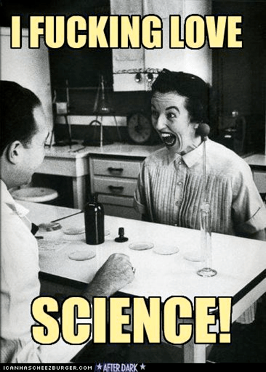
Whatever Happened To The World Of Tomorrow?

NewImage

A short Twitter conversation the other night about Richard Hammond’s tv show Journey to The Centre Of The Planet had me musing on the state of science programming. It’s not great, to be blunt. Hammond’s show was damned by knowledgeable observers like X&HTeam-mate MadameWDW…

She echoed the consensus.

Science shows seem to fall into camps nowadays. You have the big specials, filled with expensive CGI and hosted by a housewives’ favourite, full of sound and fury and very little content. I’d roll the James May show where he plays with oversized Lego into this camp, too. You have shows like Spring/Autumnwatch, cosy and cute, slipping in odd bits of science amidst all the cute wittle chickywickies and a disturbingly gleeful focus on hedgehog poo.

Then you have Bang Goes The Theory, a more polite version of Discovery’s Mythbusters and a direct descendent of Hammond-hosted shows like Blast Lab and Brainiac. You could maybe parse two minutes of interest out of these shows. They’re light entertainment disguised with a white coat and protective goggles. Not that I have a problem with blowing things up on camera in the name of science, but the shows are painfully thin on actual content. Finally, god help us, the hipster Top Gear that is The Gadget Show. It’s thin gruel, but on occasion rolls out an innovation or two amidst the endless competitions and tests of the top five waterproof cameras.

There’s a hole in the schedule.

I mourn, Readership, for a memory. I mourn for a show that combined raffish charm with excitement and enthusiasm for the science of the day. I mourn for a show forged in the era of the white heat of technology, that is ever more needed in this most sciencefictional of centuries.

I miss Tomorrow’s World.

In the 60s, 70s and 80s, TW had the sort of sway, impact and viewership that was only topped by shows like Top Of The Pops. It was slick and glamourous, and not afraid to talk to it’s audience like grown-ups. It was wide-ranging, yet capable of bringing depth and focus to a subject when it was needed. It roamed the world, from the science parks and boffins of rural England to the rocket jockeys of the California deserts. In William Woollard it had a genuine, frequently shirtless sex symbol. In Raymond Baxter, a Chairman Of The Board, a smooth-talking master at the tricky job of making science approachable. You never felt you were being talked down to. Tomorrow’s World was pacy, newsy and in the right place at the right time. It was at the forefront of the computer boom of the early eighties, showed us the first home video cameras and recorders, and was all over the launch of the shuttle Enterprise. As Atlantis touched down for the last time, I couldn’t help but feel a twinge that the Tomorrow’s World team weren’t there to welcome it home.

As science becomes increasingly under threat from swivel-eyed fundamentalists and swingeing budget cuts, I think the time is right for a revival. A weekly science-based magazine show would be a great way to spark interest in the field. We need the legacy of Baxter, Woollard, Michael Rodd and the others more than ever. Let’s celebrate the world of tomorrow, with a show that will give us up-to-the-minute updates in the fast-moving field of science and technology. Boing Boing TV, anyone?

(Speaking of Boing Boing, they’ve posted some background to the picture that heads up this post. Short version: the lady, Jane Root, was a test subject into early prenatal gender screening in the 1950s. She’s just been told she’s having a girl.

I suggest that you show that picture to the next person that tries to tell you that science is a soul-less, uncaring endeavour, and then tell them to go gruff in a hat. I love this picture. And I fucking LOVE science.)