2011: The Cleardown

NewImage.jpg
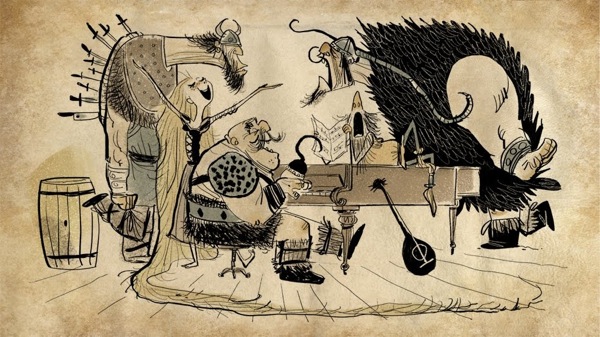
The beacon is lit. The Gateway opens. The sleeper awakes.

A sense of peace and order descends on Casa Conojito as the Xmas deccoes are packed up and put away, signalling the end of all merriness and joy for the next eleven months. It’s been a straightforward clearup, as we went minimal on the froth, frippery and frou-frou this year.

The exception to that rule is, as ever, the unknotting of the lights from the tree, a process that requires the application of non-Euclidian geometry and much swearing to complete. I was quite proud of the amount of quantum entanglement I achieved this go-round. It was an exercise in four-dimensional shared-plane dynamics that took some thought and a tearful breakdown before I applied good old Gordian theoretics to the problem and took the tree apart with the lights still attached.

Even then, the bastard things were tighter than Kylie’s dress on New Year’s Eve. The final knot-form that the lights evolved to once I had finally freed them from the tree was unsetting, otherworldly. The bundle of green wires seemed to twist serpent-like in my hands as I stuffed them back in the box. ‘Twas if somehow the form had described a pathway, a map to eldritch other dimensions. A beacon that the dwellers of these side-shifted places could follow to find their way here.

I fear for what awaits me when I go back up to the loft next Christmas. I fear that the deity whose arrival we celebrate on December 25th will not be the one we usually greet.

Ho ho ho. Cthulhu fhtagn.

This Was The Year

…that Twitter turned me into an activist.

The 38 Degrees and Avaaz guys had me signing petitions and writing angry letters to my MP (admittedly, I’ve been annoying Rob Wilson for a while now, but surely the point to democracy is to make sure your elected representative to government is aware of your needs?), forwarding links on, and in general becoming one of those people that the mainstream press like to demonise as a kneejerk reactionary. I make no apology for that. I’ve watched in horror as we ended up with a government that nobody voted for, that seems dead set on a swingeing series of cuts to essential services that is not only unjustified, but un-necessary. Not only un-necessary, but ideologically motivated. This, from Adam Ramsay on the @ukuncut blog:

…what George Osborne spotted is what right wing politicians around the world have known for the last 40 years: a disaster is a great time to radically change a country. From the privatisation of New Orleans’ schools after Katrina, to the corporate plunder of Iraq after the 2003 invasion, this trick is nothing new. Naomi Klein’s book The Shock Doctrine describes in detail how it has been used the world over.

There is a big problem. People understand this might require a big solution. And so they accept policies they would never normally countenance – policies not designed to solve the problem, but to radically change society in a way no one ever voted for.

And like this sleight of hand, Osborne’s “solutions” too are nothing new. The Conservative students I studied with at university – the generation who were born under Thatcher, and are now the researchers and aids to this government – were arguing for 30% spending cuts long before the recession. And their predecessors did too – in fact, in 1910, the Conservative Party brought down the Government rather than allow the people’s budget, the foundation of the welfare state, to pass. And they have used every opportunity since to rid this country of what they see as a dangerous socialist experiment.

And this “solution” is, of course, nothing of the sort. The idea that you solve a deficit caused by unemployment by cutting jobs is economically illiterate. Don’t take it from me – look at what is being said by the world’s leading economists, including most recent Nobel prize winners: Britain is embarking on a radical economic experiment which is not only un-necessary, but probably going to make the recession worse.

(The whole post is well worth reading if you want to whip yourself into a spiralling rage about the lies and nonsense that we are being fed about the state of our economy, it’s causes, and why the phrase “We’re all in this together” is the sickest joke of 2010.)

Twitter has also been the sharpest way to stay up to date on the happenings of the happy pranksters that have been shutting down tax avoiders Vodafone, HSBC, Boots and Topshop every weekend for a while now. Reading the streams from participants like @pennyred as stuff was happening had a giddy, unprocessed thrill to it. In events like this, the mainstream news media was left floundering to catch up.

Rest assured, there’ll be a lot more of this from me next year.


…that I was up on the main stage at FrightFest.

A seriously heady moment, as the writers and directors of Habeas Corpus (with the exception of Ben Woodiwiss, sadly) introduced the teaser, which was shown on the giant main screen at the Empire Leicester Square. This is a big deal, and we’re working towards getting the whole thing done in time to be screened next year. Once we can get the funding, of course… In the meantime, the final shot of the teaser is getting a rep on YouTube as “The Most Revolting Kiss EVAR”, which fills us all with a quiet sense of pride.

…that I wrote my head off.

Count ’em up. Nanowrimo and Script Frenzy this year left me with a completed 100 page graphic novel and two-thirds of a first draft of the second “Moon” novel. Five short stories. Innumerable blog posts. The thing is, I still feel like I’ve been slacking this year. God only knows what could happen if I light a fire under myself.

…that I made short films.

Dom and I finished Time Out, finally. It’s off to festivals, and we’re quietly hopeful of a screening somewhere. Meanwhile, experiments with a dirt-cheap Kodak digicamcorder and Garageband led to a flurry of creative output in July as I squirted out five short mood pieces in short order.  They were fun to do, and worked as document and commentary on a quiet moment. It’s a zen approach to film-making, and one that suits me. There will be more of these next year, promise.

…that I changed my reading habits.

Thanks to the Kindle. This thin, light, clever piece of kit has turned me back into a voracious reader and helped me to rediscover the hidden gems I had tucked in the depths of my hard drive as PDFs. My early worries about the open nature of the device were calmed as soon as I realised that it would flawlessly open just about any book format out there (and if it couldn’t I use the brilliant Calibre to convert it) and I am now a complete drooling convert. Much in the way that 2010 marked the end of my purchasing music in physical form (and, thanks to Spotify, barely buying music at all), 2011 will give the over-worked bookshelves at X&HTowers a much needed break. I’m eyeing up a couple of magazine subscriptions, as well as revisiting glorious indulgences from the past for surprisingly small amounts of money. I’m a blissful little bibliophile, I can tell you.


And as for 2011? Well, I want to be looking at getting something available for download on Amazon – probably Satan’s Schoolgirls as a start. Who knows, maybe even make some money off it.

Work continues on Habeas Corpus, Ghosts Of The Moon and Dom’s ongoing Banksy doco, which he hopes to have done by the end of January.

I want to start drawing more, as a complement to TLC’s interest in crafty stuff. A life drawing class is going to be vital, I feel.


Oh, and I pledge to blog more. No, really, I mean it this time. I’m signing up to WordPress.com’s PostADay initiative. That’s something new from me every single bloody day. You’re going to be sick of me by the the time I give up some time in February. There’s a very good chance, therefore, that X&HT will devolve into single line posts, photos and the occasional recipe. It’ll be different, that’s fur shure.

Right. 2011. Here we flippin’ well GO.


Life During Nano: Something for December, Perhaps

OK, this has nothing to do with anything apart from the fact that working on NanoWriMo tends to tune your brain into slightly different frequencies and you pick up on connections that you maybe wouldn’t normally notice.

Also, that you write in run-on sentences more. They normally get cut in half in the edit. But anyway.

Charlie Stross recently wrote a wonderful, curmudgeonly piece on steampunk (here it is). He made the point that the innovations of the early stories have devolved into mere set-dressing. If steampunk authors took the time to look at the worlds they were building, there would be very little glamour to be had, and a great deal of poverty and deprivation. He also cracked the joke that steampunk is what happens when goths discover brown, which made me snort tea back into my mug through my nose. He called out SF sites Tor.com and i09 as being particularly to blame for the spike in interest in the genre.

This is pretty nicely timed, as Tor have just been running a Steampunk fortnight. A lot of the critical thought and articles have been on the reinvention of the genre. Amal El-Mohtar’s piece, Winding Down The House is especially good in this regard, and successfully makes the point that steampunk’s tropes and conventions really are holding things back. If steampunk is to grow and stay interesting, it needs to move away from the Victoriana/Old West/Ruritanian bit, and find new directions.

Amal points out her frustrations neatly here:

I wrote a story in what, to my mind, would be a steampunky Damascus: a Damascus that was part of a vibrant trading nation in its own right, that would not be colonised by European powers, where women displayed their trades by the patterns of braids and knots in their hair, and where some women were pioneering the art of crafting dream-provoking devices through new gem-cutting techniques.

Once I’d written it, though, I found myself uncertain whether or not it was steampunk. It didn’t look like anything called steampunk that I’d seen. Sure, there were goggles involved in gem-crafting, and sure, copper was a necessary component of the dream-device—but where was the steam? My editor asked the same question, and suggested my problem could be fixed by a liberal application of steamworks to the setting. Who could naysay me if my story had all the trappings of the subgenre?

Syria, you may be aware, is a fairly arid country. There are better things to do with water than make steam.

Both articles are worth a read, not just as criticisms of the subgenre, but as roadmaps to a new future past.

And I have an unfinished steampunk book that could use a little attention…


RED and the finer points of growing up rather than old

TLC and I went to the pictures yesterday, and thoroughly enjoyed RED, a movie about Special Ops killers coming out of retirement after their lives are threatened by a spectre from their past. This makes it sounds all grim-faced and dark, and that’s exactly how the graphic novel by Warren Ellis and Cully Hamner reads. It is a dark little tale with very little in the way of humour or even light patches, and a very unhappy ending.

The film is nothing like that. It takes Warren’s themes and setpieces and ties them into a story that bears only passing resemblance to the book. This is a very good thing. It’s one of the most entertaining films I’ve seen in a while, with a script that understands the mechanics of the action movie, but winks and blows them a kiss as it breezes by. It’s a lot of fun, but it also has a heart and backbone, and takes time to make the point that being retired doesn’t make you useless. Far from it. Frank Moses, the RED of the title, played as Bruce Willis by Bruce Willis, is always one step ahead, always capable of thinking on his feet. He’s not an impotent old man or an easy target. And he’s even mature enough to shrug off the jibes about his hair.

There’s a wonderful moment towards the end of the film when he explains to his opponent Cooper (played with aplomb and empathy by Karl Urban, who I’m now very excited to see as Judge Dredd) about what it has taken to bring him here, and the awful lessons he’s had to learn. He is the lonely, unstoppable ronin because he has lost everything he’s ever cared about. The last hurrah that RED documents so entertainingly is his last chance at redemption, rather than revenge. It’s a chilling moment that brings home a few home truths about the process of growing up and growing old, and the things we have to lose along the way.

For me, RED’s major strength is in the casting of its female characters. These are front and centre, the engine of the story rather than the brakes. Rebecca Pidgeon is sharply efficient as the cold Control of Urban’s killer. Helen Mirren is regal and deadly, and you can just tell she was having a blast with the heavy artillery. [SPOILER ALERT] Even the commuter that John Malkovich’s character threatens with a gun comes back at him with a rocket launcher. [/SPOILER ALERT]

But it’s Mary-Louise Parker that makes the show for me. Goofy, sweet and tough all at once, always ready for a challenge and an adventure. There are no simpering dolly-birds here. You can see from the first minute of the film why Frank is so smitten with her. I am too.

Interestingly, there were a bunch of screensurfers in the back row. You know the sort, kids that’ll get in for one film then stick around all day moving from screen to screen. They were clearly intent on just chatting and pissing around, until the cinema as a whole made their feelings perfectly plain. A cinema, incidentally, full of people in their thirties and forties – the target audience for RED. An aural eye-roll (how do kids DO that?) and a muttered “Cuh, old people” was the closest we got to rebellion, and they sloped away minutes before the explosive end to the film. Their loss, in all kinds of ways. There was a lesson to be learned, if they could have been bothered to listen.

Warren gives us his insight into the story and themes of RED in a piece for the Guardian HERE. The figure of the Unretired Hero isn’t going away anytime soon.

Sibling Rivalry

I guess you have to have a brother to appreciate the evil genius of Ed Milliband’s stealth insult to his brother David during his acceptance speech as the new Labour leader. It was beautifully crafted and exquisitely judged for maximum impact in an arena where the older boy could do nothing about it.

Ed, while describing his brother in glowing terms, could have called him talented. He could have called him skilled, a great statesman, a credit to the party.

No. Ed called his brother “special”. And I just bet he had to resist the temptation to slide his tongue between his teeth and lower lip and jut out his jaw while he said it. It was a playground diss brought starkly into the adult world, and short of flapping his hands at right angles on either side of his face while doing it, I don’t think Ed could have made his point more clearly.* David, the heir apparent to the Labour throne, has been beaten to the prize, and Ed found a way to really rub his brother’s nose in a big stinky pile of defeat.

It’s telling, doncha think, that David has decided to back out of a role in the Shadow Cabinet. His reasoning? “Ed is my brother.” That says it all. David’s clearly at the point where he can’t even stand to be in the same room as the smirking brat who’s just stomped on his dreams. Christmas should be interesting round at the Milliband’s this year. Hilariously, the Asian Tribute has suggested that their mother may become involved in mediating disputes. “David. GO TO YOUR ROOM. I don’t care what your brother called you! ”

Like I said, you need to have a brother and be a brother to understand the dynamics at play. The battle for turf, the struggle for supremacy in the most minor way perceivable (who gets the last spud, the better birthday present, the later bedtime) is the red thread that binds the fraternal relationship together. And victory HAS to be celebrated, or else it is hardly a victory at all. Even if it’s the face pull, or the whispered insult. The fact that Ed has pulled off this simple feat in such a classy way is cause for applause. This man has what it takes to make his way in the brutal playground of the political word.

It’s a real shame that the Millibands won’t be in the Cabinet together. I have a very clear image of the first meeting under the new regime. The brothers will be seated opposite each other. There will be lots of glowering eye contact. David will make a snide comment, or Ed will mutter something under his breath. Someone will call someone else a mong. It won’t take much. The meeting will end in chaos as David launches himself across the table at Ed, his face a snarling mask.

The image of Harriet Harman prying the Brawling Millibands apart would have kept me warm all winter.

*I understand the moral and social issues behind the word and the gesture, but they’re a subject for a much more wide ranging post. This is not the time. If you take offence at the fact that I find playground disability taunts amusing, then please, meet me in the comments and we’ll talk.

Way Out West

We went west. We had no real plans, apart from an urge to see and experience something a little different. In the course of three days, we would find a starling church, see lions and tigers (but no bears, oh well), fall in love with a dragon and meet a god. Not bad for England in September.

We rode out early on the first day, fearing heavy traffic on a road we had travelled before that had always slowed us down. Somehow, our timing was perfect for once, and the grim weather and slow movement we had feared never materialised. The sun broke through the clouds as we reached Stonehenge.

We had driven past the stones plenty of times before, but had never stopped. It was a good time to do it. We were between coach parties, and just past the school holidays. It wasn’t empty, but there was room to manoeuvre. A bedraggled Druid and his muse manned protest signs as we went under the path to the stones. They wanted better access, and a chance to use Stonehenge in the way it had been intended – as a church. As no-one’s really sure what Stonehenge’s true purpose is, I couldn’t sympathise.

It was a warm afternoon, and flocks of starlings swooped overhead, tying knots in the air. Then, as we watched, this happened.

For half an hour the starlings roosted quietly on the stones, getting the kind of access that the Druid across the road could only dream about. I couldn’t help but feel that they were using it as a meeting place, a point of community. In their still intensity, I couldn’t help but think of them at worship.

They were gone as suddenly as they’d arrived, and we walked back to the car, thinking that we’d witnessed something a little special. It will colour the way I look at the place from now on. I have a lot of respect for the major stone sites of England, and I always leave them knowing a little less, and feeling a little more wonder.

Our next stop was an unplanned one. Stourhead is a rambling estate laid out by banker and art patron Henry Hoare in the early 1700s. The gardens are extraordinary. They’re laid out to replicate some of Hoare’s favourite paintings, and there are plenty of rolling vistas, and follies and temples peeping into view.

While walking around the lake that forms the centrepiece of the grounds, we came across a spooky tunnel carved out of the rocks. We wandered in, to be confronted by …

IMG_0765.JPGIMG_0766.JPG

The statue seems to glow, somehow, although there’s no obvious source of light. It’s a great bit of theatre, and a neat surprise in a place that’s full of tricks and playfulness. Loved it. Thank you, Henry.

We stayed at The Bath Arms, a short drive from our next spot. It’s a place I can solidly recommend. Good beer, great food, sharp service and well-priced. Plug over, but really, worth a stop if you’re in the area.

The next day was a simple pleasure. A trip to the zoo. Not just any zoo, of course. Longleat. I’d never been. The famous monkey jungle has been closed for a while due to a nasty case of monkey herpes. I was a bit relieved, to be frank. I’d heard enough horror stories about how the little buggers would rip off anything on the car that wasn’t bolted down. We weren’t too keen on being attacked by rage monkeys.

However, there were enough surprises waiting for us to make the lack of monkeys a distinct no-biggie.

P1030500.JPG

P1030443.JPG

P1030457.JPG

P1030458.JPG

P1030450.JPG

Once out of the car finally, we took the rest of the day exploring the ground, and found a couple of memorable places.

The cheap-looking Old Toms Mine doesn’t look like much from the outside, but it’s home to a colony of bats. Unlike most bat enclosures I’d seen, there’s no barrier between them and us. It’s basically a big dark room full of bats. And it’s wonderful. They whizz past your ears, fluffing your hair as they zip around. They perch upside down, chirping at you. They dangle from fruit laden skewers. Sometimes they fall off, landing in a comedy heap. They’re goofy, sweet and hilarious. We walked out with big grins on our faces. Anyone that has a fear of bats needs to check these little guys out. They’ll change your mind in a moment.

We went to the petting zoo. Yes, alright. We’re soppy. But we fell in love with someone completely unexpected. I had an encounter with a Giant Hissing Cockroach, so friendly and used to people that he couldn’t be goaded into hissing for me.

And then we saw him. Our eyes met across a crowded room. Our new best friend. The Bearded Dragon.

He’s dry and cool to the touch, with the softest belly. He laid in my hand, and promptly rested his chin on my thumb and dozed off. I think it may have been love at first sight.

WANT.

Heading back the following morning after good food and splendid beer at the Bath Arms (seriously, try the Horningsham Pride. I could drink it all night. Ok, I did.) we headed east, stoping off at Lacock, home of a stunning medieval abbey, and the place where William Fox Talbot made the first photographic negative in 1835.

This was a spur of the moment visit, but a big thing for both of us. TLC and I are both taking more photos these days, and although we’re digital, every shot we take owes a debt of history to Fox Talbot and his pioneering work. He took inspiration from his surroundings, and it’s completely understandable. The Abbey and it’s grounds are places where pictures jump out at you. By accident, and without foreknowledge, TLC managed to replicate Fox Talbots original photo.

As we headed for home, we felt sure that we’d done everything that we set out to do, and more. Every time we spend a couple of days touring this country, we find sights and experience that fill us with wonder and joy. This is a good place, and it’s good to be here.

For LOADS more pics of our adventures, hie thee to Flickr, where TLC has a fine set of our day at Longleat.

Fandom – when obsession becomes passion

My post on fandom a couple of weeks ago was very much coloured by the fact that I’m not part of a fan community. I thought that this would give me an objective outside view of the world. All it really did was provide a barricade behind which I could lob brickbats and snarks without fear of blowback. That’s unfair to a lot of people, and nudges me dangerously close to the kind of snobbish commentary that drives me to fizzing spasms of rage when it’s directed at something I happen to like.

I’ve decided to offer a right to reply to a friend and writer who is deeply involved in fandom. WDW runs a very well respected blog on one of the more interesting A-listers on the scene, Jake Gyllenhaal. She knows the highs and lows of being a fan, and I’m delighted to offer her a slot on X&HT in order to set me straight.

Continue reading Fandom – when obsession becomes passion

The Life Of The Mind

Fandom.jpg
Replace "Ron Paul" with "Fabio Capello", and you have a large majority of British male Twitterers

Fandom is an ugly, messy, partisan, tribal business. Pledging allegiance to a team, sport, film, TV show, actor or band is tantamount to drawing a magic circle around oneself, and becoming involved in the fan network wrapped about your chosen totem of desire can invoke all kinds of trouble.

I’m no football fan, as readers of my most recent posts should now be well aware. But I know fandom in all it’s perverse glory, and observers of human behaviour have a petri dish seething with activity to enjoy. I’ve become interested in the way the fans, most specifically the England fans, are acting during the World Cup – or rather, how they’re being told to behave and how they’re taking that advice.

The flags are everywhere. That simple red cross on white has become a unifying banner under which lesser tribes can unite for a few weeks. Notice how a lot of the England flags in the stadiums of South Africa will have local team names emblazoned across the middle (I saw a Reading one the other day, which gave me a bright shock of recognition) making the point that there are many tribes gathering under the one flag. Old enemies will set aside their grievances for a while in order to do all they can to aid the common good. It all starts to look almost medieval – the face paint, the battle horns, the war-chants. It’s the old SF saw of war being subsumed into sport, with corporations as the only true winner. Makes me want to watch Rollerball again. (The good one. The James Caan one.)

And then there’s the whole ENGLAND EXPECTS bit. Churchill, Shakespeare and Blake all have their finest words and phrases mashed up as rancid headline fodder. Wayne Rooney is wrapped in a flag and plastered over the front page of the Sun on the day of the England-Algeria game. The headline declares “OUR FINEST HOUR.” The fans are given to EXPECT GREAT THINGS, despite the overwhelming evidence to the contrary. The sad fact that our team has not lived up to expectations for forty-four years is glossed-over, hand-waved away. This time, it’ll be different.

Which is, to my mind, a lot like the Star Trek franchise. Endlessly fussed and fossicked over, each new iteration and re-invention held up as the one, the return to greatness, forget all that other rubbish, remember 1966, here we go, make it so. The fans dress like their idols, wear all the shirts, put on the face-paint (admittedly, for Star Trek fans this is a bit more complex than two red slashes on a white ground) and, somewhere in the back of their minds, get ready for disappointment.

classic kit.jpg
Ah, the '66 kit. CLASSIC.

I guess the JJ Abrams Star Trek reboot is then akin to England winning the World Cup. People didn’t quite know how to react when it turned out to be quite good. It was almost a shock to be confronted with something that didn’t look tired and old. Delight was mixed in with genuine surprise.

We can therefore compare the reaction to England’s performance against Algeria to a crowd who, instead of seeing the Abrams Trek, were confronted with an episode of season three of Voyager. Lame, uncertain, confused and above all BORING.

Rooney’s reaction to the boos that rang out around the pitch at the end of the nil-nil draw say a lot about the England Expects attitude, and how easy it is for an exalted figure to face the wrath of his foes. England Expects cuts both ways. We are couched to see our team as conquering heroes, incapable of defeat. When we are instead presented with a fumbling and inadequate display, we are unlikely to be in the mood to listen to excuses about climate, the kind of ball that’s being used, or the distractions of thousands of trumpets honking in B-flat. These are all actually perfectly legitimate reasons for poor performance, and for all they get paid, the England players are not superhuman. However they have been led to expect unwavering and above all uncritical support, especially during international matches. The press, the management, the PR, all geared towards making them feel unbeatable. They are not here to empathise with fans who have sacrificed an awful lot to be with their team in South Africa this summer. As far as the team is concerned, the fans are simply there, as they are always there, and their role in the game is to cheer. If they don’t – well, things start to fall apart.

The discovery that the object of your adoration is not only human, but not a very nice human is one that most fans will encounter at some point. Whether it be a brusque refusal for an autograph, or acting counter to the way the fan thinks that you should, the actors, sportspersons and musicians on which so much adulation is stacked are in constant danger of royally pissing off a chunk of their following. When they do, they seem surprised and a little hurt. It simply isn’t done for the fans to show disappointment. This comes out of a profound misunderstanding of the whole relationship. The fans do not know the star. The star cannot know the fans. They are involved in a parasitic relationship, fulfilling a need rather than entering into any kind of deeper understanding of each other. Not that either side would encourage it. That would defeat the object of the agreement. The gods need their worshippers as much as the worshippers need their gods.

amanda.jpg
Aaaany excuse.

The internet has, of course, intensified the whole scenario. Fans can now talk to each other, organising and gathering into communities as rich and diverse as their focus is narrow and intense. Many tribes and viewpoints under one banner, each putting aside their individual differences. For a while, at least, until someone says something they shouldn’t and the battle lines get drawn up. Occasionally the object of devotion will appear. This would be akin to royalty strolling into a tavern for a tankard with the proles. It’s all very exciting, but doesn’t feel llke a genuine gesture of kinship. It’s like drinking with the Prince Of Wales. It would get real uncomfortable real fast.  It’s a rare celebrity that has the ability to communicate with their fans directly and without corporate bullshit. Amanda Palmer springs to mind, and probably Wil Wheaton (although he’s carved out a name for hisself above and beyond the whole Star Trek thing, becoming a bona fide geek celeb). But these guys use the connection as much as it uses them, building a fan base and therefore cashflow out of this open relationship. Amanda especially works ferociously hard at this, building a career out of guerilla gigs and selling her records online.

The mainstream, and footballers in particular, don’t do it at all. They have no need. The huge online footie communities rage and conspire as usual, but have the ability to vent their frustrations in a direct and vocal means at their objects of devotion, every Saturday at grounds around the country. Football chants are the most immediate and to-the-minute way for fans to communicate how they feel straight at the players, at full volume. Any gaffe, affair or poor run of play will be met with incisive commentary and vicious humour. You simply won’t get any of that on the Twilight boards. Whether the footballers get a lot of what’s being said is another question.

Fandom, then, is an abusive relationship in which both sides are using each other, lashing out and making up in equal part, yelling at each other without really understanding what the other side has to say.  At the same time it’s a focus for kinship, friendship, creativity and community. The boards are places where you can be unafraid of your likes, your urges. They are places where you can discover that you are not only not alone, but there are thousands if not millions of people around the world who think like you, like the same bands, and have the same picture on their wall or as a computer desktop. Fandom is, was, and always shall be, regardless of the figure that is praised.

I’ve used a lot of phrases like “worship”, “devotion” and “idol”, and it’s deliberate. The parallels between religion and fandom are strong. They both focus on unknowable, fantastic creatures who move in rarified circles beyond and above those of the people that follow them. They promise much, and rarely deliver. But no matter how badly or indifferently they are treated, the fans will always be there, always loyal, always devoted.

Up until England get knocked out tomorrow, anyway…

(And look, while we’re on the subject. The phrase Come On, England has a comma in it. Otherwise, it’s an exhortation to ejaculate on a field in Kent. It’s the LANGUAGE, people! Let’s use it like we know it!)

(sorry)

Talking Balls

NewImage.jpg
Me, every single time I'm confronted with a football.

In 2006, I made my position absolutely clear about the World Cup. I wasn’t interested. I was aggressively uninterested. I actually walked away from a couple of conversations when they started to vector in towards discussions of Beckham’s metatarsals. I posted a big sign on the door of my suite at work, a long screed in florid prose. I considered myself the geek equivalent of Martin Luther, birthing a new and radical third way through my protest.

The end result was pretty much what you’d expect. People thought that I’d either flipped out, or that this was the first sign of a new anti-football policy at the lab. My sign seemed a little too official for it’s own good. I was approached by several colleagues, concerned that this was the thin edge of a wedge that would cut internet privileges and outside phone calls. I tried to explain that this was my way of protesting about the pervasive nature of the game, and the way it just got into everything. I was told to get a grip, find a spine and stop whining. This was for one month every four years, after all.

My arguments withered on dry ground. I gave up, took down my sign, and in a gesture of goodwill donated a pound to the office sweepstakes. Taking myself down a peg. A little monetary sacrifice.

I drew Italy, and won £50.

A lesser person would have crowed and flaunted this, celebrating the victory of the geek over the footy-loving majority. But I’d made enough of an arsehole of myself by then. I quietly donated the cash to Sport Relief, and walked away from the whole experience, treating it as a lesson learnt. I had been a passive-aggressive jerk, and I got what I deserved.

Consequently, I’m staying quiet this year. I nod and smile at the work conversations on the state of the teams before gently steering them back towards a subject in which I have an opinion. I embrace the cheap beer and grub offers, and remember to stay away from the pubs with the big screen tellys (actually, this is a rule of thumb that works well at all times of year for me).

The World Cup becomes a month-long retreat for people like me. It’s a time to catch up on your reading, on those DVDs you always meant to watch but are still on the shelf in their cellophane. It’s a time to write, to think, to keep the telly off. The choices offered by the mainstream media seem to be either the footie or the chick-flick/reality show equivalent. I do not identify as a World Cup Widow, I’m afraid.

That’s fine, though. I’m happy to be ignored. It just gives me more time to watch, and think, and write.

Coming up: football, fandom and why sports geeks are still geeks.