
I couldn’t do the Atkins Diet (or, as it’s being rehashed for a new era, the Caveman Diet). I’d be miserable in a day, and off it in two. There’s one simple reason for that. I love my carbs too much.
Category: ramblin’
ramblin’
The Sunday Lao Tzu: Travel
A good traveler has no fixed plans, and is not intent on arriving.
I’ve thought a lot over the last few days about Gimpo, Iain Sinclair and the M25. By viewing the London Orbital less as a way to get from one place to the other, and more as a space in which you can explore other, less defined territories, it can lead you on a journey where the destination becomes a sense of inner understanding.
Gimpo has often said that he wants to find out where the M25 goes. It’s a less foolish question than it sounds. His trips around the road can be very clearly seen as a vision quest, as a route into the dreamtime. Once you ignore the exits, once you shrug off the distractions, then your true path can become much clearer.
Round and Around: The M25 Spin
For the last fifteen years, a man called Gimpo has been on a journey. It’s a journey that for most people would have little point, and less meaning. But for those who enjoy the idea of simply getting in a car and driving, Gimpo’s trip is the perfect distillation of the joys of travelling without a set destination, going for the hell of it. Driving just to see the road disappear beneath your wheels.
Since 1996, Gimpo has spent a day each year driving around the M25. In fact, a day and a bit, as he takes 25 hours. He plans to do it until 2021. That’s a 25 year circumlocution of one of Britain’s most hated roads. Gimpo calls it the M25 Spin, and it’s quietly becoming one of the most intriguing art projects out there.
He has form with esoteric art. As an honorary member of The K Foundation, he was with Jimmy Cauty and Bill Drummond when they torched a million quid on the Isle of Jura in 1994. As manager of The Foundry, a bar and art venue in Shoreditch based in an old bank, he would set off army-issue thunderflashes in the vaults to feel the concussive thump in his chest, turning the thick concrete walls into a giant drum.
But the Spin is something else. It’s a mobile, participatory artwork. Anyone can join in, meeting up with Gimpo and his heavily decorated white van for a guest lap or two. Take a seat in the back, where there’s always a sofa, good music and something to drink. The Spin is part celebration of a mobile lifestyle, and the idea is to have fun.
Dom has been helping to document the work for three years now, and I tagged along for this year’s interview. We met Gimpo in his East London back garden on a glorious April afternoon. Over a couple of Red Stripes, some green ginger wine and a Lucozade shot, Gimpo took us through the history and future of the Spin.
When he was a boy, he told us, his dad would let him sit up front on long journeys. He would put his chin on the dashboard, and his entire field of vision would fill with the road unspooling beneath him. Soon, he would slip into a dream state, where he was the master of his own destiny.
Later, as a commercial driver, he would find that he was constantly pushed to meet deadlines, rushing and stressing to get deliveries to their final destination. The journey was no longer the point. He yearned to get back to the time when being behind the wheel of a car or van could become an excuse to simply be. The Spin was born out of those experiences.
Gimpo loves the M25. He believes that most people hate it because no-one travels for the hell of it anymore. We go out to get somewhere. We don’t go out just to go out. The Spin is about recapturing that feeling, the fugue state that long journeys can often induce. He records each Spin, upgrading his kit when the budget allows, moving ever closer to the dream of being able to gather a whole 25 hour session seamlessly, without changing tapes. For now, he captures one circuit at a time and bolts them together as best he can in post.
The Spin was featured at the Portobello Film Festival last year, and Gimpo insisted that anyone that wanted to look at the footage would have to sit through at least one circuit. He wants the road to hypnotise us in the same way that it does him, and that’s a process that takes a bit of time.
As commentary on modern travel, on the way we look at the London Orbital and as an inspired piece of performance art, the M25 Spin is fluid, wise and spiritual. It takes an experience that most of us find boring or repellent, and gives it a strange ungraspable beauty. The more I think about the Spin, the more I agree with psychogeographer Iain Sinclair, who has called Gimpo a visionary. He sees something in the London Orbital that we simply cannot.
For more info, your best first pitstop is Gimpo’s website. The Spin takes place on the weekend before Mother’s Day every year, mustering at Thurrock services.
Reporting The Protest
That old saw that yesterday’s news is tomorrow’s chip paper has never seemed more accurate. After a days worth of opinion and outrage, the papers have moved on.
Let’s reflect on how the events of March 26th were reported. Up until the breakaway direct action groups rolled out their plans, there had been little to report. You know, just half a million people descending on the capital to express their outrage at brutal and un-necessary cuts to the welfare state.
It was only when paint started to be flung (the uncorroborated claims of light bulbs filled with ammonia also being lobbed at police is now being treated with scepticism. How do you fill a lightbulb with ammonia, anyway?) that the news feeds sparked into proper life.
Footage of Ed Milliband’s speech at the Hyde Park rally was split screened with police scuffles with protesters. A sure sign that although they wanted to be seen as even handed, the network’s interests were elsewhere.
Meanwhile, retail pranksters UKUncut kicked off their own action, and occupied Fortnam and Mason. As ever, the invasion was peaceful and cheerful. The reports of damage taking place were quickly and thoroughly shut down, as video and photos taken inside the building showed singsongs and campouts. The police would later arrest every protester inside, and charge them with aggravated criminal damage. The sum total of said damage – a knocked over display of chocolate bunnies.
The reportage of the day was becoming confused. Commentators like Sunny Hundal of Liberal Conspiracy initially accused UKUncut of diluting the original message by acting as the main speeches were going out. But he was also careful to note that they had nothing to do with the actions of the “Black Bloc” outside. Other reporters had no problem with merging the peaceful demonstration inside Fortnums with the paint-throwing activists on Piccadilly. Meanwhile, a rumour began to circulate that a member of the Sky News crew had offered someone £25 to throw a brick. This sounded suspiciously like a plot line from an old episode of Drop The Dead Donkey.
At Trafalgar Square, a group of about 200 had gathered. Violence was sparked off as police squads rushed into the crowd. The reasons for this remain unclear. The official police line is that they were acting to prevent damage to the Olympic clock. Eye witnesses, including the New Statesman’s Laurie Penney, maintain that the squads were trying to pick up individuals that had been earlier spotted causing trouble. Regardless, police lines closed, the kettle was lit, and a tense standoff began that effectively shut off the West End for most of the night. For just about all of the major news outlets, this would be the story. Penny Red’s view is here. And here’s another, slightly less purple version, from Liberal Conspiracy’s Dave Osler.
There’s a jarring disparity at work when you look at the footage and reports of the day. The even-handed claims of a huge and peaceful rally being marred by the action of a violent minority is illustrated almost exclusively with pictures and footage of the disorder. The protestors at Trafalgar Square and the Uncutters have been stigmatised by both the press and Police Commissioner Bob Broadstreet as criminals and anarchists. But as yet, there’s little proof that anyone arrested had anything to do with the window smashing on Piccadilly. And let’s not forget, they may not have been part of the main march, but they still have a perfectly legitimate right to protest. Tying UKUncut in with the brick-lobbers is an act of base dishonesty.
Let’s also note that the crowd was quiet up until they were rushed by riot squads. Even if the police were hurrying to protect the Olympic clock, their actions were certain to spark an already volatile situation. You’d be naive not to expect any trouble at a mass gathering like March 26th. A police charge into a bunch of over-excited kids is the surest way I know of to start some.
The picture that is emerging is muddled and unclear. Both sides are flinging accusations of bias, and of an opportunity lost. We know that there are concerns about thuggish behaviour from both the police and protesters. It was ever thus, and for every picture of a kid in a hoodie heaving a brick through a window, there’s another of a copper in stormtrooper gear batoning a girl in the face. There’s no argument to justify either. But both seem to be a more valid illustration of the day than the big story.
I’d say the number of arrests speaks volumes, and points you at the bias of the reportage. 201 arrests. 149 people charged, of which 138 were the entirely peaceful UKUncut crowd. If Fortnums want to press charges, I’d say they’ll end up looking very silly making a stand over a few chocolate bunnies. Which leaves us with 11 people charged with criminal damage. Out of, let us remind ourselves, a crowd of five hundred thousand people. Do the maths on that, and then ask yourself why the scuffles on the periphery were the leading story.
+++UPDATE reflecting slightly changed numbers of arrestees.
We Went On A March By Accident
>
TLC and I went into that London yesterday for art, theatre and general silliness to celebrate her birthday. I was aware, of course, that today was the date for the huge anti-cut march organised by the TUC, but I hadn’t figured that we’d see it.
It went down Piccadilly, and right past our hotel, of course. And that was a good thing, because we got the chance to see what was going on, and for a little while at least, join in and document.
The sheer scale of the undertaking was mindboggling. The march started from Victoria Embankment, and went all the way to a huge rally at Hyde Park. We were with it for a half hour or so, following it from Trafalgar Square to Half Moon Street. We passed thousands of people. Kids, adults, students, grandparents, mums, dads, nurses, teachers, public servants of every kind, all united under banners of every type, colour and material, and one message. The cuts that start to kick in next week are wrong.
I refuse to be objective about the issues at hand. I agree wholeheartedly with everyone on the march. It was amazing to see Piccadilly filled with people from end to end. I was cheered and moved by the good humour and determination of the protestors. I’d say quiet determination, except it wasn’t.
The vuvuzelas, hated noisemakers of the World Cup, has been retasked, and along with the drums, whistles and cheers means that the March has it’s own musicality, it’s own drive. It’s a drone that you can lose yourself in, a beat that matches your pulse. I hadn’t realised before, but marches are fun.
I really hope that the peaceful, joyous racket made today resonates through Parliament. The Government climbdown over the sale of the forests shows that if enough people make their opinion known, we can reverse poorly thought out and rushed policies. We should be proud and supportive of everyone out on the streets today. I’m glad I was there.

+++UPDATE+++
TLC’s posted some of her rather excellent photos of the march as a Flickr set. Check ’em out here!
The Trouble With Postaday
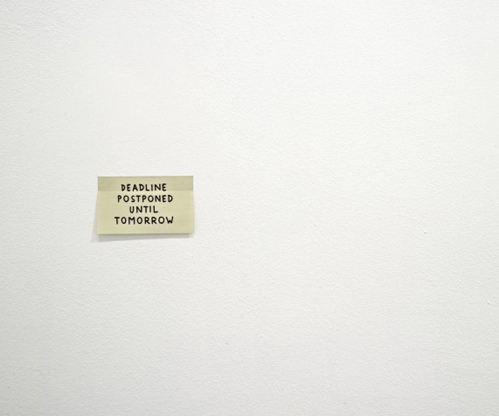
I’m coming up on three months of posting every day on X&HT, and I hope that thus far you’ve enjoyed the ride. I’ve constantly been surprised by the way in which I’ve found something fresh to talk about, even if it means looking at things I’ve mentioned in the past from a slightly different angle.
I can’t say it’s been easy, and the temptation to simply stick a funny pic or link up has been hard to ignore. But that’s what Twitter’s for, and I promised myself a long time ago that I wasn’t going to be a simple aggregator.
However. I forgot the charger for L’il Conojito this morning, which meant the battery dried before I could send this morning’s post to WordPress. Hence this quick, makepiece apology, banged out on the phone while I keep an eye on my work. I could just leave you all hanging. But that would be a betrayal of trust that I see reflected in the general upward curve of daily page hits, And I wouldn’t do that to you, Readership.
So, you get this, with my apologies. Normal service should be resumed tomorrow.

(images via http://thisisnthappiness.com/)
The Sunday Lao Tzu: A Journey
Do the difficult things while they are easy and do the great things while they are small. A journey of a thousand miles must begin with a single step.
Lao Tzu has certain themes that he returns to over and again from different perspectives and viewpoints. Self-mastery is one of them. The ability to conquer your own doubts and shortcomings is a vital part of achieving enlightenment, but it is equally important in your daily life.
You can use many of his teachings as guidance while planning a tough endeavour such as running a marathon. Training is best accomplished little and often, building up slowly and carefully, aware at all times of the lessons and warnings that your body is giving you. Running is a perfect opportunity to empty your mind of worry and care; to simply be in and of the moment. It can be a deeply meditative time.
I hope that everyone who has run the Reading Half-Marathon today has succeeded in their goals, and that the experience has helped them in all the ways they hoped, and some that they never expected. I would especially like to send warm good wishes to X&HTeam-mate Paul Staples, for whom this race is just another milestone on the road to the London Marathon in May. To him, and all the other brave and noble souls joining him, may the road rise up to meet you.
Momento Mori
As spotted in the vestibule of The Old Operating Room in Southwark, just down the road from Guys Hospital. Un-nerving and beautiful in equal measure.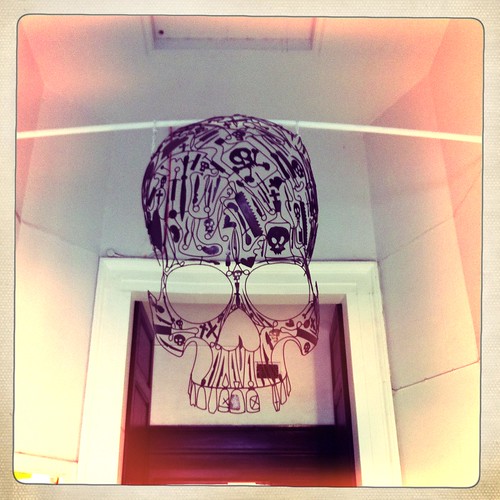
Cerise Sauvage: A History
I’ve mentioned in the past how a long walk will often suggest characters or situations to me. It’s a process I’ve likened to having someone fall into step with me and start to tell their story as we go.
I had a hospital appointment this morning, and afterwards decided to take a stroll back through Southwark, across the river to St Pauls and up the Strand, revisiting a few old haunts. Damned if I didn’t get a companion, murmuring in my head as I strode up Carter Lane. She had a name which I’d heard before.
I wrote down the things she told me in a couple of caffeinated jolts in shops along the river. I haven’t told the half of it. The name Westinghouse is mentioned at one point. Astute members of The Readership might recall I’ve talked about her before.
Meet Cerise Sauvage. She has a soundtrack that you might find appropriate.
A doco kinda day
Just a quickie for now, although I may well update later. On a train into That London, for to meet with the mysterious docoBanksy.
The project that has taken well over three years of our life is now close to completion. A virtually complete version is going out to film festivals worldwide. We meet today to plan, strategise and plot our next move. We’re pleased and excited about the end project, and hope you will be too.
In 2011, docoBanksy will have you.
 EXCUSES AND HALF TRUTHS