

Doctor, Doctor, gimme the news…
Continue reading Considerations on the announcement of a new Doctor
telly
Doctor, Doctor, gimme the news…
Continue reading Considerations on the announcement of a new Doctor
I still don’t think TV gets social networking. Despite the chatrooms, despite the hashtags that pop up as graphics on shows as disparate as the X Factor and Kirstie’s Homemade Britain, there’s still a sense that the broadcast networks can be caught unawares. That life online can often move at a bewildering pace, and in unexpected directions.
Charlie Brooker gets social networking. He certainly gets Twitter. Which is why The National Anthem, the first episode in his three-part drama series Black Mirror, works so well. As a long time tweeter, he sees how public opinion can change in minutes over the change in a news story, and how complacency, cant or hypocrisy will be seen through and shot down in flames.
Sometimes you just can’t help yourself. You know it’s wrong. You know it’s bad for you. But somehow the wrongness becomes part of the attraction. The habit grows claws, and digs in hard. And gods help me, I think it’s happening now.
American Horror Story is one of those shows that I’m just not going to be able to stay away from.

Caught the last episode of Torchwood: Miracle Day last night. It’s a series that, while riddled with flaws the way Swiss cheese has holes, I found myself enjoying. Once you stop trying to take it seriously as a genuine exploration of a Big Idea and buy into the high-camp, wildly gesticulating opera of the thing, then it becomes a far more palatable option. Let’s face it, if the show really wanted to show us the effects of a world without death, you’d be in for a much grimmer prospect.
I loved the way Lauren Ambrose and Bill Pullman both got the tone. Ambrose in particular, who I adored as Claire in Six Feet Under, really went for it, all hair and bug eyes and shrieking. The script even got a joke out of it, as she was smacked around by Gwen while the show built up to it’s Really Big Explosion. “How much lipstick can someone wear?” Well, in this show, there’s no such thing as too much.
The fanboi rollcall of ex-Trekkies and genre stalwarts simply added to the hilarity. Look, it’s Q! With a beard! Nana Visitor still looks like an alien even without the nose-thingy!
Look, come on. You couldn’t take it seriously. It was clever of Russel T and his co-conspirator Jane Espenson to move on from the bleakly adult themes that Children Of Earth had explored so effectively, and try something more over-the-top. And dear gods, they did it. Immortality, brought about through a magic tunnel through the earth that was somehow the physical manifestation of the soul of the planet. You couldn’t do that on Hollyoaks. The show became a manic, globe-trotting whirlwind of crazy ideas, big ‘splosions, gore, sex and tantrums.
Gwen Cooper has changed too. No longer the audience’s eyes, ears and questions, she’s a superspy now, a stone killer whose secret base just happens to be a terraced house in Cardiff. A woman whose mothering instincts include shoving a Glock into the face of any threat to her daughter. To be frank, she’s the reason I kept watching. She took the hysteria and bombast around her and made it, if not believable, then somehow bearable.
Everything’s geared up for another season, with a Buffy-style Big Bad in the shape of the Three Families and another immortal on the planet. Will we get one? Well, viewing figures in the UK have tanked. But Starz, who backed the show in the States, have form when it comes to pushing out high-concept, high-camp genre shows. This could be the start of something faaaabulous.

A short Twitter conversation the other night about Richard Hammond’s tv show Journey to The Centre Of The Planet had me musing on the state of science programming. It’s not great, to be blunt. Hammond’s show was damned by knowledgeable observers like X&HTeam-mate MadameWDW…
She echoed the consensus.
Science shows seem to fall into camps nowadays. You have the big specials, filled with expensive CGI and hosted by a housewives’ favourite, full of sound and fury and very little content. I’d roll the James May show where he plays with oversized Lego into this camp, too. You have shows like Spring/Autumnwatch, cosy and cute, slipping in odd bits of science amidst all the cute wittle chickywickies and a disturbingly gleeful focus on hedgehog poo.
Then you have Bang Goes The Theory, a more polite version of Discovery’s Mythbusters and a direct descendent of Hammond-hosted shows like Blast Lab and Brainiac. You could maybe parse two minutes of interest out of these shows. They’re light entertainment disguised with a white coat and protective goggles. Not that I have a problem with blowing things up on camera in the name of science, but the shows are painfully thin on actual content. Finally, god help us, the hipster Top Gear that is The Gadget Show. It’s thin gruel, but on occasion rolls out an innovation or two amidst the endless competitions and tests of the top five waterproof cameras.
There’s a hole in the schedule.
I mourn, Readership, for a memory. I mourn for a show that combined raffish charm with excitement and enthusiasm for the science of the day. I mourn for a show forged in the era of the white heat of technology, that is ever more needed in this most sciencefictional of centuries.
I miss Tomorrow’s World.
In the 60s, 70s and 80s, TW had the sort of sway, impact and viewership that was only topped by shows like Top Of The Pops. It was slick and glamourous, and not afraid to talk to it’s audience like grown-ups. It was wide-ranging, yet capable of bringing depth and focus to a subject when it was needed. It roamed the world, from the science parks and boffins of rural England to the rocket jockeys of the California deserts. In William Woollard it had a genuine, frequently shirtless sex symbol. In Raymond Baxter, a Chairman Of The Board, a smooth-talking master at the tricky job of making science approachable. You never felt you were being talked down to. Tomorrow’s World was pacy, newsy and in the right place at the right time. It was at the forefront of the computer boom of the early eighties, showed us the first home video cameras and recorders, and was all over the launch of the shuttle Enterprise. As Atlantis touched down for the last time, I couldn’t help but feel a twinge that the Tomorrow’s World team weren’t there to welcome it home.
As science becomes increasingly under threat from swivel-eyed fundamentalists and swingeing budget cuts, I think the time is right for a revival. A weekly science-based magazine show would be a great way to spark interest in the field. We need the legacy of Baxter, Woollard, Michael Rodd and the others more than ever. Let’s celebrate the world of tomorrow, with a show that will give us up-to-the-minute updates in the fast-moving field of science and technology. Boing Boing TV, anyone?
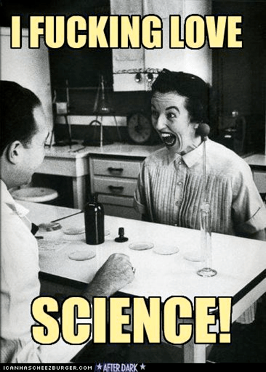
(Speaking of Boing Boing, they’ve posted some background to the picture that heads up this post. Short version: the lady, Jane Root, was a test subject into early prenatal gender screening in the 1950s. She’s just been told she’s having a girl.
I suggest that you show that picture to the next person that tries to tell you that science is a soul-less, uncaring endeavour, and then tell them to go gruff in a hat. I love this picture. And I fucking LOVE science.)
You can have fun with FX’s new big-budget SF show Falling Skies by playing spot the reference. It’s so stuffed with nods to other shows that it becomes a commentary on the state and visual style of filmed SF in the early part of this most scientifictional century.
(Spoilers ahead. Break left. Engage thrusters.)

Ah, Saturday night telly. Safe, secure home of talent show, hospital drama, old film. And of course, also the place to go for head-mangling, multi-level, wildly self-referential and furiously uncompromising science fiction.
That would be Doctor Who, which always stuck out of the Saturday night schedules like a Sontaran at the dinner table. Gleefully absurd, cheap and cheerful, dark at heart yet always somehow comforting. Effects straight out of the Blue Peter school of sticky-back plastic. Acting straight out of regional theatre.
Yeah. Not any more. Not for a long time. Under Russell T. Davis and more recently Stephen Moffat, Doctor Who is now the best-looking, best acted show on the box, and one of the most contradictory. Ostensibly still a kid’s programme, at least when you look at the extensive BBC website and all the associated mercy, Doctor Who is at the same time deeply complex and terrifyingly adult. It not only refuses to talk down to it’s audience, but launches off in all directions at once and dares the viewer to keep up.
This season, Moffat’s second as show-runner, has been made with money from BBC America, and was supposed to be the moment when the show would break in the States. You would expect, then, a couple of episodes in which a new audience could be eased gently into the story. Something entry-level, with a decent dose of explanation about who the guy in the blue box that’s bigger on the outside than the inside is.
Nope. Sorry. Within ten minutes of the opening titles, the Doctor had been killed, and then reappeared as a version from an earlier timeline. There was something about Scream-faced monsters that you forgot about as soon as you looked away from them. And where the hell did the red-headed broad from E.R. come from? Also, when the heck did the show with the monsters made out of bubble wrap get so goddamn scary?
Since the reboot, Doctor Who has been in the hands of writers who not only get the Doctor and all his dichotomies, but were responsible for keeping the flame lit during the wilderness years. The Paul McGann TV movie aside, the period between the end of Sylvester McCoy’s time in the Tardis and Christopher Eccleston shrugging on the leather jacket was one of furious invention and true high concept adventure. In books, audio and comics, writers like Davis, Moffat and Paul Cornell could carve out stories that didn’t have to be concerned with budget or kid-friendly attitude. They could bring a Doctor to life that had rarely been seen in the shows, a Doctor filled with moral ambiguity, a Machiavellian manipulator. More importantly, a Doctor that instils fear. The Doctor that can turn armies around at the very mention of his name came out of this free and fertile period.
Today’s Doctor Who is a very different programme to the one I grew up with, the one that scared me behind the sofa for two seasons running. The pace, of course, has sharpened, as stories are fitted into forty-five minute slots instead of the two-hour four parter format. Although it’s good to see more two-part cliffhangers, giving the characters a little more room to breathe. It’s also more overtly scary, as Moffat creates adversaries designed to exploit our all too human weaknesses, the flaws in our perception of the world. Creatures that attack in a blink, or hide in the shadows.
And all of a sudden, more adult fears are also being exploited. Constant, unexplained surveillance. The doppelganger, the enemy with your face. Or the terror of a mother losing her child. All tied into a narrative that has no problems with skipping hundreds of years and light years in a single jump cut. It’s epic, demanding and yes, exhausting work. To be honest, I tend to watch the show on catchup, when I feel ready for it. That also gives me the rewind option for those reel “huh?” moments.
But Moffat’s refusal to compromise hasn’t lost him viewers. Considering what else is on around the same time, it’s not a surprise that anyone with the taste for big, brash but thoughtful action would be all over this show. I have niggles with the way the show has so tightly interwoven with it’s backstory, but these are only niggles. Doctor Who is far and away the best thing on British telly at the moment. It’s fearless, tough and when it hits the big notes, a sheer and utter joy. It lures high end names and the best writers in the business. When I realised it was going on break until the autumn, I yelled in disbelief. Although the big reveal wasn’t that huge a surprise, it’s wonderful to finally have River Song’s place set in stone. And with these six episodes, the set up for something extraordinary to come rolling out of the gates in September is well and truly in place.
Now all I need is one of those damned time machines so I can see those episodes now!
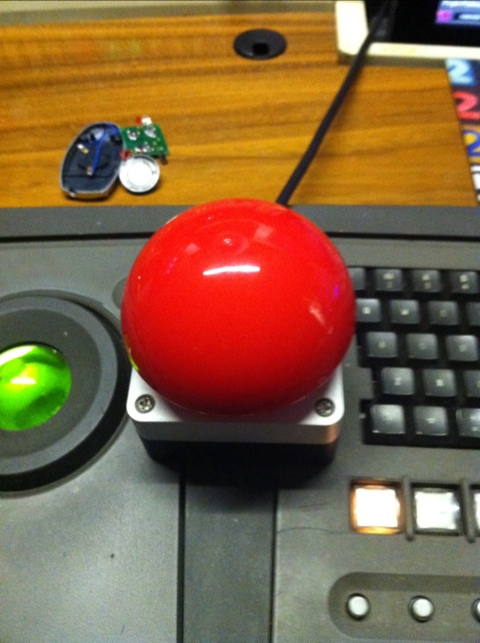
My Twittersphere already know about The Big Red Button, and the time has come to share it with you. I use it to start and stop my scanner in an instant. It’s much quicker and easier than clicking a mouse, and infinitely more satisfying.
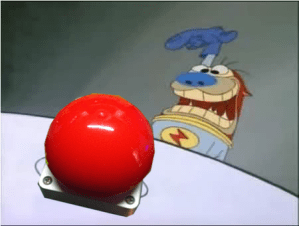
You can use it to help give money to Comic Relief. Go on, give it a click. You know you want to. Be like Stimpy. Give in to the urge.

The producers and cast of most recent TV SF shows are at pains to point out that their programme isn’t actually science fiction at all. They tie themselves in semantic knots to make sure we don’t think that their show is anything to do with that woo-woo spacy stuff. This is as true as ever when we look at the press for the BBC’s new drama, Outcasts.
Set designer James North has said “This is futuristic drama with the focus on pioneering humans who, out of necessity, just happen to be living on a planet that isn’t Earth.” Showrunner Ben Richards elaborates, making it clear that the new world of Carpathia is “… an alien planet without scary monsters. Little green men and fearsome creatures isn’t what Outcasts is about at all.”
Which to my mind is a bit of a shame. A first contact show might be more interesting than the programme we’ve ended up with, a frontier drama with a simple message. We can’t ever make a fresh start, because wherever we go, we have to take ourselves along. It’s not a new theme for an SF show. Look at Battlestar Galactica. It’s clear Ben and James have.
When a producer, writer or actor disassociates themselves from SF, they’re really backing away from the furniture. Look out for phrases like “flying saucers,” “space aliens” “ray guns,” or indeed Ben’s own “little green men.” And of course, the dreaded “sci-fi”. But at the same time they’re happy to use the tropes and themes that have been part of the genre since Wells and Verne started marking out the territory.
I guess it’s the G-word that’s the problem. Somehow the idea that SF is either kid’s stuff or entertainment for the socially inept is still a belief that informs the way films and books are marketed and sold. For “genre” read “ghetto”, and if you can make a semantic little wiggle that ensures you don’t get stacked up in the racks at the back where all the pimply, friendless people go, then so be it. This is especially important for the literary types. It’s taken the best part of thirty years for Margaret Atwood to “out” herself as an SF writer. Jeanette Winterston still has problems with the terms, although her novel The Stone Gods is set on another planet in the future.
It seems crazy to me. You wouldn’t set a story in Arizona in the 1860’s, populate it with cowboys, chases on horsebacks and a climactic shootout and say “oh, but it’s not a Western.* It’s a ridiculous stance, and hopefully one that’s on the way out. Michael Chabon’s alternative history The Yiddish Policeman’s Union won a Pulitzer Prize, and Justin Cronin’s apocalyptic vampire story The Passage is a genuine hit on all levels. There’s a misunderstanding about the people that enjoy SF, fantasy and horror that seems at least 30 years out of date. It makes the attempts of creators like Ben Richards all the more silly. Why would you cut yourself off from an big potential audience that can prove itself to be loyal and supportive to the right show?
The thing is, at a deep core level, Ben and James are right. Strip away the silver foil and spandex, and SF transcends it’s often low-budget set dressing. (Not an accusation I can level at Outcasts, by the way. It looks great.) SF acts as a mirror on the times in which it was created. It becomes a pretty relevant document of the hopes and fears of the generation that made and consumed it.
In the 50’s, it was all about the fear of infiltration by a foreign power and nuclear destruction. I Married A Stalin From Outer Space. Invasion Of The Atomic Leech-Women.
In the 60’s, SF began to explore the inner spaces of the mind, and the implications of massive shifts in societal influence. The first inter-racial kiss on TV was on Emergency Ward 10 in 1964, but it’s the second one that everyone remembers – on the Star Trek episode “Plato’s Stepchildren.”
In the 70s, things went dark and creepy as the promise of the Age Of Aquarius melted away, and we were left with three day weeks, Vesta curries and The Generation Game. Sapphire And Steel was un-nerving and bleak. TV’s eternal optimist Gerry Anderson went live action, and in UFO and Space: 1999 crafted shows that were in equal measure silly and almost unbearably harsh. The latter show starts with the moon being blasted out of orbit, effectively ending all life on Earth and dooming the inhabitants of Moonbase Alpha to a nomadic life. Even Doctor Who went steampunk and gothy, and featured sequences that are still carved in my psyche today.
SF’s role as social and political commentary is often overlooked, which is a pity but in some ways a major strength. The deep stuff is in disguise, the way a concerned mum will sneak veggies into a pasta sauce for her fussy kid, giving the viewer something to chew on after the end credits have rolled. But ultimately, it doesn’t matter. Ben Richards can claim all he wants that his show isn’t SF. When the first shot has a spaceship gathering speed towards a strange new world, we all know what we’re looking at. What he’s trying to make clear is that there’s meat on the bones, that his show has substance and depth. Personally, I think audiences nowadays are sophisticated enough to make up their own minds about whether a show is worth watching or not without caring about the genre.
I’ll leave the last word to Jeanette Winterson, who I unfairly sneered at earlier. She nails the argument on her website, thusly:
People say to me, ‘so is the Stone Gods science fiction?’ Well, it is fiction, and it has science in it, and it is set (mostly) in the future, but the labels are meaningless. I can’t see the point of labelling a book like a pre-packed supermarket meal. There are books worth reading and books not worth reading. That’s all.
(The quotes from James North and Ben Richards come via a Daily Mail piece on January 29th – an article I picked up via Ansible, I hasten to add.)
*Unless you’re Cormac Macarthy, I guess.
Cookery shows are entertainment gussied up as having some educational value – which for the most part they do not have. Important steps in the preparation of a delicious meal are either skipped, glossed over or mangled. I speak from bitter experience. There’ve been too many times when I’ve served TLC something barely edible that I’ve taken from a cooking sketch. The expensive hardbacked books that these shows are designed to hawk have the same problem. As Nigel Slater says, recipes don’t take your kitchen into account. Your oven might be calibrated differently. You might not have been able to get hold of all of the ingredients. The more precise the recipe, the greater the chance that it’s going to go wrong somewhere down the line. If you’re trying something from Heston Blumenthal, you’re SOL unless you’ve got a laboratory and a tame hunchback to hand.
A real annoyance is the moment when, when in the interests of entertainment, a cook will take a stone classic and needlessly muck about with it. TLC doesn’t cook much, but her specialties have a purity and forthrightness of purpose that shines through. When a TV chef starts throwing bacon, double cream and breadcrumbs into a mac and cheese, her disdain is palpable. She’s right, of course. There’s no need for it. Better to teach the viewers how to make food properly. Here’s TLC’s tip for perfect mac: “When in doubt – MORE CHEESE.”
Frankly, a philosophy to live by.
You can get valuable tips and tricks out of cookery shows, though, if you’re prepared to watch out for the telling details. The way a TV cook handles a knife, for example. Compare the cack-handed way Nigella chops an onion to the way Gordon Ramsay renders it down to fine dice in instants. Watch the pro chefs at work, and you get some inkling of the short cuts they use to make their lives simpler.
I always get something useful out of Jamie Oliver. He grew up in a professional kitchen, cooking for punters. And it really shows. He’s a natural around a rolling pin. I’m embarrased to say that it was Jamie that showed me the right way to crush a clove of garlic (twat it with the flat of a big knife, while still in it’s skin. Peeled and chopped in one easy move, without the un-necessary investment in presses, rollers or those funny neoprene sleeves. Yes, ok, you have to pick the garlic out of the skin and maybe chop it about a little more. If you have a problem with touching garlic, then maybe you shouldn’t be using it.) Watching him and others like him at work has moulded the way I operate in a kitchen environment, taught me the importance of sharp knives, solid implements and a worktop that can take a beating.
Every so often the shows will come up with a recipe that you just know is going to hit big. in that case, it’s going to be everywhere. Both Nigel Slater and new girl on the block Lorraine Pascale (the perpetrator of the criminal mac and cheese) have featured a no-knead quick soda bread made without yeast. It’s the reappearance of a great idea (it’s in Mrs Beeton, donchaknow), and means you have a warm loaf on the table 40 minutes after putting flour in a bowl. I’m not accusing anyone of plagiarism. In the culinary world, as in fashion, ideas are there to be taken and tweaked. But this one is going to run. Betcha the Hairy Bikers grab it next.
In fact, sod it, here’s my take on it.
Rob’s Sody Bread
Half and half measures of strong wholemeal and plain flour to make up 500g or 18oz go in a bowl.
Throw in a teaspoon of sea salt, another of sugar, the browner the better, and one more of bicarb of soda, and mix the dry ingredients together.
Throw in 350ml or 12 fl oz buttermilk, and scoosh it into a soft dough. Don’t got buttermilk? Add a tablespoon of lemon juice to ordinary milk before it goes in, and leave for five minutes. Now you got buttermilk.
Tip the dough onto a floured surface, and shape it into a ball. It’ll be sticky. Flour your hands too.
Score the top in a cross with a knife. Go deep. Imagine your enemies while you’re doing it.
Place your slashed dough on a baking tray, then into a hot oven 200C/400F/Gas6 on the top shelf. Give it half an hour.
When it’s nice and brown and risen and filling the kitchen with that bread smell, you know the one, the one they use in supermarkets only this is real, this is YOU making that smell you delicious creature, take the bread out and let it cool slightly, before rending it asunder and using it to scoop up the juices of the casserole I didn’t tell you how to make. It’ll last a day or so, so you have my permission to be greedy and wolf the lot in one go. You’re worth it.
 EXCUSES AND HALF TRUTHS