A Saturday Chicken and Sunday Sausages

(As promised, here’s yesterday’s post, which has been lying dormant in a sleeping netbook. I have taken steps to ensure that powerouts will not happen again. Thank you for your patience and consideration in this difficult time.)


We had rellies over this weekend, which always puts me in a nurturing, big-food mood. I love to gather people around our big round table and give them something good to eat. We lunched out heartily, so I was a little worried that my dinner would be picked over and poked about the plate without much interest. I was wrong.

I’ve always been a fan of the simple roast chicken, which takes so little effort and gives so much. The trick is not to ponce about, but allow the pure, clean flavours of the main attraction to shine through, with just a couple of accompaniments. On occasion we’ve simply had chicken with fresh warm bread and lots of aioli, but that’s a TLC and I treat that I don’t do for anyone else.

My way with chicken? A lemon up the backpipe (jabbed all over with a knife so that it squirts hot juice into the flesh as it cooks), olive oil massaged over the whole of the creature (think of how you would put suntan lotion on the one you love. Massage it in. Don’t be shy. You’re cooking with love), lots of Maldon salt and fresh ground pepper. That’s all. The chicken gives out enough fat to either baste your spuds or to make a thin, intense gravy. This time around I did neither, choosing to go a little French with a potato boulangerie (finely sliced potato and onion layered in a deep dish, covered with stock and baked) and a green salad of lamb’s lettuce and, in a trendy touch, pea tops, which look a bit like watercress and taste a bit like Bird’s Eye’s finest. The boulangerie was sloppy enough to create the lubrication the dish needed. It was great, and five empty plates told me all I needed to know. Then we had chocolate cake. Clearly, lunch had worn off.

The carcass was dealt with after we’d waved our guests goodbye the following day. It was stripped of any remaining meat (not much) then dumped in a pan, covered with water, and joined by peppercorns, the lemon (after I’d squeezed the sweet, tart juice over the leftovers) and a bay leaf. That bubbled away quietly to itself for a bit, maybe an hour or so, until I had a straw-coloured broth.

I’d done an emergency run to the shops the previous morning, and spotted Toulouse sausages on special, and a clever pack of beans and veg designed for a casserole. Sunday dinner fell into place in an instant.

The sausages were quickly fried off in a big pan after a dust with flour, which instantly gave them a tasty crust. Then the bean mix, and everything was tossed together to make friends. Once they were singing away happily, the remnants of a bottle of red from the night before went in, reduced down to cook off the booze and enrich the flavours. Then some of the stock from the chicken, enough to cover, and a squirt of tomato puree. I tipped the whole lot into my little red casserole dish with the lid, and into an oven at 200c/Gas 6 for an hour. The resultant stew was rich, unctuous, rib-sticking. There were whole cloves of garlic in the bean mix, which had softened enough to squish to a paste. The whole shebang was served with the remains of the Saturday loaf, and the leftover spuds from the boulangerie, pan-fried with leeks and mushrooms until a crust formed.

There’s enough stock left over to make a risottoish thing with the lemony chicken leftovers. One cheap chook has supplied enough to help out three meals. You don’t get that with a tray of pieces.

 

The Trouble With Postaday

20110321-085101.jpg

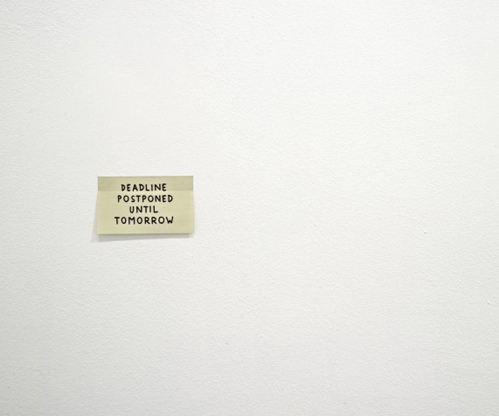
I’m coming up on three months of posting every day on X&HT, and I hope that thus far you’ve enjoyed the ride. I’ve constantly been surprised by the way in which I’ve found something fresh to talk about, even if it means looking at things I’ve mentioned in the past from a slightly different angle.

I can’t say it’s been easy, and the temptation to simply stick a funny pic or link up has been hard to ignore. But that’s what Twitter’s for, and I promised myself a long time ago that I wasn’t going to be a simple aggregator.

However. I forgot the charger for L’il Conojito this morning, which meant the battery dried before I could send this morning’s post to WordPress. Hence this quick, makepiece apology, banged out on the phone while I keep an eye on my work. I could just leave you all hanging. But that would be a betrayal of trust that I see reflected in the general upward curve of daily page hits, And I wouldn’t do that to you, Readership.

So, you get this, with my apologies. Normal service should be resumed tomorrow.

20110321-085637.jpg

(images via http://thisisnthappiness.com/)

The Sunday Lao Tzu: A Journey

Do the difficult things while they are easy and do the great things while they are small. A journey of a thousand miles must begin with a single step.

Lao Tzu has certain themes that he returns to over and again from different perspectives and viewpoints. Self-mastery is one of them. The ability to conquer your own doubts and shortcomings is a vital part of achieving enlightenment, but it is equally important in your daily life.

You can use many of his teachings as guidance while planning a tough endeavour such as running a marathon. Training is best accomplished little and often, building up slowly and carefully, aware at all times of the lessons and warnings that your body is giving you. Running is a perfect opportunity to empty your mind of worry and care; to simply be in and of the moment. It can be a deeply meditative time.

I hope that everyone who has run the Reading Half-Marathon today has succeeded in their goals, and that the experience has helped them in all the ways they hoped, and some that they never expected. I would especially like to send warm good wishes to X&HTeam-mate Paul Staples, for whom this race is just another milestone on the road to the London Marathon in May. To him, and all the other brave and noble souls joining him, may the road rise up to meet you.

A Big Red Button for Red Nose Day

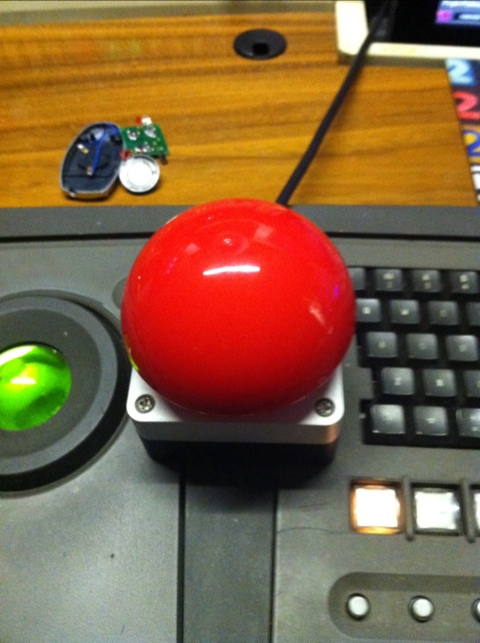
My Twittersphere already know about The Big Red Button, and the time has come to share it with you. I use it to start and stop my scanner in an instant. It’s much quicker and easier than clicking a mouse, and infinitely more satisfying.
You can use it to help give money to Comic Relief. Go on, give it a click. You know you want to. Be like Stimpy. Give in to the urge.


Shaken And Stirred: Against Shaky-cam

An interesting post hit yesterday on Salon from director of photography Matt Zoller Seitz. A summons to arms, a battle cry. In it, he calls out the increasing practice of directors and DOPs to use shaky-cam techniques on multi-million dollar films. The specific example he mentioned was Battle: Los Angeles (yes, THAT film again. Welcome to Battle: LA week. Not my intention, honest. Like I plan any of my content) but Paul Greengrass and Michael Bay are also singled out for special attention. You could argue that most big-budget actioners use this technique to a greater or lesser degree, and in a worst-case scenario, almost exclusively.

In Battle: LA, I assume that the idea was to give the impression of an embedded reporter following alongside 25 Recon. This reporter is clearly suffering from the coffee shakes. Shaky cam turned the last Bond film into an incomprehensible mess as the Broccolis tried to put Bourne style shot-work into the franchise. It was one of the flawed decisions that would stall the resurgence of Bond in it’s tracks.

I don’t want to spend time synopsising Matt’s post, so I’ll simply add my approval. There’s a whole genre of horror films that pose as found footage from camcorders in the tradition of The Blair Witch Project, and I can’t be alone in finding them unwatchable. They give me motion sickness, and are pretty much unreadable. There’s no sense of staging, or frame-building. Hand-held techniques, used sparingly, can be incredibly effective. When they become the only technique, there’s a problem. It looks cheap, ugly and lazy.

The problem is, it’s everywhere. Bandwagon jumping has always been an issue in Hollywood. A film-maker does something innovative, and others rush to follow. When shaky-cam techniques were folded into the effects sequences of Firefly and Battlestar Galactica, Hollywood made notes. The Star Trek reboot forgot the sweeping, graceful camera passes across the surface of the Enterprise as it flew past in favour of jittery zooms and whip pans. NCC-1701 is a beautiful ship, and it needs to be eye-candy, not half-seen in a thick layer of fake motion blur.

Shaky cam is hard to shoot, too. You need a multi-camera set-up, and even then there’s no guarantee that you’ll catch everything you need. It’s a mess to edit, a pain to sound sync and horrible to grade. As you can probably tell, I’m not a fan.

I don’t want to see the end of hand-held, by any means. It’s been a vital part of film technique since the French New Wave. But it’s time to stop relying on it as a way to mask poor direction, effects and acting. As Matt says: Get a tripod. Write a set list. Stop covering action. Start directing again.

(Heart)Breaking News

I’ve stopped watching the 24 hour news channels. I’ve contemplated switching off Twitter. In the face of a developing drama like the one that is engulfing Japan, I’ve come to the conclusion that there’s very little information coming out of rolling news sources, and a whole lot of conjecture, speculation and plain old stirring the pot.

We have no way of knowing what’s going on at Fukushima. Really, we don’t. Until Japanese authorities give us updates, we’re in the dark. But because the 24 hour stations have to say something, and because the nuclear emergency on the north-eastern coast of this beleaguered nation seems to be the only news story worth telling, (regardless of the awful ongoing crisis through the rest of the country) we get guesswork. An endless stream of experts, rolled on to give worst-case scenarios based on the tiny scraps of information they’ve been able to glean. We get what ifs and deadlines. If I hear the phrase “The next [vague time period] is crucial”, I’m going to scream.

And of course, it’s an ideal time for both pro and anti nuclear lobbies to pitch up a tent and start proselytising. You get scare stories and I told you so’s banging up against safety records and unforeseeable circumstance. I think I know less about nuclear power now than I did when I started.

Facebook and Twitter have always been home for the sudden appearance of rumour and conjecture dressed up as fact. I’ll make myself clear right now. Anyone on my feed that starts talking about how this is payback or divine retribution gets an instant unfollow and a report. I’ve already had to refute the outrageous map doing the rounds that claims to be from the Australian Nuclear Authority, stating radiation levels that the Fukushima plant will never come close to coming across the Pacific in a plume of death. This is the sort of environment in which pranksters thrive, and I think we all should all know not to feed the trolls by now.

Look, I don’t want to make light of the horrible situation that’s going on at the moment. Part of the reason for closing off the news feeds is because the images coming out of Japan are so unbearable. But I think it’s best to at least take a step back away from the torrent. You’ll never be able to slake your thirst if you try to drink from a full-on hosepipe. Developing news is just that. I’m allowing myself a daily update from a trusted source, and that’s it.

The best that we can do is to donate, keep Japan in our thoughts and prayers, and not, however inadvertently, spread harmful rumours and outright lies.

The best place I’ve found for donations and contact information is Google’s centre: http://www.google.com/crisisresponse/japanquake2011.html

Let’s keep our fingers crossed, and don’t believe the hype. Stay strong, Japan. We’re with you.

Cannon Fodder: the changing face of the villainous horde

NewImage

Battle: Los Angeles is a war movie. Let’s get that out of the way right now. The SF trappings are there to pull in the core audience of 16-25 year old males who will happily sit through it in the same way that they’d sit through a walkthrough of Crysis 2 on YouTube. But it’s really an excuse to have US military, modern US military with their grenade lobbing rifles and laser sights and night vision wage war against an enemy with which they can actually get their fight on. There is no fear of accidental civilian deaths or any of the horrible tangled messiness that modern warfare against an enemy that remains undefined and hard to find has become.

SF has always provided this kind of unambiguous thrill. As the audience becomes less and less excepting of the traditional war movie (which after all served primarily as propaganda against countries that have now been friends and colleagues for over fifty years) there’s still a need for shootybangbang excitement against a villainous horde. If you can make that villain completely fictional, and of a different species to the hero, then all to the good.

The aliens in Battle: Los Angeles are faceless, emotionless avatars, existing only to shoot and to be shot at. They spindle around in a backward-leg walk, and fire guns that have been grafted onto their arms. They couldn’t surrender if they wanted to, or were given the chance.

There’s little sign of pain or any kind of emotion when M-16 slugs tear through them (or, in one memorable sequenced, skewered on a bayonet and then torn apart by M-16 slugs). They make that default monster noise that’s becoming as over-used as the Wilhelm Scream, and then they fall over. As such, they’re simply the latest in a long line of invaders that runs all the way back to War Of The Worlds. Think the swarming hordes of James Cameron’s Aliens, mirrored helmets topping a drooling tooth-filled maw. The creatures of Independence Day, blankeyed and mouthless. Notice too, that the writers haven’t even bothered to give the enemy proper names. They are simply called by their function. Alien. Invader. Enemy. Monster.

Creatures from the Doctor Who universe have names, at least. Of their species, anyway. On the whole, they still follow the same idea of being interchangable, indistinguishable. Daleks and Sontarans differ from the Hollywood Horde ideal in that underneath the expressionless masks they wear, something hideous lurks. The Cybermen take this one step further – they were humanoid once, and chose to lock all that away behind a blank carapace. There’s a little more depth there, but their intentions remain the same. They are set on conquest and colonisation.

The Stormtroopers of the Star Wars Universe have the same purpose. Spookily, under their helmets, they all look the same. They’re clones, and therefore again one step away from the human. They’re constructs, manufactured and therefore easily expendable. And again, they have a collective name rather than anything that would allow us to see them as individuals, to give us the chance to empathise.

The one flipside to this idea that I’ve been able to find comes in, of all places, from the first Austin Powers movie. A running gag showed the home lives of some of Dr. Evil’s henchmen after they were killed by the International Man Of Mystery. Giving a faceless hench a wife, a family, friends and a social life is unthinkable in most of the cases I’ve talked about. We’re not supposed to care about them. They are obstacles to be removed without thought or consequence.

As @JaesonX pointed out to me on Twitter, SF invasion pics are starting to shrug off the old cliches. District 9 takes a much more complex and nuanced approach to the theme of first contact, a situation that’s unlikely to begin with the two sides shooting at each other. Gareth Edwards’ Monsters tells us that we’re just unlikely to be able to figure out what they want here in the first place. Both films end, not in full-scale conflict, but a grudging, uncomfortable co-existence, marred with sporadic violence. This can be tracked back to shows like Alien Nation, where the visitors arrive not as aggressors, but refugees. This reflects the fluid nature of national identity, racism and touches on the way people view their territory and the people that come into them in ways that the basic war movie simply doesn’t have the tools to address.

There will always be a place for war movies. But we live in a complicated world, and it’s sometimes difficult to figure out who the bad guys should be. I’m holding out for the first war movie that pits the USA against it’s own banking system. That’s a fight with some life in it.

(pic credit: Francesco Francavilla).

Why The Aliens Of Battle: Los Angeles Deserve Their Beatdown

Spoiler alert

nyakyakYAK
... and I look GOOD without a shirt.

I am the commander of an invasion force. We have travelled across the stars to parasitise a small, blue planet somewhere on the Western Spiral Rim of the Milky Way. Specifically, my comrades and I have come for its water. There’s a lot of it. This “Earth” (such a foolish name for a world whose surface area is 70% water) is a rich prize.

Because I am not stupid, and because I understand that a) tactically, high ground gives you a major advantage and b) there is no higher ground than low orbit, I begin my assault by making a note of all the major gathering points of the indigenous population. Usefully, these are lit up at night.

Then I start throwing rocks at those population centres. They don’t need to be massive. Just big enough not to burn up on their way through the atmosphere. Something the size of a skyscraper, tiny in terms of the masses of rock and metal that swing around the sun in tandem with the blue world, would have a pretty appreciable effect on a major urban conurbation when it’s travelling at several miles per second. I don’t even need to be that accurate. Shockwaves and airborne debris would do most of the work. Then it’s a simple mopping-up operation.

Or, if I’d rather start a harvest of the water without causing genocide, I could land my forces in the middle of the Atlantic and Pacific, and set up seaborne facilities that would be difficult to detect until it was too late. I could have a defence grid in place before the aboriginals have a chance to organise a meaningful response. Maybe I’m already at it. You’ve heard of the Bermuda Triangle, right?

The one thing I would unquestioningly not do is land a ground force on coastal zones of high population without immediate air support, and then force them to fight inland in order to start a refuelling and harvesting operation from the sewers. The sewers, for fate’s sake. This would afford me the barest trickle of the resources that are clearly available. You know, all the blue stuff I can see from orbit? The stuff I came hundreds of light years to get at? Why would I fight an expensive and potentially ruinous land war against natives who, quite rightly, are going to be pretty honked off at what I’m up to? Like I said, I’m not stupid.

I am the commander of an invasion force, and I laugh at your Aaron Eckhart, just before I throw an asteroid at him.