Oscar analysis from someone that didn’t watch the show

NewImage

The usual pointless farrago of asskissery and balls-out flint-eyed marketeering fancied up with a couple of handfuls of pink frosting, but a few points sprang to mind on a brief spin through the results.

1. Boy, the producers of True Grit must have really pissed someone off. Not a sniff of a golden dildo. I would have laid money on Roger Deakin’s luminous photography getting the nod, and I’m on record about my admiration for the acting skills of Hailee Steinfeld as Mattie Ross.

2. when it comes to supporting actor/actress, bigger is clearly better. In terms of performance, that is. I thought Christian Bale sailed pretty close to the wind in The Fighter, but Melissa Leo ran up all her flags and bared her fangs at the storm. Cartoony performances go down well with Oscar, and Leo’s role as the Ward matriarch was as broad as it gets. I thought Amy Adams was better, frankly.

3. The only reason anyone’s disappointed that Exit Through The Gift Shop didn’t win? It would have been fun to see what Banksy would have come up with. Inside Job is this week’s cinema trip, and by all accounts it lives up to the high reputation it’s received.

4. SF films have to make do with technical Oscars. The Awards Committee is full of actors who look to script and performance rather than the whole package. It’s blatantly clear that they’re not interested in films with a fantastic bent, and Inception is just the latest example of this tiresome snobbery. These films will get a pat on the head for looking and sounding pretty, then sent off to play while the grown-ups take the stage.

5. The King’s Speech should have won the award for Film Most Likely To Tickle The Academy’s Fancy. Historical drama? Check. Historical drama featuring Brits with plummy accents? Check. Historical drama featuring BRITISH ROYALTY? Check-o! Historical drama featuring a British royal with a disability? OMG Checky Checkington III! It was so blatantly tooled to the Academy’s proven weaknesses that the other nine nominations might as well just not bothered turning up.

Once again, there will be crowing about what a great day this is for British film. No, it’s not. British film is in a real state, and tosh like The King’s Speech only puts a pretty mask on an increasingly withered and ugly old trouper. There was no official British presence at the Chermont International Short Film Festival this year, despite a strong independent showing. British short film is blooming, as Shaun Tan’s deserved Oscar in the Short Film category made clear, but otherwise things are looking grim. I shudder to think what representation or support there’ll be for Brit film-makers at Cannes. The King’s Speech shows the idea of a British film becoming caged up into a shrinking pool of acceptable subjects. Funding for films that fall outside this net will only become more and more difficult to achieve, in a market that’s vanishing day by day.

Meanwhile, over at the Razzies, I was delighted to see M. Knight Shamalangadingdong’s Last Airbender get the thorough kicking it deserved. Until I saw that it had taken $360million worldwide, despite the fan-hate and critical pantsing the movie had endured. That means the rotten thing actually made a profit. It also shows that Oscar is meaningless. In it’s way, Last Airbender was as successful as any of the Oscar winners last night, in that it accomplished it’s primary objective. It made money, and without any of the posturing and shmaltz that the rest of the industry had to put up with last night.

Having an Oscar is great for marketing purposes, but if you can make a buck without it, you have to question the point of the whole exercise.


(EDITED, once I realised I was claiming that there were no British short films at Chermont. Very not true, and X&HTeamate Nick Scott was there flying the flag amongst many others.)

Gaddafi’s Role Models: Five SF & Fantasy Despots

As Libya is on the verge of shrugging off the chains of the most comic-book of the villainous Middle Eastern dictators, I thought it would be fun to look at some slightly more fictional varieties of Gaddafi et al. With his elite guard of female killers and penchant for a fancy costume and ranting speeches, I reckon he’d fit in nicely amongst this lot.

Continue reading Gaddafi’s Role Models: Five SF & Fantasy Despots

A doco kinda day

Just a quickie for now, although I may well update later. On a train into That London, for to meet with the mysterious docoBanksy.

The project that has taken well over three years of our life is now close to completion. A virtually complete version is going out to film festivals worldwide. We meet today to plan, strategise and plot our next move. We’re pleased and excited about the end project, and hope you will be too.

In 2011, docoBanksy will have you.

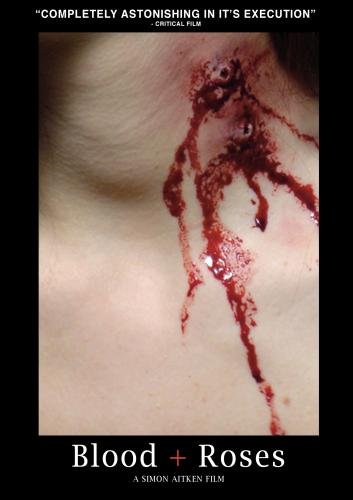
Blood + Roses: Treat Yourself To Some Grown-up Horror!

The big news this weekend for music fans is the sudden appearance of the new Radiohead album, The King Of Limbs, which I’m happily downloading as I write. But if you like horror, then there’s another reason to celebrate.
Simon Aitken’s smart, grown-up vampire film Blood + Roses is finally, finally available to buy from Amazon. OK, yes, I have a deep connection to the film. I have a big fat colourist credit, and edited the behind the scenes documentary Love Like Blood. But I believe in the film. I think it’s a clever update on the mythology and iconography of the vampire trope. It’s well written, and has a sterling brace of leading performances from Benjamin Green and TV’s own Marysia Kay (she’s on Take Me Out tonight on ITV1). Those in the know are already calling Blood + Roses “Twilight For Grown-ups”. I’m really pleased that you all have the chance to enjoy a film that I’ve been banging on about for the last couple of years. Do yourself a favour, and snag a copy of Blood + Roses, Readership. You know it makes sense.

I Run To Death, And Death Meets Me As Fast: X&HT Watched The Seventh Victim

NewImage

The crossing where the dark roads of horror and film noir meet is a place of fertile earth, where nightmares are easily grown. The ground, after all, is fertilised with a hefty dose of bone and blood. There are a ton of great films out there that take typically noir traits, and give them a shivery twist. Think of classics like Alan Parker’s Angel Heart, Jonathan Demme’s The Silence Of The Lambs. David Fincher’s Se7en. Kolchak The Night Stalker. Hell, half the X-Files was horror noir. Think of a film where a hard-boiled tec takes on a case, only to find that he’s hunting down something with a little more of the night in it than he anticipated.

Back in the heydays of noir, the 1940’s, this crosspoint was wide and broad. Noir has always been black and white in both visual and moral terms, and like horror, is not overly concerned that good should always triumph over evil. Both genres cast a bleakly jaundiced eye over human relationships, and easily find and stress-test the weak points.

The 1943 film The Seventh Victim saw producer Val Lewton take the psychological horror that he had pioneered in the classic Cat People, and add a noirish feel. Deep shadows and slashes of light were already visual cues for hard-boiled film, and this was a look in which Lewton’s long-time cinematographer Nicolas Musuraka revelled. On The Seventh Victim, he and director Mark Robson went a step further, soaking every frame in pools of darkness.

The Seventh Victim begins as the sheltered world of our heroine, Mary, is quickly stripped away. She attends a boarding school, the fees paid by her only relative, her sister Jacqueline. Jacqueline has disappeared, and the funds have dried up. Offered the choice to stay in the school as unpaid help, Mary instead opts to travel to New York to find her sister.

Once in the Big Apple, the mystery only deepens. Jacqueline has given away the family business, and got into some very bad company. Mary is quickly snared in a web of lies and deceit, and the hunt for Jacqueline will lead her to question the motives of everyone who pledges to help her.

The Seventh Victim casts an eerie, uncomfortable spell right from the first frames. Mary is urged to leave the boarding school and not return by the headmistress’ assistant, who tells her that “you must have courage to really live in the world” – a creepy foreshadowing of future events. Jacqueline is described as a rare beauty by everyone she meets, a light in the dark city – and yet she is obsessed with death, and rents a room above the Dante Restaurant (a powerfully appropriate name) containing nothing but a noose and a chair.

The film contains sequences that are the match of The Cat People in terms of shadowy shocks. Mary and a private detective who has taken her case search the cosmetics factory that used to belong to Jacqueline, at night. The one room they haven’t entered is barred by a black rectangle of shadow at the end of a dark corridor. Both Mary and the detective recoil at the sight of it. They are right to do so. There is death in that room for one of them.

The final fifteen minutes, in which Jacqueline wanders the streets after being cursed by the Satanists who have swallowed her life and shattered her sanity, are as powerful as any horror of the era. Vulnerable and alone, Jacqueline is threatened by shadows that turn out to be harmless, only to have new real, threats loom out of the darkness. Trapped by her own crumbling will, Jacqueline’s escape route is clear to us all, yet still a punch in the gut when it happens. Mary starts to hope for the future, unaware that her sister has already closed the door firmly on it. It’s an astonishingly bleak ending.

Noir doesn’t often get this creepy, horror doesn’t often have this atmosphere. Fans of both genres should find much to admire in The Seventh Victim, even if it’s a little too cold-hearted to love.

Leading Man Clive put me up to this, but then he knows my proclivities better than most. It proudly appears under the banner of the annual Film Noir Preservation Blogathon, raising funds to get classic and wrongly forgotten movies back into shape so they can thrill and chill a brand new audience. Readership, I urge you to support this worthy cause, which as I’m sure you can imagine is pretty near to my heart.

You can donate using Paypal by simply clicking on the lovely lady under the lamp-post below. Be gentle though. She may look like a kitten, but this cat has claws.

“You must pay for everything in this world”: X&HT Watched True Grit

For most, the defining image associated with True Grit is of Rooster Cogburn, grizzled, one-eyed, overweight U.S. Marshal, riding down on his nemesis Lucky Ned Pepper and his gang, a blazing six-gun in either hand. The Coen Brothers don’t argue with this view, and ensure that Jeff Bridges gets his moment to grip horse traces in his teeth in their lush new version of the tale. I shall not add a contrary voice to the consensus.

I am glad to see though that the focus on this re-telling is firmly on the girl who tells the story. Little Mattie Ross, only fourteen and yet taking on the world and all its hard lessons in her pursuit of the man who murdered her father. The hunt, it is clear from the beginning, is her way of grieving, and it would be tantamount to betrayal to abandon the chase, no matter what obstacles lie in her way. The world does not care about justice, it seems, but she does. Mattie will never tell a lie, never break a promise, never walk away from a contract.

Though small enough to be knocked off her feet by the recoil every time she fires a gun, she will sleep in a funeral parlour full of corpses and fearlessly negotiate with a hard-bitten stockman to ensure she has the funds to continue her quest.  Set against her, everyone else seems compromised, foolish, crippled by their misdeeds and mistakes. Her prey, Tom Cheney, is a weak, venal halfwit. Laboeuf, the Texas Ranger who falls in and out of her company is a strutting loudmouth, incapable of silence even after he near bites off his tongue. Cogburn, well, Rooster is as mean as a long winter’s night and about as ugly. He’s a drunk, a brute and a killer, who’d be dead at the end of a rope years ago if not for the star that he wears. It’s no accident that everyone but Mattie is a grotesque, with mouthfuls of appalling teeth, scars and extraordinary facial hair. As Cogburn, Jeff Bridges manoeuvres his bulk around like a bear after a stroke, quick and graceful only in combat.

Mattie is no angel. She’s stubborn as two mules, inflexible as a new leather crop. She will shed tears for no man, although shed tears she does, in a truly heartbreaking moment. The world is a simple place in her eyes, a realm where there is no excuse for the wicked to remain unpunished, for the death of an honest man to go unavenged. Mattie is biblical in her wrath, relentless and unbreakable. She seeks a man with true grit to help her bring Tom Cheney down, but in the end it is clear that she has more grit than anyone.

Hailee Steinfeld provides us with a clear, unalloyed view of Mattie Ross. In tight braids, an over-sized hat, breeches and boots, she cuts an unyielding silhouette. She is clear-eyed, tough but with an underlying sweetness. It would be easy to turn Mattie into a vengeful automaton, but that is never the case here. She takes joy in tales told round the campfire, and in the company of her beloved pony Little Blackie. She learns some awful lessons out on Indian territory, but they never dispel her faith that justice will be done, and that the men she rides with will prove as equal to the task as she.

The re-telling of True Grit is a job that has been done with care and skill. Under the lenses of Roger Deakins, the New Mexico landscapes are harsh and clean. The Brothers Coen have provided a lean script, the dialogue florid yet spare, capturing the conversations of Mattie, Rooster and LaBoeuf with a delight in the eccentricities and formalities of the period. There is violence, and when it appears it is sharp and brutal. But that isn’t the point to the tale, and it’s well over halfway through the film before a gun is fired in anger. True Grit is a story about how when it comes to seeking justice, innocence is frequently the greatest weapon you can wield.

An excellent comic adaptation of the moment when Rooster and Mattie first crossed paths is available on the True Grit site for your perusal here. Fill your hands.

Don’t Get Me Started: X&HT Didn’t Watch Never Let Me Go

NewImage

This is not a review. This will not be fair, or balanced, or even particularly well informed. It will be full of spoilers. I’m not here to measure the virtues against the flaws.

I’m here to talk about the idea behind Never Let Me Go, why it patently, clearly doesn’t work and how dressing up a core SF trope in literary clothes is a dirty trick.

The story, as brought to us by the chronicler of the English mind Kazuo Ishiguro, is set in an England where cloning for body parts is legal and accepted. Of course, we’re not told that all at once. Instead, we’re introduced to the student body of Hailsham, a secluded boarding school. They are your usual bunch of artsy upper-middle class wet sponges, who flop about making doe eyes at each other, without the faintest idea in their heads that something is remiss here even when teachers keep bursting into tears and rushing out of the classrooms. They are educated, sent out into sheltered accommodation, and when the time is right, harvested. All of which they accept with a stoic, bovine acquiescence. There’s no sense that they can escape their fate, that they can find a life outside their defined role.

The idea of a society that would openly sanction or even allow organ harvesting is intriguing, and leads me to wonder what that world would look like. It would be a very different place.. The very idea that we would tolerate bags of spare parts that looked like Keira Knightley wandering the streets is one that takes a bit of a stretch. We’re squeamish at the best of times. We allow factory farming because it is convenient, cheap, and above all out of sight. The butcher’s counters at Tesco tend not to have attached abattoirs. Let’s face it, if scientists came up with a talking cow, the numbers of vegetarians would spike overnight

At the end of the story, Hailsham is revealed to be a failed experiment – an attempt to show that clones have souls. It’s never made clear why the school was closed. Was it that, like Philip K. Dick’s replicants, the Hailsham kids don’t show emotions, but rough approximations, fakes, large-scale autonomic reflexes that just happen to look like fear or love? Or, more likely, that the clones are indeed human, and that we don’t care? That if the program were to be shut down then the crisis that forced us into the position of creating the clones in the first place could reoccur, putting society back to square one? All of these questions are never addressed, which is a shame, because the society in which Hailsham exists deserves a second look. Never Let Me Go seems to depict us reverted to a slaver’s past, a time when we could quite easily look on certain creeds and colours as resources, as tools. But we never see this world beyond the narrow focus of the Hailsham kids, and they’re all too drippy to give a toss about.

None of this is new, of course. The nature of humanity is a core concept in SF. One of the formative books of the genre, Mary Shelley’s Frankenstein, deals with that very issue. Philip K. Dick’s Do Androids Dream Of Electric Sheep brings us Roy Batty, rebelling against his nature and destiny to find his humanity despite the cruellest of barriers – a shortened life span. The Clonus Horror, a 1979 SF movie takes the whole idea of clones and organ harvesting and gives it a pulpy spin. Michael Bay’s 2005 clunker The Island takes the same tack, mirroring the Clonus story so closely that it led to a lawsuit and an out-of-court settlement. Both films pitch the clone factory as a conspiracy that, once revealed, brings the whole edifice down. Never Let Me Go doesn’t bother with that kind of closure. The characters simply shrug and carry on, plodding onto the killing floor with uncomplaining docility.

The primary disconnect for me comes from the idea that the clones need to have feelings and emotions in the first place. Surely if we have the technology to create something like that, it would be far more cost effective to make them obviously non-human. It’s just the organs we want, after all. Build something with a rudimentary brainstem, or the capacity for self-awareness of your average squirrel, make it mobile enough that it can feed and water itself without the ability to run away, and there you go, job done. If you can sort out a resealable zipper so you can pop out the organs you need, so be it. A farm animal, effectively.

Or, if we absolutely positively have to have intelligent, self-aware bipeds, we could quite easily condition them to embrace their position in life, so that they see their eventual sacrifice as a good thing. I’m thinking the way the lower classes in Huxley’s Brave New World are so happy with their lot that the idea of rising above their station fills them with nausea. I’m thinking the Ameglian Major Cow from The Hitch-Hiker’s Guide To The Galaxy, so happy with it’s fate that it cheerfully points out the best cuts to potential diners. The one problem I always had with Duncan Jones’ masterful Moon was that Sam had to have memories of his “past life”. Why would he not simply be conditioned to be happy where he was, even to the point of tidying himself away at the end of his “shift?”

I can deal with Never Let Me Go, just, barely, if I look on it as a kind of satire both on factory farming and a very British kind of stoic resignation to one’s fate. Otherwise, it’s simply too ridiculous a concept to take seriously. The idea hangs together if you treat it as a life-extending plot committed by the rich and powerful that will be busted and brought down by our clone heroes. But Ishiguru ties a Swiftian-style Modest Proposal to a very English love triangle, and it’s simply too unwieldy a prospect to float. The fact that it’s been sold to the public as a love story from the writer of The Remains Of The Day is dangerously close to misrepresentation. It’s a bleak account of a particularly nasty kind of dystopia that doesn’t even have the guts to give the audience a dose of closure.

Needless to say, I won’t be seeing this one. I think a rewatch of The Island might be in order. There’s a film that knows it’s stupid.

One Shot: X&HT Watched The Fighter

Boxing movies, like most dance films, like most music films, are rags to riches tales. They tend to be “true stories” – as much as any Hollywood biopic can have any claim to veracity. They will be set in dirt-poor urban neighbourhoods, where everyone gathers outside stoops and porches when they’re not in the local bar starting fights and getting in trouble with the waitresses.

They will focus on the last shot at stardom, the fight or talent contest or rap battle that our hero or heroine absolutely cannot lose. Most importantly, they talk about how the family is the key to success, while at the same time pointing out what a bunch of monsters the family of the main character is.

The Fighter succeeds by taking all these elements and cranking them up to distortion point. It’s the tale of Micky Ward, a stepping-stone boxer used by better prospects to get up the ladder to the lucrative title bouts. Played by Mark Wahlberg as a doughy, sad-eyed lump of protein, Micky is a no-hoper, a never-gonna.

He’s crippled, not by lack of talent or fighting spirit, but by his family. Ma Ward is a manipulative harridan, seeing insult and disrespect in every stray comment. His sisters are a bunch of lemon-sucking, frizz-haired monstrosities. A Greek chorus of harpies. His brother Dicky, mentor, trainer, that guy that knocked down Sugar Ray Leonard that one time, is a manic, eye-bugging crack addict. Any one of these would be enough to send a normal person off down the street screaming. All three in one house give you a fairly close idea of the inside of a lower circle of hell.

In these kind of films, the main character always needs a love interest to help find the confidence and belief in themselves that will give them the chance to escape the traps that their live have become and live their dreams. Frequently they’re from the other side of the tracks, and it’s no different here.

Things are so low-rent in this world that Charlene, played with perky toughness by the delightful Amy Adams, stands out by having gone to college. She’s a dropout, but by sporting an education she’s some sort of interloper to the Wards, who view any outside influence with the kind of swivel-eyed suspicion that really deserves to be backed by a banjo and a hooting jug. She’s a threat to the family unit, and they make their displeasure clear.

Later in the film the ladies Ward will start a seven-to-one street catfight with the lovely Ms. Adams, as she is not only no better than she oughta be, but also indulges in lesbian threesomes, according to reliable scuttlebutt. Sadly, these speculated threesomes are never pictured, which I’m guessing means they didn’t happen. A boy can dream, I suppose.

So, there’s the inevitable schism. Dicky goes to jail, which gives Micky the excuse to break away from the Wards, and what a surprise, start winning fights. There are montages. Lots of montages. Training montages. Fight montages. Dicky in jail getting clean montages. Which is fair enough, and very much on model. Rags-to-riches tales need montages, because the process of going from rags to riches inevitably takes years and we are an impatient bunch that need to see progress fast. The dancer will slip and trip, but in a couple of lap dissolves we’ll see her pirouette across the studio floor. The rapper will frown over a blank sheet of paper, but we’ll soon see it fill with rhymes.

Dickie reappears with new teeth but the same old attitude, expecting to pick up where he left off, leading to yet more schisms and fights. Lockers get punched. I feel sorry for lockers in these kind of films. They come under all kinds of abuse.

Finally, Mickey decides that even those his family are a bunch of raving nutballs, he needs them. Or at least, the insight that Dickie has on his fighting. This again is textbook stuff, a reunion leading to the final triumph of the protagonist. Does he triumph? Well, this is the story of a fighter that won the WBU crown in 2000. There should be no surprises here.

And that’s the point, Readership. The Fighter is a film about the fight, not the victory. The important thing is not the conquest, but the battle to get there. Rags-to-riches tales make this point clearly. They end at the moment of triumph, dissolving away to a final series of cards telling us what happened next. But it’s not important. It’s all done by the time the boxer raises his hands into the flashbulbs of the cameras, or the moment that the dancer or the singer takes her bow in the blast of the spotlight. After that, we know the story. We can take over now.

One last thing. Cleverly, director David O. Russell runs footage of the real Micky and Dicky over the end credits. There’s been a lot of honking in the review columns about how broadly Christian Bale plays the manic Micky. Accusations of over-acting, of method gone mad, have been levelled at him. Watching the footage of the real Pride Of Lowell, you quickly realise that Bale calmed down his performance. The real Micky, a motormouth attention vampire, would drive you nuts in five minutes flat.

A Tangled Web, or some random thoughts on animation

I noted yesterday that Tangled is likely to be the last of the “Disney Princess” films. This still seems like a bit of an odd decision, considering how popular the girls are as a brand. They have their own clothing, doll and even comic ranges, and new direct-to-disc movies seem to roll out on a regular basis. It’s funny to see how Tinkerbell seems to have been folded into the gang. She’s an uncomfortable fit. A bit too feisty for the rest of the girls. It’s apparently to do with appealing to boys. Note that Disney didn’t say anything about quitting the fairy-tale genre. That Jack fella’s got some stories to tell.

When pictured together, the Princesses have a disturbing similarity. As their images are tweaked and refined, they are slowly nudged into templates that look very familiar. The eyes get bigger, the mouth smaller, the head shape more overtly heart-shaped. Granted, Mulan and Jasmine don’t quite fit the mould, but it’s starting to become difficult to tell Cinderella apart from Sleeping Beauty, Belle from Ariel*.

NewImage.jpg

Rapunzel’s the most extreme version thus far of the look. It’s a very anime approach. Her eyes take up half her head and her mouth almost disappears to compensate. There’s a lot of the japanimation heroine in Rapunzel. Her hair becomes prop, weapon and maguffin. Anime is full of characters with ridiculously long hair, that seems to have a life of its own (and also seems to randomly change length based on what the character is up to at the time).

NewImage.jpg

The thing is, of course, that the influence goes both ways. The father of modern manga, Osamu Tezuka, was famously influenced by early Disney, with characters like Astro Boy given the big eyes and childish features that he found so appealing in Mickey Mouse and his friends. We could say that by making Rapunzel look so anime, the designers are simply acknowledging, however subconsciously, the history and influences that have placed The House Of Mouse at the heart of world animation.

We can look to Europe too. It fascinates me how we are happy to have cartoony characters as long as the backgrounds and settings are rendered realistically. Tangled again is a prime example of this idea, with gorgeously rendered scenery playing up against massively stylised heroes and villains. It’s an example of the style that French bande desinee artists have made their own. Think of Tintin, with all those beautiful, exquisitely researched landscapes backing our blank-eyed hero. Or Asterix, if you want to go more cartoony. There’s nothing to say that Disney was at all influenced by the French school, but the comparisons are there to be had.

NewImage.jpg

The Europeans are also big on their anthropomorphic animals. The biggest selling comic album in France right now is Blacksad, a noirish detective tale. The main character just happens to be a panther, with a snappy line in suits. Again, Disney made their name with animals that wear clothes, walk on two legs and talk. Which came first – the mouse or the marsupilami? It’s a knotted mess of influence and cross-fertilisation. And it’s not helped by the fact that, contrary to common practice in modern animation, the two animal sidekicks in Tangled don’t talk. They react in human ways, but in dumbshow. Even more messily, the horse Maximus is presented as half cop, half jock and half dog. He chases down Flynn by smell, and reacts very favourably to Rapunzel scratching him behind the ears. It’s yet another knot in the net.

NewImage.jpg

It’s worth sticking around to watch the end credits, which are illustrated with character designs (by the brilliant Shiyoon Kim) in a lovely, scratchy inky style that has more than a nodding relationship to the work of one of my favourites, St. Trinian’s creator Ronald Searle. I’ve always seen nods to Searle’s style in some of my favourite Disney’s, and the linework in the Tangled end credits hearkens back to some of those classic mid-60s films. 101 Dalmations and The Aristocats are prime examples of this looser, freer form. It’s great to see this little tribute to past triumphs, and I was quietly amused to see how much more busty Rapunzel is in these early sketches. I didn’t think Disney did cleavage.

Dammit, this film has got me thinking about cartooning again in a big way. In a kind of unfocussed, scattershot manner, for which I apologise (how else could it be when talking around a film with a title like that?). But the fun in watching a film as rich this rich reference and tribute comes from seeing the images spark and fire off connections, however randomly. Tangled provides a dense web in which it’s a pleasure to get tied up.


*yes, alright, apart from the tail…

A Very Good Hair Day: X&HT Watched “Tangled”

Tangled is something of a landmark for Disney. It’s their fiftieth animated movie. It’s also, according to reports, most likely to be their last “princess” film. I’m still not sure if that’s a shame or not. Mind you, I’m not sure how many other princesses of legend are left to chronicle.

The film also marks a return to the core values and tropes that make your classic Disney films so satisfying. By going back to its roots, the House Of Mouse has made their most successful movie since 2007’s Enchanted; a film which took delight in extracting the Mickey out of the story beats that Tangled embraces and celebrates.

We all know the tale. A girl, imprisoned in a tower by an evil witch, whose only means of entry is by means of her long golden hair, is rescued by a handsome prince. It ties into the myth of the lost princess, one of the main building blocks of yer average fairy tale. Sleeping Beauty. Beauty And The Beast. Cinderella, stuck in near-slavery. Snow White, in exile with a bunch of vertically-challenged miners. It’s a base to build a story on, a solid foundation of myth and legend.

Tangled’s screenwriter, Dan Fogelman (sweetly, IMDB also lists Jacob and Wilhelm Grimm as co-writers) takes that core idea and answers the simple question that everyone asks. What happens if Rapunzel lets down her golden hair and breaks herself out of her prison, rather than waiting for a prince? By making her story a quest, a love story, a rite of passage and a return home, Fogelman does a great job of not just answering the question, but telling a story that bears retelling at bedtime. More importantly, by giving Rapunzel’s ‘do a point and a purpose, the story has an impetus, becoming the engine that drives the tale on.

It’s traditional enough, sure. There’s a happy ending (ok, fine SPOILER ALERT, Disney film has happy ending. In other news, water is wet, the sky is blue, yo’ mama wears an afro with a chinstrap) and cute animal sidekicks. It’s all set in that pleasingly ill-defined land of mittel-European castles, forests and jolly, clean, well-fed peasants that we may as well call HistoryLand. But there are subtle trims to the formula. The animals are unvoiced, letting the character animation do all the talking. Maximus the horse is bold and brave. Pascal the chameleon is loyal and sassy. We get it, and we don’t need a comedy voice to put a wig on it and make it do a shuck and jive. There’s plenty of slapstick and broad humour, but the jokes work on the grown-ups in the audience too. The main characters aren’t limp and lifeless. They’re sharply drawn and inhabit the screen with flair and verve.

And I mean sharply-drawn in all senses of the word. The animation is, as you’d expect, stunning. But it’s not just the vistas, set pieces and special effects that make it special (although yeah, the lantern sequence, something in my eye, I’ll be fine). The character animation is beautifully nuanced. Every little flit of emotion on Rapunzel and Flynn’s faces is exquisitely done. This isn’t performance capture or any of the other cheats in which Zemekis, Cameron and Jackson have decided to base their careers. This is proper, honest to goodness cartooning, showing the magic that happens when talented animators use the best tools the 21st century can offer.

It’s bolstered with great voice work too. Thank goodness, for Tangled the directors plumped for actors with Broadway experience, who know how to project a line and make it sing. I’m so sick of animated films with all-star casts that don’t understand how to act for cartoons. You have to be larger than life. Instead, you so often get a flat, cold delivery that’s not so much “will this do?” as “screw you, pay me.” Mandy Moore, Zachary Levi and the amazing Donna Murphy get it so right that I’m astonished there isn’t a Best Voice category at the Oscars. They bring the gold, the final grace notes of wit and charm, menace and wickedness that make the characters shine. You get to believe in, and root for them.

By bringing back Alan Menken, the talent behind most of the Disney songs you know since The Little Mermaid, Tangled gets another boost. I’d gone off songs in Disney films, (and towards the end of Menken’s run they were kind of jammed on and lacquered into place) but here they do the perfect job – commenting on the inner life of Rapunzel, the relationship between her and Mother Gothel and in the riotous Snuggy Duckling sequence, showing that even hardened brigands and ruffians have dreams. They’re neatly done, don’t overstay their welcome, and move the story forward in graceful ways to which the writers of Glee should be paying note.

The fiftieth Disney animated film shows how far the studio has come since Snow White, and how much they’ve learned. It’s a company that has always been prepared to take risks with their movies, and to learn from them. After the major mis-step of Home On The Range (Don’t. Seriously. Just … don’t.) Disney retrenched, learning with the brilliant Enchanted how to laugh at themselves, and with The Princess And The Frog that it’s the story rather than the CGI that makes the film. Under the watchful eye of Pixar’s John Lasseter I feel quietly hopeful that rather than marking the end of an era, Tangled takes the best of the past and zshuzzes it up into something new and fresh.

Maybe I’m overthinking it. Tangled is one of those films that works as entertainment and history lesson, but ultimately, it’s a fun, smart and extremely pretty family movie. You can just let your hair down and enjoy it.