Don’t Get Me Started: X&HT Didn’t Watch Never Let Me Go

NewImage

This is not a review. This will not be fair, or balanced, or even particularly well informed. It will be full of spoilers. I’m not here to measure the virtues against the flaws.

I’m here to talk about the idea behind Never Let Me Go, why it patently, clearly doesn’t work and how dressing up a core SF trope in literary clothes is a dirty trick.

The story, as brought to us by the chronicler of the English mind Kazuo Ishiguro, is set in an England where cloning for body parts is legal and accepted. Of course, we’re not told that all at once. Instead, we’re introduced to the student body of Hailsham, a secluded boarding school. They are your usual bunch of artsy upper-middle class wet sponges, who flop about making doe eyes at each other, without the faintest idea in their heads that something is remiss here even when teachers keep bursting into tears and rushing out of the classrooms. They are educated, sent out into sheltered accommodation, and when the time is right, harvested. All of which they accept with a stoic, bovine acquiescence. There’s no sense that they can escape their fate, that they can find a life outside their defined role.

The idea of a society that would openly sanction or even allow organ harvesting is intriguing, and leads me to wonder what that world would look like. It would be a very different place.. The very idea that we would tolerate bags of spare parts that looked like Keira Knightley wandering the streets is one that takes a bit of a stretch. We’re squeamish at the best of times. We allow factory farming because it is convenient, cheap, and above all out of sight. The butcher’s counters at Tesco tend not to have attached abattoirs. Let’s face it, if scientists came up with a talking cow, the numbers of vegetarians would spike overnight

At the end of the story, Hailsham is revealed to be a failed experiment – an attempt to show that clones have souls. It’s never made clear why the school was closed. Was it that, like Philip K. Dick’s replicants, the Hailsham kids don’t show emotions, but rough approximations, fakes, large-scale autonomic reflexes that just happen to look like fear or love? Or, more likely, that the clones are indeed human, and that we don’t care? That if the program were to be shut down then the crisis that forced us into the position of creating the clones in the first place could reoccur, putting society back to square one? All of these questions are never addressed, which is a shame, because the society in which Hailsham exists deserves a second look. Never Let Me Go seems to depict us reverted to a slaver’s past, a time when we could quite easily look on certain creeds and colours as resources, as tools. But we never see this world beyond the narrow focus of the Hailsham kids, and they’re all too drippy to give a toss about.

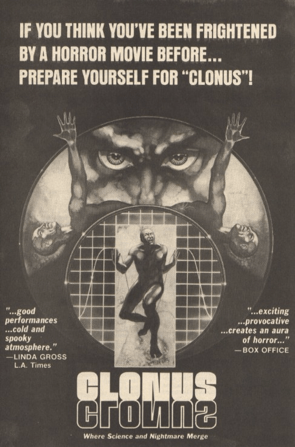
None of this is new, of course. The nature of humanity is a core concept in SF. One of the formative books of the genre, Mary Shelley’s Frankenstein, deals with that very issue. Philip K. Dick’s Do Androids Dream Of Electric Sheep brings us Roy Batty, rebelling against his nature and destiny to find his humanity despite the cruellest of barriers – a shortened life span. The Clonus Horror, a 1979 SF movie takes the whole idea of clones and organ harvesting and gives it a pulpy spin. Michael Bay’s 2005 clunker The Island takes the same tack, mirroring the Clonus story so closely that it led to a lawsuit and an out-of-court settlement. Both films pitch the clone factory as a conspiracy that, once revealed, brings the whole edifice down. Never Let Me Go doesn’t bother with that kind of closure. The characters simply shrug and carry on, plodding onto the killing floor with uncomplaining docility.

The primary disconnect for me comes from the idea that the clones need to have feelings and emotions in the first place. Surely if we have the technology to create something like that, it would be far more cost effective to make them obviously non-human. It’s just the organs we want, after all. Build something with a rudimentary brainstem, or the capacity for self-awareness of your average squirrel, make it mobile enough that it can feed and water itself without the ability to run away, and there you go, job done. If you can sort out a resealable zipper so you can pop out the organs you need, so be it. A farm animal, effectively.

Or, if we absolutely positively have to have intelligent, self-aware bipeds, we could quite easily condition them to embrace their position in life, so that they see their eventual sacrifice as a good thing. I’m thinking the way the lower classes in Huxley’s Brave New World are so happy with their lot that the idea of rising above their station fills them with nausea. I’m thinking the Ameglian Major Cow from The Hitch-Hiker’s Guide To The Galaxy, so happy with it’s fate that it cheerfully points out the best cuts to potential diners. The one problem I always had with Duncan Jones’ masterful Moon was that Sam had to have memories of his “past life”. Why would he not simply be conditioned to be happy where he was, even to the point of tidying himself away at the end of his “shift?”

I can deal with Never Let Me Go, just, barely, if I look on it as a kind of satire both on factory farming and a very British kind of stoic resignation to one’s fate. Otherwise, it’s simply too ridiculous a concept to take seriously. The idea hangs together if you treat it as a life-extending plot committed by the rich and powerful that will be busted and brought down by our clone heroes. But Ishiguru ties a Swiftian-style Modest Proposal to a very English love triangle, and it’s simply too unwieldy a prospect to float. The fact that it’s been sold to the public as a love story from the writer of The Remains Of The Day is dangerously close to misrepresentation. It’s a bleak account of a particularly nasty kind of dystopia that doesn’t even have the guts to give the audience a dose of closure.

Needless to say, I won’t be seeing this one. I think a rewatch of The Island might be in order. There’s a film that knows it’s stupid.

Interesting Times For Tax Dodgers

NewImage.jpg

The end of January is tax return time, and businesses up and down the country are working hard to make sure their numbers get in on time. For those businesses and individuals that choose to find morally dubious methods to avoid paying those taxes, the end of the month is going to be more interesting than usual.

UKUncut’s Big Society Revenue And Customs have called for the day before the deadline, this coming Sunday, to be the moment for their biggest high street action yet. As well as the usual targets, new dodgers have come to light and are in the frame. This time around, Boots, whose move to Switzerland in 2008 lost the UK around £100m in tax profits per year, will see the sort of action that has already shut down Top Shop and Vodafone stores across the country. Week on week, more friendly UK high street names are being shown up to be sharp practitioners, using armies of lawyers to exploit legal loopholes that are costing us billions of pounds in lost revenue every year.

Kraft, who recently bought Cadbury’s, have shown the direction of their moral compass by moving part of their business to …guess where? Switzerland, depriving the Exchequer of an estimated £60million a year. Even Tesco do it. A company that turns over profits of 3.4billion will go through extreme contortions in the courtroom to avoid land tax and stamp duty. And yes, they also have a presence in Switzerland.

The fact that these numbers are out there, can be easily shared and discussed, and allow us to ask questions that Boots and Philip Green would really rather prefer we didn’t, is a direct result of action and data-sharing from organisations like UKUncut and bloggers like the excellent Richard Murphy. Better yet, by motivating ordinary people up and down the country to make it plain that we don’t approve of the shenanigans of big business (and let’s never forget, financial shenanigans from large corporate structures that considered themselves to be above the law are what got us into the current mess in the first place), the regulators are now taking an interest. The National Audit Office will be looking into how deals were struck with HMRC by Vodafone and others. It’s also going to assess how HMRC can do it’s job properly as hundreds of tax inspectors are laid off following the latest round of public sector layoffs. This is brilliant news, and a real sign that direct action has genuine and palpable results.

I can’t wait to see what the documents WikiLeaks are releasing from Swiss banking whistleblower Rudolf Elmer have to say. I think those corporations and super-rich individuals who think they can shirk their obligations are in for a very interesting few months.


Tron and The Conspiracy Of Surfaces

This post contains discussion of the plot
and characteristaion of Tron: Legacy.

Consider this to be your Spoiler
Warning.


I’m prepared to be an apologist for Tron: Legacy. I am, after all, the
perfect example of the film’s target audience. I clearly remember
going to see the film as an impressionable 15-year-old, and going
to an arcade afterwards that ACTUALLY HAD THE TRON GAME. I was a
late convert to the unsetting pleasures of girls. I drooled over
lightcycles instead.

So, for the most part, I had no problem with the reboot (yes, I’m going there). Tron
is perfectly tooled and cheerfully blatant nostalgia bait. The
acting is significantly better than in the original. The cast do a
sterling job of playing the absurdities of the plot and dialogue
absolutely straight. Apart from Michael Sheen’s green-screen
chewing performance as the treacherous Zeus. Ziggy meets David
Frost. Jeff Bridges somehow gets away with being The Dude again,
and Olivia Wilde plays action pixie girl Quorra with the right
level of crush-inducing flair.

The film sports a perfectly serviceable script that hits the right beats at the right
time. The characters are properly motivated and have a bit of
depth. And I like the idea of the villain of the piece being a not
very good copy of the star. CLU is the creepy new textbook
definition of the Uncanny Valley, and I applaud Digital Domain for
not getting it right.

I mean, I’m under no illusions. Tron: Legacy is rubbish. There are some supremely dumb
bits and longeurs. It’s over-long, and over-earnest. But the
original had what Leading Man Clive called “plateaus”. I, being
less charitable, consider Tron to be a film of one half that slows
to a crawl when Flynn and Tron reach the portal. Legacy is pacier,
prettier, and understands the audience. The little nods to the
earlier film and to eighties rivals such as WarGames made me
smile.

So why, then, did I walk out of the BFI IMAX with a frown and a headache?

It’s that bloody stereoscopy again.

Tron: Legacy should be the perfect film for 3D. It is a film about transparent
surfaces, of action glimpsed through slabs of glass, of characters
framed through the empty centre of discs. It It provides us with
the illusion of depth.

This is, in essence, my problem with the 3D process. It’s the “deck of cards” effect. There is no real sense of depth and solidity. Instead elements in the frame are
placed in a series of flat planes, much like a toy theatre where
paper cut-outs are slotted in and out of a proscenium arch. This
isn’t such a great idea when all you have to play with is a
close-up, and the nose is on a different plane to the
cheeks.

There are tricks to make this less apparent. Selective
focus becomes vital. Objects that we are supposed to perceive as
being further from the viewing plane are carefully defocused in
post. The problem is that this is frequently misjudged, especially
in shots where you are looking through windows, or in the case of
Tron, transparent walls. There are innumerable shots where
characters will walk towards camera and stay in focus throughout.
It’s as jarring as the split-screen effect used to keep two actors
sharp when they’re at opposite ends of a room.

3D claims to be a technique for enhancing storytelling, for involving the viewer more
deeply in the story. All it does is constantly remind you that you
are watching a 3D film. Things are shoved in your face – sort of.
Things rocket overhead – kind of. You have to wear a silly pair of
plastic shades. And then you have to pay extra for the privilege.
Tickets for the IMAX set me back £15, and got me a seat that was so
close to the screen that my eyes were watering after ten minutes.
And I can tell you, it’s disconcerting when odd eye-protein amoebas
start swimming around in the imaging plane and bumping into Jeff
Bridges. I can see a situation where you’re asked to pay extra
extra for the seats in the central sweet spot of the
range.

The sad thing is, that IMAX projection does a much better
job of allowing you to lose yourself in the image. 3D depends on
the proscenium arch effect, pushing elements backwards and forwards
from a flat imaging plane, the screen. An IMAX image is so big that
it extends past your field of vision. You are engulfed in the
picture. You are not being poked at, or peering through a window.
You are inside the picture, and it’s an utterly overwhelming
experience.

A reminiscence. There was a fairground attraction when I
was young that involved a 70mm film of a rollercoaster ride
projected onto the inside of a canvas dome. You stood in the dome,
gripping rails that had been driven into the ground. You needed
them. When the film started, the huge image fooled the brain into
thinking that you were on the ride, and you tilted and swayed
accordingly. No specs needed. You were elsewhere, and it was an
amazing ride.

Much in the same way as The Dark Knight moved between
35mm and Imax to pull the audience into the action sequences, it
would be interesting to see what would happen if, rather than 2/3D
to show the differences between our world and The Grid, Kosinsky
had chosen to shoot the Grid in IMAX. Imagine that first shot of
the Recogniser coming down through the clouds suddenly filling the
whole height of the cinema.

I think you know where I stand on 3D by now, Readership. I find it distracting, irritating and until my eyes settle it simply doesn’t work for me. I spent the first 45
minutes of Avatar thinking that there was either something wrong
with me, or that some pranker had swapped the lenses of the glasses
over (if you do this, according to Mark Kermode, the 3D is
cancelled out. Might have to try that).

I’ve given it a try, and I can now state as a New Year Resolution that I will never
see a film in 3D again. It’s a fake, a parlour trick, a conspiracy
of surfaces that makes a poor shadow play out of the most immersive
form of entertainment there is. 3D adds nothing to a film, and in
my opinion distracts from its pleasures. I was quite prepared for
Tron: Legacy to be a bit of silly fun. I walked out of the cinema
feeling both frustrated and disappointed, for reasons that had
nothing to do with the film.

IMG_1000000776.JPG


Also, I look ridiculous in the glasses.

Blu-Ray Is Dead (At Least For Me)

Christopher Nolan’s Inception is out to own this week, on good ol’ DVD and brandspanking new sexy eye-meltingly gorgeous Blu-Ray. Oh, you must buy it on Blu-Ray. Otherwise you’re missing out. The detail. The clarity. Oh, the colours. It’s almost an insult to everyone who worked on the film not to buy it in it’s purest, most perfect form.

Yes, alright, I’m taking the piss. I lived through the whole VHS-Beta thing, the whole vinyl-CD handover, so excuse me if I’m a little less than whelmed by the urgent push by the movie companies to have me rebuy films I already own. Or worse, pay a premium to watch new material, which would include an investment in new kit that I don’t need or particularly want. I have a halfway decent telly and an upscaling DVD player which delivers lovely results. We watched UP last week (yes, I know, right up on the moment here at X&HTowers) and the pictures were gorgeous.

But a lot of the supposed benefits are down to the way the end user (that’s you, Readership) has set up their telly and player. Are you going in HDMI? A lot of people still use the Scart connection, apparently. And have you calibrated your telly? If you’re now asking what calibrated means, then no, you haven’t. Which means that your lovely pricy digital telly is running with the factory presets. These won’t be right for your room, and in most cases will be waaaay too bright and saturated. Or, if you set up a TV the way my dad does, not bright and saturated enough. He doesn’t own a 3DTV. You just need sunglasses to watch the telly in Mum and Dad’s place. (sorry, pater.)

How do you calibrate a HDTV? Funny you should ask.

My major problem with Blu-Ray is that it is a transitional format. It’s high-density, high-capacity storage, and that’s all. It’s a carrier for content, and it’s the way that content is formatted in the first place that is important. A recent re-issue of Gladiator used exactly the same video files as were on an earlier, carelessly encoded DVD, with predictably horrible results. But very few people either noticed or cared, and as a result that disc is still on the shelves. You have to wonder how many reissues that people are paying a premium for have been put together the same way, with the odd “special feature” whopped on to make it seem bright, shiny and new.

The thing is that a lot of movie content sits on servers and hard drives in high definition quality and has done for quite a while. For DVD, that content has been compressed and down-converted to allow it to fit on a disc. There was a push a few years ago to “cinephile” editions (of such cinematic masterpieces as “I, Robot”) that had the highest resolution version of the movie that could be crammed onto a single disc, with extras either on a separate coaster or excised completely. Then Blu-Ray and HD-DVD appeared, and it seemed that we could have it all. Full, high-quality transfers and hours and hours of supplementary features that no one ever watches. But the fact remains that the content has not changed. It’s the same 1080p file that was originally created.

Which of course makes me look at iTunes, Netflix and the like and start to wonder why we need the disc in the first place. Up until a couple of years ago, a wall of our house was dedicated to our CD collection. In some places, the shelving was beginning to double-stack. At the same time, the books in the back room were making an attempt to break through the wall. We were swimming in content, much of which had been listened to or read once, if at all. I bought a big external hard drive, digitised the CDs, backed up that hard drive at least twice, and stored all the discs in the loft. We now have a lot more room for books we don’t read. But that process changed the relationship we have to music. It’s much less album based. We pick and choose, shuffle, build playlists. A cheap subscription to Spotify means that I rarely ever buy music anymore. I don’t need to.

It would be a more time-intensive job, but I could do exactly the same thing for the DVD collection that now takes up the wall where the CDs used to live. Dump everything onto a cheap media server and a back-up drive, and who knows, I might even start watching the discs that are shelved and still in their wrapping. Build playlists and mood reels with them. As someone in love with the on-demand services that the plusboxes offer, I love that flexibility. As with music, I’d then look at ways to buy my content in a form that doesn’t come in a box.

To my mind, the film companies are missing a trick. I’m usually a bit behind the curve on this kind of stuff. This means there are already hundreds and thousands of people who are not only thinking the same as me, but have done something about it. iTunes is a good first step, but I see no reason why the studios don’t have their own portals, or club together to create something that could do the job as well. I’d love to see something like Netflix’s streaming service in the UK. As a huge advocate of Lovefilm’s disc-on-demand service, this has to be the logical next step, doesn’t it? (I’d note that while Sky Movies and Virgin’s Front Row deliver something similar, they’re still not providing the depth of service and the ability to source esoterica that Lovefilm can. Plus, they’re both crippled by embargoes on when they can start showing movies – usually well after the coasters have hit the shops).

Yes, I know it would be a massive undertaking to get all that material onto servers that can reliably squirt it down the pipe and into your front room, but if it works, it’s a service I’d happily pay for, much in the way Spotify get money off me every month.

Certainly, I have no plans to buy a Blu-Ray player, which means I have no reason to buy coasters. Instead, if I want the absolute best quality image available, I do the right thing and go to the cinema. Project a Blu-Ray next to a 35mm print on the big screen, and you’ll soon see which one’s better. Even when, sadly, projection is done using big hard drives, the image quality of those files will still show that the disc is a massive compromise for the domestic market. Bear that in mind, and the argument that Blu-Ray is the ultimate viewing experience starts to look a bit thin.

And don’t get me started on bloody 3D…

+++UPDATE+++

Simon Aitken reminds me that while his most excellent horror Blood + Roses is currently available for rental, it will roll over to digital download and DVD purchase through Amazon in the new year. The metrics on who’s buying what should make for very interesting reading.

Low Gear

It is perhaps the BBC’s biggest money-spinner, generating millions of pounds in revenue. You can buy books, a monthly magazine, toys and games and even cakes emblazoned with the images of the hosts. It’s enormously popular, boasting a loyal and worldwide fanbase.

It’s Top Gear, and I hate it. It’s a prime example of safe Sunday programming that just plods on and on and on doing the same old stuff week after week. It’s turned into a smug, bloated cliche. It’s not even interesting enough for satirists and comedians to have a pop at it now. It just sits there, taking up a chunk of primetime scheduling, getting in the way and stinking up the joint. It’s like Last Of The Summer Wine for petrolheads. Songs of Praise for the sort of person that buys every new Clapton compilation, regardless of how many versions of the same songs they own.

Why do I hate Top Gear? Let me count the ways.

Continue reading Low Gear

Padded Out

the wonders of nature.jpg
Rampaging elephants couldn't tear me away from this article on how technology is disssociating us from the wonders of nature.

The time has finally arrived. This Friday, the 28th, the iPad will finally be on sale in the UK. I can already, with a sinking heart, report some of the things that will happen on that day.

There will be photos in all the papers of Steve Jobs holding up the iPad in his keynote at the Macworld conference back in January. You will recognise this photo, as it’s the only one the papers have been using to illustrate news about the device since its announcement.

There will be a sad and slightly droopy queue of obsessives outside the Apple Store in Regent Street, who just have to be there to pick up the iPads they preordered, rather then have the devices FedExed to their front door like a normal person.

There will be live-blogging. Dear gods, there will be live-blogging. Each and every one of these will include the phrase “The queue is starting to move. No, wait, false alarm.”

These people will be interviewed by BBC Breakfast. They will look slightly desperate, and a little crazy. They will be condescended at by an over-styled moron who has to get his eight-year-old daughter to sync his iPod. There will be an in-studio interview with an advocate like Rory Cellan-Jones, or Hugo Rifkind of the Times, who will gush like a perfumed faucet about the device. The phrase “game-changing” will be used to excess. This will be followed for balance by a spokesman from Sony, whining that it’s really just a big iPod Touch.

The queuers will be applauded by Apple staff when they finally pick up their iPads. They will feel the urge to hold their newly-purchased devices above their heads as if it’s the World Cup. They will look a little desperate, and slightly crazy.

Any coffee shops with wifi in the immediate area around Regent Street will be absolutely fucking unbearable until about 4PM, when purchasers get bored with the novelty of reading the Times or watching Star Trek on their new toys and go home to irritate their partners instead. There will be much discussion of the on-screen keyboard, and everyone will be insanely jealous of the smug git in the corner with the venti macchiato who splurged on the keyboard dock. He will merrily spend the afternoon whooping it up on Twitter instead of doing any actual writing.

Meanwhile, those of us in the know will be patiently waiting for June the 8th, and the moment at WWDC when Steve Jobs digs in his pocket.


For Your Consideration

HIGH SNARK CONTENT.gif

oscar.jpg

Oscar season is over for another year, the tents and awnings are coming down, the pretty dresses are, for the most part, going back to their designers.

What have we learnt this time around, Readership?

1. It is possible to be both Best and Worst Actress at the same time.

2. You can win a Best Cinematography Oscar even when your cameras were principally used as motion capture devices.

3. You will win an Oscar eventually, if you hang on in there for long enough. The Oscar will never be for your best work, but for the one that most accurately portrays your public image. For example, Jeff Bridges didn’t win the Oscar this year. The Dude did.

4. Oscar ❤ Pixar, unconditionally.

Every year I can depend on the Oscars being even more bloated, self-congratulatory and pointless. There were no major surprises, no astonishing turn arounds. I’m pleased Kathryn Bigelow and The Hurt Locker grabbed so many awards, but what does that prove?

5. Oscar ❤ war movies.

5a. Oscar hates SF. Avatar was there because Oscar is scared of James Cameron. District 9 was there because Oscar ❤ Peter Jackson.

The question we should be asking is why does it take until the second decade of the 21st century for a woman to win Best Direction Oscar?

Further, the illusion of choice in the Best Film shortlist drives me nuts. Expanding the list out to ten does not give us more choice. There’s still a shortlist of 5. It’s just been bloated out with a B-list that have no chance of getting the award. Oscar has been capable of some deeply eccentric choices over the years, but it was blatantly clear this year which movies were in with a shot. The football movie? Uh-uh. The harrowing race/abuse tale? I don’ sink so. The cartoon? Gimme a break. There’s already a slot for Best Pixar Movie of the year.

And then there’s the Moon debacle. The short, sharp debut of a bright new talent, featuring an astonishing, nuanced performance from one of the best actors of his generation was ignored by Oscar this year. It’s partially the fault of Sony, of course, who decided that the film was not worthy of consideration (way to back your creative teams, there, guys. Nice work.) Nonetheless, there should have been an inkling that the film was perhaps worth a look after it did so well at the Baftas. By then, it was probably too late. Another missed opportunity for Oscar to show that it had interest in a broader range of films. But no. Once again Oscar showed hisself to be old, slow and out of touch. It’s the awards show that’s just too easy a target, too bloated and dumb to actively hate. It’s just there, wheezing into view every March like a despised older relative, staying that little bit too long, before blubbering away again leaving nothing behind but a faint whiff of cabbage water and a couple of trinkets that’ll just gather dust on the sideboard.

Until a horror movie wins Best Movie, I shan’t be watching again.

A Liddle Bit Of Good News

An image search for "Rod Liddle" brings up macros with a much more robust choice of language than this...

Columnist Rod Liddle now looks unlikely to be offered the position of editor at the Independent, following a groundswell of disapproval from staff and readers. This should universally be considered A Good Thing. Liddle would be a rotten fit for the paper. His views on women and minorities are well-known, thoroughly documented and utterly reprehensible. However, because the reader response was organised through Facebook and the campaign site 38 Degrees, some opinionistas in the press have taken the opportunity to tag public disapproval of the potential appointment as mob rule.
This is disingenuous, to put it mildly. So I won’t. It’s flipping ridiculous. Mob rule is a loaded and highly evocative phrase, which leads the reader to imagine that Liddle had been dragged out of town after being tarred and feathered (pause for a moment just to savour that image…) What actually happened was somewhat less dramatic. A highly paid journalist has not been ushered into an even more highly paid job, thanks in part to the efforts of concerned readers of the paper concerned. That’s it. It’s hardly bloody Salem, is it?
I will immediately state my interest in the affair. I joined the Facebook group, and signed the 38 Degrees petition. I don’t want an unmitigated shit like Liddle running a newspaper for which I have some measure of respect and affection. It is my right to inform the potential owner of that paper of my opinion. Did I gather with hundreds of other worried readers at the doors of the Independent’s offices, flaming torch in hand? Did I help to string up a gibbet at the door to Liddle’s flat? Have I in any way affected Liddle’s future earnings or his professional reputation?
No. No, I did not. I put my name to an internet petition and fired off an email to Simon Kelner and Alexander Lebedev. That’s all I have done. The fact that I was not alone in doing this seems to be the problem, and something that opinionistas are finding increasingly difficult to cope with. The idea that people can respond in their thousands to an article or story that they find objectionable, that somehow they can be held accountable for the things they write must scare them stool-less.
The angry letter to the editor is no longer the only option. The readership of our daily papers are more and more aware of their power, and ready to exercise it. If the chattering loudmouths that clog the opinion pages don’t like it, well, la-di-tough-shit. Guess what, passive consumption is a thing of the past, and about time. It’s easy now to show our disapproval of the badly-thought out, quickly dashed-off, lazily executed rubbish that passes as opinion in every paper on the news-stand.
In the face of public disapproval, all they can do, it seems, is call us either the thoughtless automatons of a liberal elite orchestrating our every move on Twitter (the Indie campaign was started by a reader, by the way, not a celebrity) or at worst a howling mob. Neither portrayal is likely to endear us to the writers that spawn this bollocks.
Liddle, as a columnist for the Times and The New Statesman, is just the latest and most obnoxious example of the problem. It’s interesting to note that as the campaign has unfolded, his complaints about social networking have become more hysterical. While trying not to paint himself as a victim, he has resorted to using ever more tenuous links to other, unrelated or outdated news stories to have a pop. It would be funny if it wasn’t so… oh, who am I kidding? It’s HILARIOUS.
To sum up, then. It would seem that public opinion becomes mob rule only when it isn’t working in your favour. And we are watching, opinionistas. Watching, and ready to call you out on your bullshit.

Buying In The Name Of

Rage Against The Machine is the UK’s Christmas No. 1. That still feels like such a strange phrase to write. It outsold the record that most industry voices had assumed would be a shoo-in, Joe McElderry’s “The Climb”, by a cool 50,000 copies. This is A Very Good Thing, for a number of reasons.
Of course, there is the argument that both records are effectively making money for the same company, Sony. This misses the point. The X-Franchise has lost the war of hearts and minds pretty severely this year, and that is going to hurt the brand badly. The realisation that there is a large enough percentage of the population out there that are not just indifferent or unwilling to spend money on supporting the X-Franchise, but despise it actively enough to independently source another track, successfully campaign for it and buy it in sufficient numbers to make it the popular choice must be horrible for Cowell and crew.

This year has seen a bit of a sea change in the way music is offered and distributed to the public, and Rage’s victory shows that clearly. It was not available to buy in the shops, and had not been re-released by Sony. It was a song that went to number one because people wanted it there, and the fact that it has made it the top slot today could send marketing departments in record companies worldwide into a panicked spin. What do you do if your carefully concieved, hideously expensive campaign to push the next big thing to the top of the charts gets shoved aside because some scrote with a Facebook camplaign decides it’s time Mr. Blobby made a comeback?

This is the harbinger for absolutely massive change in the delivery of music, as it proves without a doubt that crowd-sourced PR works. It’s to Rage’s credit that they saw the groundswell and ran with it, zipping to London to record a live session on Radio FiveLive (“now, let me get this straight. You’re telling me that you don’t want me to sing the line “Fuck you, I won’t do what you tell me to. That’s what you’re telling me. Just so I’m clear.”) that will go down as a classic comedy swear moment in radio history. They have announced that the profits from the single will go to Shelter. There’s a seperate campaign running that has already raised over half a million quid for the charity. I’ve dropped a fiver to that one. Seemed only fair. The download of the single cost me 29p from Amazon.

Rage have shown themselves to be connected with their audience, filled with humour, charity, compassion and fun. The X-Factor camp, on the other hand, have come across as curmudgeounly, whiny and increasingly self-centred. It seems to be all about little Joe’s dream of getting to number one, and anyone that buys the Rage single is stomping on that dream.

Aces. I bet people started buying “Dying In The Name Of” twice when they heard that tripe.

But the one sign that has cheered me most this Christmas is contained in the choice of song that the X-Franchise chose to launch little Joe’s career. Choosing a ballad for the grannies to swoon over is a decision that has stood Cowell and his band in good stead for several years, but it’s backfired pretty impressively in 2009. Let’s not forget, this campaigning idea began last year when Jon and Tracy Morter put Rick Astley’s Never Gonna Give You Up against Alexandra Burke’s Hallelujah. Then, the campaign was too fragmented, with a lot of punters choosing to buy the Leonard Cohen or Jeff Buckley versions of the song instead. But the point was that the song won. Hallelujah is an excellent choice for a Christmas No. 1 record, with the right balance of festive charm and bittersweet sentiment. Never Gonna Give you Up was a bit too joky a choice.

This year the choice was a lot clearer, and a lot simpler. The ballad was trite and turgid, and up against a song you can jump around to while swearing at the top of your voice. Barely a choice at all, really. But the result could have been very different.

One of the early choices for Joe’s first single was a cover of the journey track “Don’t Stop Believing”. A much stronger song, and one with the right balance of cheese and X-Franchise will-to-power. I think it would have won.

This shows us something rather enlightening. This is the point where Cowell has either lost his sure touch, shown he’s either fatally out of touch or has simply stopped caring about the singles-buying market. He’s facing a public that has clearly demonstrated that they do care about music and the charts very much, thank you, and are perfectly prepared to show that they have the will and the ability to take the wheels off the hit-making machine. It’s a lovely moment, and a great Christmas present for music fans across the country.

The only thing that could make it sweeter is for the franchise to release Joe’s version of “Don’t Stop Believing” as the next single. And for the Journey original to make it to number 1 instead.

In The Gutter

At some point today, I am reliably informed, X&HTowers will have it’s first dedicated e-reader. Sure, TLC and I both have laptops and iPhones, which are both perfectly capable display vectors, but she wanted something bigger than the phone, smaller than the Macbook. Plus, she’s a geek of the highest order and loves her tech.

Of course, in the process of researching which model to go for (no Kindle on the list, BTW. My wife likes it opensource. No wait, that came out wrong) I started considering the possibility of putting comic content on the device. Which got me thinking about digital comics in general.

The major and minor players are already pushing digital content hard, and in a hurried and unthoughtful way. Obviously reading from a screen is a whole different experience to picking up a book and flicking through it. It’s clear that there’s no way to replicate that experience on an e-reader. But what I’m seeing is a rush to completely rethink and reformat the way comics work, forcing them to fit the screen.  Alex De Campi on Bleeding Cool has already written insightfully about how this is likely to work. I can see the advantages, of course, (not least the financial benefits to the creators) but speaking as a consumer there’s still something missing when you’re forced to read a narrative panel by panel. It’s like trying to read a book when the formatting is set to one paragraph per page.

There’s less of a sense of flow, and certainly no way to expand and contract scale, say by moving from a tight 9-panel page to one with a single image. There are tricks you can play with pacing, sure, and tweaking for the Japanese market becomes slightly less of a pain but… I dunno. I’ve not seen an iPhone comic yet that’s been a satisfying experience, and downloads onto the laptop just feel cheap. I view them more as previews to see if I’m likely to want to invest in the comic or trade when it comes out in the real world.

And don’t get me started on motion comics. The bastard son of Crash Cargo-level animation and bad audiobook readings, I’m dumbfounded by any suggestion that this mongrel format is in any way the future of The Ninth Art. I watched a version of Brian Bendis’ Spiderwoman that had perhaps three frames in it, and a conversation between two characters on the top deck of a bus that seemed to go on for an hour and a half. Pretty impressive for a fifteen minute clip. I swear, I popped out to make a cup of tea and came back to find the same frame playing that had been on the screen when I left. This shit ain’t comics. It certainly isn’t entertaining.

I may be coming across here as something of a Luddite. In which case – good. I’ve not finished yet, either. Last week, on one of my increasingly rare trips to Forbidden Planet, I came across a title that quite genuinely had my head spinning with the possibilities.

I found the DC Wednesday Comics, and I fell in love.

The Wednesday Comics hearken back to the age of the comics section included in every big American Sunday paper. Broadsheet sized, and therefore able to cram a heck of a lot of story into a single-page strip. This was the place where Will Eisner’s Spirit blazed a trail, and where the story-telling techniques of masters like Alex Raymond and Chester Gould dropped through the mailbox of millions of American homes every weekend. In the UK, we’ve never really had anything like it. Our broadsheets simply don’t have the girth of the American heavies.

So, the Wednesday Comics have tweaked that look and feel for the modern audience, and the genius part is that they’ve made it transformable. It racks as an A4 (ish, I don’t have the proper dimensions to hand so I’m using shorthand) booklet, which then folds out to A3. Each single-page strip has an A3 page to itself, and in the centre two strips share a single unfolded sheet of A2.

Coffee Mug For Scale

Are we seeing the possibilities yet? I see a story that can go from small and intimate to absurdly widescreen within a sixteen page spread. I can see stories where scale can be reined up and down with abandon. It’s a neat, flexible way to get huge swathes of art and story into a pocketable form. Plus, it’s printed on lovely tactile newspaper, the kind of stock that most Brit comics were on when I was a kid and buying them regularly. I’d love to see Paul Grist do something in this format with his Jack Staff or Kane universe. Screw it, I’d like to see Rebellion do some 20o0AD spinoffs on newsprint. A new Cursed Earth maybe. Certainly, I remember Dredd back when it was in the centre pages and started every episode with a big splash page. Dinosaurs, robots and mutants rampaging across a huge sheet of paper.

It was cheap, it was lurid, and above all it was fun.

Let me throw down my cards, let me show you the cut of my jib, and the lining of my jacket. I don’t like digital comics. I don’t think they work as the fetish objects that comics should be. It kills the magic. It sucks out the joy. It turns art into graphics files. It turns the process of reading into a linear, stilted and over-directed chore. It turns the magic of what happens in the gutter between every frame into a LOADING message.

Fuck that. The best and brightest stuff on the web will eventually find it’s way onto print, and there it will finally find it’s true home. I talk about Warren Ellis a lot on this site, and it’s telling that his web project with the brilliant Paul Duffield, FREAKANGELS, would always preview on the web before making it to print in an expanded and collectible edition. Sure, you can read it for free online, but it’s not the same. He, and other writers I admire like Cory Doctorow have long been exponents and advocates of the web as a place where content can be tasted and sampled before you, the discerning consumer, complete the cycle, and dump some cash on an object that’s nourishing to the soul. An OBJECT, not a file.

Let’s put it like this. X&HTowers is home to a pair of techy geeks, and yet it is a place groaning with bookshelves full of tatty paperbacks and vinyl records. A place where a fat internet pipe cannot compete with music, booze, a book and quiet conversation. Sometimes, it seems that we are the McLuhanist dream. We are a place where the medium really is the message.