
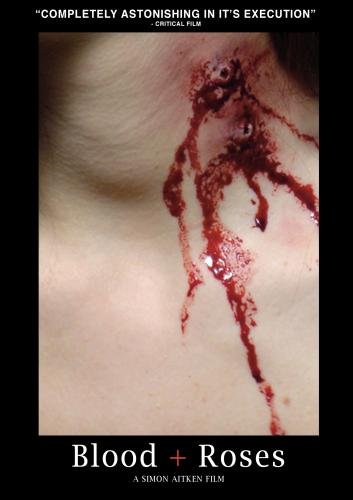
 The big news this weekend for music fans is the sudden appearance of the new Radiohead album, The King Of Limbs, which I’m happily downloading as I write. But if you like horror, then there’s another reason to celebrate.
Simon Aitken’s smart, grown-up vampire film Blood + Roses is finally, finally available to buy from Amazon. OK, yes, I have a deep connection to the film. I have a big fat colourist credit, and edited the behind the scenes documentary Love Like Blood. But I believe in the film. I think it’s a clever update on the mythology and iconography of the vampire trope. It’s well written, and has a sterling brace of leading performances from Benjamin Green and TV’s own Marysia Kay (she’s on Take Me Out tonight on ITV1). Those in the know are already calling Blood + Roses “Twilight For Grown-ups”. I’m really pleased that you all have the chance to enjoy a film that I’ve been banging on about for the last couple of years. Do yourself a favour, and snag a copy of Blood + Roses, Readership. You know it makes sense.
Tag: Film
Don’t Get Me Started: X&HT Didn’t Watch Never Let Me Go
This is not a review. This will not be fair, or balanced, or even particularly well informed. It will be full of spoilers. I’m not here to measure the virtues against the flaws.
I’m here to talk about the idea behind Never Let Me Go, why it patently, clearly doesn’t work and how dressing up a core SF trope in literary clothes is a dirty trick.
The story, as brought to us by the chronicler of the English mind Kazuo Ishiguro, is set in an England where cloning for body parts is legal and accepted. Of course, we’re not told that all at once. Instead, we’re introduced to the student body of Hailsham, a secluded boarding school. They are your usual bunch of artsy upper-middle class wet sponges, who flop about making doe eyes at each other, without the faintest idea in their heads that something is remiss here even when teachers keep bursting into tears and rushing out of the classrooms. They are educated, sent out into sheltered accommodation, and when the time is right, harvested. All of which they accept with a stoic, bovine acquiescence. There’s no sense that they can escape their fate, that they can find a life outside their defined role.
The idea of a society that would openly sanction or even allow organ harvesting is intriguing, and leads me to wonder what that world would look like. It would be a very different place.. The very idea that we would tolerate bags of spare parts that looked like Keira Knightley wandering the streets is one that takes a bit of a stretch. We’re squeamish at the best of times. We allow factory farming because it is convenient, cheap, and above all out of sight. The butcher’s counters at Tesco tend not to have attached abattoirs. Let’s face it, if scientists came up with a talking cow, the numbers of vegetarians would spike overnight
At the end of the story, Hailsham is revealed to be a failed experiment – an attempt to show that clones have souls. It’s never made clear why the school was closed. Was it that, like Philip K. Dick’s replicants, the Hailsham kids don’t show emotions, but rough approximations, fakes, large-scale autonomic reflexes that just happen to look like fear or love? Or, more likely, that the clones are indeed human, and that we don’t care? That if the program were to be shut down then the crisis that forced us into the position of creating the clones in the first place could reoccur, putting society back to square one? All of these questions are never addressed, which is a shame, because the society in which Hailsham exists deserves a second look. Never Let Me Go seems to depict us reverted to a slaver’s past, a time when we could quite easily look on certain creeds and colours as resources, as tools. But we never see this world beyond the narrow focus of the Hailsham kids, and they’re all too drippy to give a toss about.
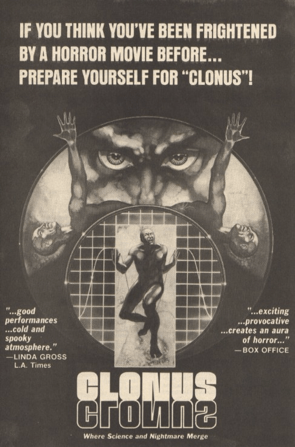
None of this is new, of course. The nature of humanity is a core concept in SF. One of the formative books of the genre, Mary Shelley’s Frankenstein, deals with that very issue. Philip K. Dick’s Do Androids Dream Of Electric Sheep brings us Roy Batty, rebelling against his nature and destiny to find his humanity despite the cruellest of barriers – a shortened life span. The Clonus Horror, a 1979 SF movie takes the whole idea of clones and organ harvesting and gives it a pulpy spin. Michael Bay’s 2005 clunker The Island takes the same tack, mirroring the Clonus story so closely that it led to a lawsuit and an out-of-court settlement. Both films pitch the clone factory as a conspiracy that, once revealed, brings the whole edifice down. Never Let Me Go doesn’t bother with that kind of closure. The characters simply shrug and carry on, plodding onto the killing floor with uncomplaining docility.
The primary disconnect for me comes from the idea that the clones need to have feelings and emotions in the first place. Surely if we have the technology to create something like that, it would be far more cost effective to make them obviously non-human. It’s just the organs we want, after all. Build something with a rudimentary brainstem, or the capacity for self-awareness of your average squirrel, make it mobile enough that it can feed and water itself without the ability to run away, and there you go, job done. If you can sort out a resealable zipper so you can pop out the organs you need, so be it. A farm animal, effectively.
Or, if we absolutely positively have to have intelligent, self-aware bipeds, we could quite easily condition them to embrace their position in life, so that they see their eventual sacrifice as a good thing. I’m thinking the way the lower classes in Huxley’s Brave New World are so happy with their lot that the idea of rising above their station fills them with nausea. I’m thinking the Ameglian Major Cow from The Hitch-Hiker’s Guide To The Galaxy, so happy with it’s fate that it cheerfully points out the best cuts to potential diners. The one problem I always had with Duncan Jones’ masterful Moon was that Sam had to have memories of his “past life”. Why would he not simply be conditioned to be happy where he was, even to the point of tidying himself away at the end of his “shift?”
I can deal with Never Let Me Go, just, barely, if I look on it as a kind of satire both on factory farming and a very British kind of stoic resignation to one’s fate. Otherwise, it’s simply too ridiculous a concept to take seriously. The idea hangs together if you treat it as a life-extending plot committed by the rich and powerful that will be busted and brought down by our clone heroes. But Ishiguru ties a Swiftian-style Modest Proposal to a very English love triangle, and it’s simply too unwieldy a prospect to float. The fact that it’s been sold to the public as a love story from the writer of The Remains Of The Day is dangerously close to misrepresentation. It’s a bleak account of a particularly nasty kind of dystopia that doesn’t even have the guts to give the audience a dose of closure.
Needless to say, I won’t be seeing this one. I think a rewatch of The Island might be in order. There’s a film that knows it’s stupid.
One Shot: X&HT Watched The Fighter
 Boxing movies, like most dance films, like most music films, are rags to riches tales. They tend to be “true stories” – as much as any Hollywood biopic can have any claim to veracity. They will be set in dirt-poor urban neighbourhoods, where everyone gathers outside stoops and porches when they’re not in the local bar starting fights and getting in trouble with the waitresses.
They will focus on the last shot at stardom, the fight or talent contest or rap battle that our hero or heroine absolutely cannot lose. Most importantly, they talk about how the family is the key to success, while at the same time pointing out what a bunch of monsters the family of the main character is.
The Fighter succeeds by taking all these elements and cranking them up to distortion point. It’s the tale of Micky Ward, a stepping-stone boxer used by better prospects to get up the ladder to the lucrative title bouts. Played by Mark Wahlberg as a doughy, sad-eyed lump of protein, Micky is a no-hoper, a never-gonna.
He’s crippled, not by lack of talent or fighting spirit, but by his family. Ma Ward is a manipulative harridan, seeing insult and disrespect in every stray comment. His sisters are a bunch of lemon-sucking, frizz-haired monstrosities. A Greek chorus of harpies. His brother Dicky, mentor, trainer, that guy that knocked down Sugar Ray Leonard that one time, is a manic, eye-bugging crack addict. Any one of these would be enough to send a normal person off down the street screaming. All three in one house give you a fairly close idea of the inside of a lower circle of hell.
In these kind of films, the main character always needs a love interest to help find the confidence and belief in themselves that will give them the chance to escape the traps that their live have become and live their dreams. Frequently they’re from the other side of the tracks, and it’s no different here.
Things are so low-rent in this world that Charlene, played with perky toughness by the delightful Amy Adams, stands out by having gone to college. She’s a dropout, but by sporting an education she’s some sort of interloper to the Wards, who view any outside influence with the kind of swivel-eyed suspicion that really deserves to be backed by a banjo and a hooting jug. She’s a threat to the family unit, and they make their displeasure clear.
Later in the film the ladies Ward will start a seven-to-one street catfight with the lovely Ms. Adams, as she is not only no better than she oughta be, but also indulges in lesbian threesomes, according to reliable scuttlebutt. Sadly, these speculated threesomes are never pictured, which I’m guessing means they didn’t happen. A boy can dream, I suppose.
So, there’s the inevitable schism. Dicky goes to jail, which gives Micky the excuse to break away from the Wards, and what a surprise, start winning fights. There are montages. Lots of montages. Training montages. Fight montages. Dicky in jail getting clean montages. Which is fair enough, and very much on model. Rags-to-riches tales need montages, because the process of going from rags to riches inevitably takes years and we are an impatient bunch that need to see progress fast. The dancer will slip and trip, but in a couple of lap dissolves we’ll see her pirouette across the studio floor. The rapper will frown over a blank sheet of paper, but we’ll soon see it fill with rhymes.
Dickie reappears with new teeth but the same old attitude, expecting to pick up where he left off, leading to yet more schisms and fights. Lockers get punched. I feel sorry for lockers in these kind of films. They come under all kinds of abuse.
Finally, Mickey decides that even those his family are a bunch of raving nutballs, he needs them. Or at least, the insight that Dickie has on his fighting. This again is textbook stuff, a reunion leading to the final triumph of the protagonist. Does he triumph? Well, this is the story of a fighter that won the WBU crown in 2000. There should be no surprises here.
And that’s the point, Readership. The Fighter is a film about the fight, not the victory. The important thing is not the conquest, but the battle to get there. Rags-to-riches tales make this point clearly. They end at the moment of triumph, dissolving away to a final series of cards telling us what happened next. But it’s not important. It’s all done by the time the boxer raises his hands into the flashbulbs of the cameras, or the moment that the dancer or the singer takes her bow in the blast of the spotlight. After that, we know the story. We can take over now.
One last thing. Cleverly, director David O. Russell runs footage of the real Micky and Dicky over the end credits. There’s been a lot of honking in the review columns about how broadly Christian Bale plays the manic Micky. Accusations of over-acting, of method gone mad, have been levelled at him. Watching the footage of the real Pride Of Lowell, you quickly realise that Bale calmed down his performance. The real Micky, a motormouth attention vampire, would drive you nuts in five minutes flat.
A Tangled Web, or some random thoughts on animation
I noted yesterday that Tangled is likely to be the last of the “Disney Princess” films. This still seems like a bit of an odd decision, considering how popular the girls are as a brand. They have their own clothing, doll and even comic ranges, and new direct-to-disc movies seem to roll out on a regular basis. It’s funny to see how Tinkerbell seems to have been folded into the gang. She’s an uncomfortable fit. A bit too feisty for the rest of the girls. It’s apparently to do with appealing to boys. Note that Disney didn’t say anything about quitting the fairy-tale genre. That Jack fella’s got some stories to tell.
When pictured together, the Princesses have a disturbing similarity. As their images are tweaked and refined, they are slowly nudged into templates that look very familiar. The eyes get bigger, the mouth smaller, the head shape more overtly heart-shaped. Granted, Mulan and Jasmine don’t quite fit the mould, but it’s starting to become difficult to tell Cinderella apart from Sleeping Beauty, Belle from Ariel*.

Rapunzel’s the most extreme version thus far of the look. It’s a very anime approach. Her eyes take up half her head and her mouth almost disappears to compensate. There’s a lot of the japanimation heroine in Rapunzel. Her hair becomes prop, weapon and maguffin. Anime is full of characters with ridiculously long hair, that seems to have a life of its own (and also seems to randomly change length based on what the character is up to at the time).

The thing is, of course, that the influence goes both ways. The father of modern manga, Osamu Tezuka, was famously influenced by early Disney, with characters like Astro Boy given the big eyes and childish features that he found so appealing in Mickey Mouse and his friends. We could say that by making Rapunzel look so anime, the designers are simply acknowledging, however subconsciously, the history and influences that have placed The House Of Mouse at the heart of world animation.
We can look to Europe too. It fascinates me how we are happy to have cartoony characters as long as the backgrounds and settings are rendered realistically. Tangled again is a prime example of this idea, with gorgeously rendered scenery playing up against massively stylised heroes and villains. It’s an example of the style that French bande desinee artists have made their own. Think of Tintin, with all those beautiful, exquisitely researched landscapes backing our blank-eyed hero. Or Asterix, if you want to go more cartoony. There’s nothing to say that Disney was at all influenced by the French school, but the comparisons are there to be had.

The Europeans are also big on their anthropomorphic animals. The biggest selling comic album in France right now is Blacksad, a noirish detective tale. The main character just happens to be a panther, with a snappy line in suits. Again, Disney made their name with animals that wear clothes, walk on two legs and talk. Which came first – the mouse or the marsupilami? It’s a knotted mess of influence and cross-fertilisation. And it’s not helped by the fact that, contrary to common practice in modern animation, the two animal sidekicks in Tangled don’t talk. They react in human ways, but in dumbshow. Even more messily, the horse Maximus is presented as half cop, half jock and half dog. He chases down Flynn by smell, and reacts very favourably to Rapunzel scratching him behind the ears. It’s yet another knot in the net.
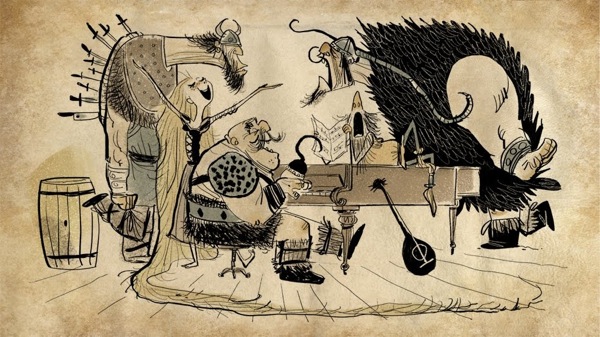
It’s worth sticking around to watch the end credits, which are illustrated with character designs (by the brilliant Shiyoon Kim) in a lovely, scratchy inky style that has more than a nodding relationship to the work of one of my favourites, St. Trinian’s creator Ronald Searle. I’ve always seen nods to Searle’s style in some of my favourite Disney’s, and the linework in the Tangled end credits hearkens back to some of those classic mid-60s films. 101 Dalmations and The Aristocats are prime examples of this looser, freer form. It’s great to see this little tribute to past triumphs, and I was quietly amused to see how much more busty Rapunzel is in these early sketches. I didn’t think Disney did cleavage.
Dammit, this film has got me thinking about cartooning again in a big way. In a kind of unfocussed, scattershot manner, for which I apologise (how else could it be when talking around a film with a title like that?). But the fun in watching a film as rich this rich reference and tribute comes from seeing the images spark and fire off connections, however randomly. Tangled provides a dense web in which it’s a pleasure to get tied up.
*yes, alright, apart from the tail…
The Mirror Crack’d From Side To Side: X&HT Watched BLACK SWAN

Black Swan is the first great horror movie of 2011. Darren Aronofsky has taken the beloved movie trope of the doomed ballerina, and created something new, sumptuous and berserk out of it. It references Polanski’s Repulsion, the moody, lush quality of Dario Argento’s Suspiria, and most boldly, the work of David Cronenberg. The body horror may be going on in her head, but for poor Nina Sayers, the changes that happen as she struggles with the dual roles of the White and Black Swan are all too real.
It’s a simple story. Nina is a ballerina plucked from obscurity in the corps to dance a career-defining role as the Swan Queen in Swan Lake. She is precise, technically perfect. But passionless, controlled. Her quest to embrace the sensuality and darkness at the heart of the role, the evil twin, the Black Swan, leads her down the path to madness.
It’s a film about duality, and Aronovsky makes that clear from the start. The film is jammed full with mirrors, obscured windows, and all sorts of other reflective surfaces that offer up warped views of the world. We often see two or more versions of Nina in the frame. As her sanity starts to fray, those mirror images start to show something other than reality. Her reflection no longer maps to her, taking on it’s own life. When that happens, she is free to release herself from her old existence, taking on the mantle of the Black Swan both mentally and physically.
Like the tortured, driven characters in much of Cronenberg’s work, and indeed in Aronovsky’s own extraordinary debut Pi, Natalie Portman plays Nina as fragile, unworldly yet driven to succeed at all costs, even if that cost is mental and physical transformation. When Thomas, the exploitative and abusive head of the corps (played with sleazy physicality by Vincent Cassel), demands that she become the Black Swan, that is exactly what she does. It’s a tour de force, and Portman is on record as throwing herself into the role, training for ten months before shooting started. She makes a convincing prima ballerina, and worryingly, an even more convincing psychotic.
The film works beautifully at blurring the boundaries between the real and Nina’s mirror world, undoing murders and seductions in the blink of an eye, showing us flashes and warped reflections of her unravelling mind. The atmosphere throughout is unsettling. There are a few shockhits, but for the most part Aronofsky keeps the mood low-key, and his audience on edge. It’s a brave, bold and scary film. For once, I’m behind the Oscar hype. This one deserves to fly.
(WDW isn’t so much of a fan, for reasons that I can totally get behind. Her contrasting review is up on MovieBrit.)
Start Choppin’: X&HT Reviews 127 Hours

Bottle
films are notoriously hard to carry off. Putting all of your action
in one cramped, isolated place, with a limited cast of characters
could be the recipe for a tense, claustrophobic thriller. Rodrigo
Cortés’ sweatily effective Buried springs to mind as the most
extreme recent example.
If you’re going to hem in your
actor to that kind of degree, then you’d better be sure that you’ve
got someone bloody good in front of the camera. Ryan Reynolds is
brilliant in Buried, and I’d have been interested to see him cast
as Aron Ralston in Danny Boyle’s 127 Hours. He has the proper sense
of physicality and goofy charm for the role. Instead, the face that
we see in a hole in the rock is James Franco. It’s a testament to
Franco’s skills as an actor, and of Boyle’s as a director, that
we’re convinced from the get-go of his capability, energy, skill
and knowledge of the desert that very nearly kills him.
We all know the story by now.
Aron Ralson, crag-hopper, mountain biker, all-round super-confident
hardbody makes a split second mistake while out on a weekend jaunt
in the deserts near Moab, Utah and ends up in a crevasse, his hand
mashed between the rock wall and a huge piece of
chalkstone.
His story, and what he has to do
to get back to civilisation, is the stuff of legend. In fact, there
were times when I found myself scoffing at the preposterous nature
of his escape. “There’s no way he could rappel down that cliff,” I
chuckled at one point. “He’s half-starved, desperately dehydrated
and quite possibly in shock. What do the writers take me for?”
Aron’s story is mind-boggling because you have to keep telling
yourself that all this actually happened, that he did free himself
from a predicament that would have 99.99% of us forming an
attractively spooky display of bleached bones in a cave somewhere.
He survived, and continues to do the things he used to, only now
with a rather cool looking climbing tool replacing his left hand.
Very post-human.
The trick to keeping a bottle
film interesting is to keep your viewpoint fluid. In Buried, the
director does this by exploring every nook and cranny of the set,
and cleverly by changing the size of the coffin to enable his
camera to get into places where there simply shouldn’t be room. in
127 Hours, Danny Boyle takes a different approach, and a lot of the
film isn’t in the canyon where Ralston is trapped at all.
With the use of flashbacks,
hallucinatory episodes and gorgeous tracking shots over the desert
terrain, I felt like I was on a guided tour of the trapped
climber’s interior geography. It’s cleverly done, and although you
lose something of the isolation and claustrophobia that he must
have felt, the end result is a dazzling, eye-popping feast. The
cinematography is wonderful, and every format from yummy 35mm to
grainy 2003-era DV is thrown into the mix. Kudos to Enrique Chediak
and Anthony Dod Mantle especially for the beautiful macro work,
slipping cameras into water bottles, the guts of cameras and
tracking the path of ants and insects through the cave.
Danny Boyle is one of the few
directors out there that loves colour, and uses it to it’s full
advantage on the big screen. I’m tired of the limited palettes that
are the thing in film these days, and heartily sick of the dreaded
cyan/orange cliche that makes modern films look underlit and boring
to watch. 127 Hours is a hard dose of pure sunshine after all that
drabness, and I felt like Aron, dipping my toe in blissful relief
into warmth and light, if only for a little while.
As for THAT moment: well, I’m a
horror film fan, so I’ve seen significantly worse. It’s nicely
done, and everyone around me seemed to be squirming. I loved the
way the arm breaks were accompanied by an almost subliminal flash
of light. As I watched, though, I realised that no matter how much
gore or screechy sound effects Boyle threw at us, there would be no
way of conveying more than a hundredth of what Aron Ralston went
through that day, in his cave, alone and close to death.
127 Hours is a worthy testament
to an astonishing feat of human endurance, but it doesn’t come near
to showing us what it must have been like. That’s a good thing.
It’s a remarkably positive movie, filled with light and colour and
life, and a happy ending. As a lesson in what we can survive and
achieve, 127 Hours is a triumph.
X&HT Reviews: Season Of The Witch
 My esteemed colleague WDW and I seem to have made it a habit that, if we go to see a film together, it’s usually as a dare to watch something truly dreadful. Our last adventure, a trip to see Twilight: Eclipse exceeded all our expectations.
When we settled down in front of Season Of The Witch, a medieval action-horror boasting a Rotten Tomatoes score of 3%, we had no thought that it was going to be anything more than turgid nonsense, with light relief coming from seeing how unconvincing Nic Cage’s hair extensions were going to be.
Readership, we were labouring under a misapprehension, one that desperately needs clearing up. Season Of The Witch will never be a great film, but if you enjoy derring-do, sword-play and ye olde adventuring then you could do a lot worse.
The story concerns Nic Cage and his wig returning from the Crusades as a deserter, along with his best mate Ron Perlman and his giant forehead. They are talked/blackmailed into escorting a witch across country to an isolated monastery, whose monks will take away her powers and cure the land of the pestilence sweeping across it. It’s a dangerous cargo story, a kind of olde worde Wages Of Fear, and the package they carry turns out to be neither the innocent girl that our heroes initially see, nor the witch that the monk accompanying them believes.
At 97 minutes there’s no flab or dull patches. The film gallops from wild-eyed battle to preposterous encounter. There are swordfights, wolves, demons, and a sweatily tense bridge-crossing sequence. There’s a decent performance from Nathan off of Misfits, and Claire Foy as the witch does a fine job of flitting between innocence and evil. Nic Cage does his trademark flip-out, and Dominic Sena directs the whole thing with an eye to the gothic and grotesque.
Yes, ok, the dialogue is pretty dreadful (although there are a couple of great lines that WDW and I quoted back and forth to each other in the pub afterwards) but then you show me a medieval actioner where the lines are anything more than groanworthy.
Short conclusion – we walked out feeling utterly bemused by the rotten reviews this film has been getting. It’s a lot of fun and solidly old-fashioned in it’s approach in giving you thrills and jolts in equal measure. It’s likely to get knocked around at the box office, facing as it does the one-two punch of 127 Hours and The King’s Speech in it’s opening weekend. That’s a shame, because if you’re in the mood for scary action (admission: I’m ALWAYS in the mood for scary action) this fits the bill admirably.
WDW and I wanted to see a bad film this weekend. We failed dismally.
About Time Out
Finally, at last, and about bleedin’ time. Excuses & Half Truths is delighted to present a film by Rob Wickings and Dominic Wade, shot in one day as part of the Straight 8 screenings of 2009.
The story of the shoot is here. The story of the screening and it’s aftermath is here.
Obviously the film has been tweaked and titles added, but at heart the story remains the one we shot back in March last year. A tale of modern life, and how escape from it can be all too easily permanent.
We couldn’t have done it without our most excellent crew. Without Whom awards go to Lewis Shelbourne as general camera assist, and Hayley Jannesen as AD (and it’s Hayley’s voice you hear at the end).
But it’s Kiki Kendrick who makes the piece. Her performance is extraordinary. And she forced Dom and I to up our game, think things through and generally sort ourselves out. We’re better directors because of her. Kiki, we don’t have the thanks. Her show “Next!” is tearing up the Edinburgh Fringe – if you’re there, then go, and be ready for a cracking piece of theatre.
Ladies and gentlemen. TIME OUT.
The Missing Bit
The announcement yesterday from Jeremy Hunt that the UK Film Council is to be abolished came as one heck of a shock. After a couple of appalled, sweary outbursts on Facebook and Twitter, I had a nose at the Wikipedia entry and had a bit of a think about what it is and what it does.
Film-makers like Michael Booth don’t seem too bothered. In fact, he and many others are looking on it as good news. Another X&HTeam-mate, Nick Scott, has also pointed out that his major source of funding isn’t the Film Council. It’s Full Tilt Poker. Both these gentlemen have found innovative ways to get their films funded and out to their audiences that don’t include an agency they viewed as bloated, corrupt, and in Michael’s case a shill for US interests.
It’s true that for the kind of film makers that I count as friends, the end of the Film Council can be met with a cautious cheer. Accusations of cronyism and snobbery have been rife since the council was formed ten years ago. You’re fine as long as you want to make a certain kind of film, with a certain approach. Let’s look at the kind of films that have benefitted from Film Council funding over the past decade.
The Girl Everyone Wants

It’s taken me a while, so my apologies for being late to the party. But I think I’ve finally figured it out. I’ve realised that the Twilight Saga is a work of utter genius.
Now, I understand your misgivings, Readership. Lord knows, I shared them for long enough. A visit to the third and most recent instalment of the series, Eclipse (documented with neat charm by the wise and lovely WDW here) was tantamount to torture for me. I was the only male of voting age in the cinema. The smirk from the attendant on taking my ticket should have been warning enough. The phrase “enjoy the film” have never been uttered with less sincerity.
We left the cinema with screaming headaches and jaws agape. In the pub afterwards (because trying to make sense of the film sober at that point was a task equal to knitting with live squids) we worked round and round the problem, before coming to the conclusion that many many people had arrived at way before us.
The Twilight films are utter shit. They don’t work as romance, as horror, as drama. They don’t properly work as films. They’re prime examples of a money-grab, where a franchise with a popular following is flung onto the screen with little care and attention. The fans will go and see it regardless, as long as there’s plenty of close-ups of the stars smouldering. Or topless. Preferably both.
I travelled home, swearing that this would be the last time I went to see a film on a dare, or under the assumption that it would be entertainingly bad.
And then, gods help me, I started thinking about it some more. Admittedly, I hadn’t stopped drinking. This probably contributed to my relaxed state of mind. And it led to an epiphany. I realised the essential point to the Twilight films.
The reason that the drama is so wooden, the acting so minimal, is that we are supposed to see through it. The Twilight films are Brechtian, concealing a deeper truth behind the faux-“thrills” on screen. The actors are not playing roles, they’re archetypes. They’re symbols. They may as well (and probably should) be carrying around placards stating their intentions. We’re not supposed to believe that the Cullens are actually vampires, for heaven’s sake. That’s why all the vampiric tropes have been stripped away. No fangs. No fear of daylight.
No. The Twilight films are about greed, and how desire for a single object can destroy a carefully balanced system. It’s a treatise on economics, and a telling satire on our culture and the focus on wanting what the other guy has.
Consider. There are two families living in an isolated location, who have come to a fragile piece after centuries of enmity. They stay away from each other, and the balance is maintained.
Then an object enters this system, that the scions of both families decide that they want. It could be a car. It could be a nice jacket. In the case of the Twilight saga, it happens to be a girl. It really doesn’t matter. Bella Swan is not a character in the accepted sense of the word. She’s the equivalent of Helen of Troy. She exists simply to be fought over. In true cinematic terms, she’s a maguffin. She’s the thing that everyone in the film is chasing after for their own purposes, and therefore helps to move things along. The boys, Haircut and Six-Pack, want her without really knowing why. There certainly seems to be no sexual attraction visible. Kisses are exchanged to drive the other guy mad, not as an expression of desire.
Meanwhile the villains of the piece, Redhead and CreepyGirl, want her as a weakness they can use to exploit the others. If they can have her, or at least prevent Haircut and Six-Pack from having her, then they have won. Possession of the Object of Desire is all. Everything else is subsumed into that simple, primal urge. All focus is on the fragile, Pantene-haired creature whose expression never changes.
It would be easy to compare her porcelain features to a mask, which would then strengthen the arguments towards Twilight becoming a modern form of Greek tragedy. But this would be a mistake. There is real heart and emotion at the core of Greek drama. No. what we have here is more akin to a cool scientific procedure. Elements are set adrift in a hermetically sealed environment (very little takes place outside Forks, and the forests that close it off from the world outside) to interact weakly with each other. The words “love”, “need”, and “desire” are used but there is never any sense that the elements using them understand their meaning. The only term that makes any sense in this context is “want”. Everyone wants Bella, but they wouldn’t know what to do with her if they got her. Having her is not the point. It’s the wanting that matters.
It’s this understanding of the illogical and destructive power of greed that makes the Twilight Saga such a clever and rewarding piece of art. It’s completely fascinating, and I’m saddened that it’s taken me this long to cotton onto the ideas that make the film tick. Fancy me thinking it was just a godawful soul-less teen franchise. I really should know better.
I can’t wait to see what happens in Breaking Dawn…
 EXCUSES AND HALF TRUTHS