
 The big news this weekend for music fans is the sudden appearance of the new Radiohead album, The King Of Limbs, which I’m happily downloading as I write. But if you like horror, then there’s another reason to celebrate.
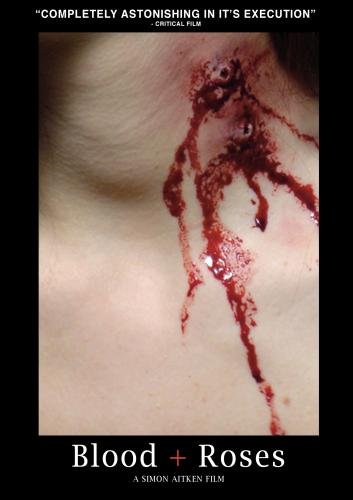
Simon Aitken’s smart, grown-up vampire film Blood + Roses is finally, finally available to buy from Amazon. OK, yes, I have a deep connection to the film. I have a big fat colourist credit, and edited the behind the scenes documentary Love Like Blood. But I believe in the film. I think it’s a clever update on the mythology and iconography of the vampire trope. It’s well written, and has a sterling brace of leading performances from Benjamin Green and TV’s own Marysia Kay (she’s on Take Me Out tonight on ITV1). Those in the know are already calling Blood + Roses “Twilight For Grown-ups”. I’m really pleased that you all have the chance to enjoy a film that I’ve been banging on about for the last couple of years. Do yourself a favour, and snag a copy of Blood + Roses, Readership. You know it makes sense.
Category: Blog
The Year Of The Rabbit

I’m often asked what it is about me and rabbits. The honest truth is that I’m not really sure. I could put it down to being called (ahem) Bobsy-Rabbit the Lodger by TLC and her housemate when she and I first starting living together. But that would be a poor excuse, and not really the truth. I’ve never owned a rabbit, although I’d like to. A big, floppy house-trained number. I would stroke him and love him and hug him and squeeze him and call him George. Probably.
It’s the cultural connotations that I find most interesting. The rabbit in myth and legend is a trickster and a herald, the bearer and frequently the source of bad news. Think B’rer Rabbit, or Alice’s White Rabbit. Think Bugs, or Roger. Or Frank from Donnie Darko, come to that. The Ojibwa tribe of North Amerindians have Nanabozho. Kalulu bounces around Central Africa with his tricks and scams.
Frank Kozik’s Smorking Labbit, the image of which has graced my internet presence for some years, is notoriously fluid in appearance, a many-coloured, always-changing little beast. The basic outline and attitude remains the same, but the Labbit can be any colour, his cigarette replaced with a bubble of gum, the pin of a grenade, even a fine moustache. The Labbit is disguise and statement of intent all at the same time.
The Internet is all about masks, aliases, alternate identities. To me the rabbit ties into that perfectly. Look at how many times Bugs will change his costume, his voice, even his sex to get the better of Elmer Fudd. Although I might not slip into a dress and slap on lipstick (sighs of relief all round), I’m not exactly the person I claim to be on the web. None of us are. We all choose the side of ourselves that we want people to see and respond to, and present that to the world.
But there’s something more about the rabbit. The simple fact that I have no real idea how the fascination arose, and indeed how my web alias Conojito developed with no conscious effort on my part, leads me to feel that I have somehow been guided towards identifying with the tricky little creature. Worldwide, cultures revere and are guided by their spirit animals. Is this the case with me? Have I been gifted with a Labbit-shaped, Pullmanesque daemon to help me through this life? I admit, the idea is strangely comforting.
The more I dig into the concept, the more it evades me. I claim that Conojito is a mangling of the Spanish for rabbit, conejo. (Tio Conejo is, you won’t be at all surprised to hear, a Latin American version of B’rer Rabbit). But a truer translation of the phrase con ojito would be “with a little eye”.* Do I have a blinkered view of the world? Does looking at life through a mask somehow obscure one’s vision? Or am I somehow using this disguise to obscure your view of me, to diminish myself, to seem less threatening so I can slip through your defences? That, after all is part of the purpose of camouflage.
That’s the thing about rabbits. They’re tricky little buggers to get a hold of.
*I’d love to take credit for that insight, but it was pointed out to me by Alejandra on the WDW forums. For which much thanks.
The Big Problem With The Big Society
David Cameron’s Big Society is based around the idea that volunteers will take up the slack from public services that have been cut. This brings out my bristles. It makes the assumption that there are enough people out there with the time and spare income to be able to give their time for free. It also devalues the work that the public sector employees are doing.
As an example, let’s look at libraries. They offer all kinds of services above and beyond simple book-lending, and are involved in deeply complex digital archive and stewardship incentives. Sourcing and distribution of books, DVD, music and web-based services are all part of the remit. Take a look at this breakdown of a librarian’s day from the Voices Of The Library site:
- Two separate TV companies want background info for programmes they are making for this autumn.
- I need info on the founder of a local college for the deaf.
- Please find me a local newspaper report of the death of a motorcyclist in 1951 (narrowed it down with GRO indexes on Ancestry).
- Please search local trade directories for me for a pub on the county borders, 1870s to 1880s.
- A lady from the USA comes in to research her family, who lived at a local manor house. She is delighted with the amount of resources we have on them.
- Another lady needs help copying an exact small rural area on the 1880 map.
- A man comes in to research the navigability of the local river.
- Another man needs intensive staff help to search the FindmyPast site.
- A lady needs guidance in using newspapers on microfilm.
- When did a local village magazine start, and how can I write to them?
- Please can you help us trace the whereabouts of a book containing original watercolours by a Victorian lady artist, which we think we saw in a local museum in 1995?
- We need photographs and history of a jeweller’s shop in the county town.
- A colleague from another council dept asks if we can suggest a local book suitable for official presentations? (We recommend a very good one published by ourselves, which will mean income for our photo website).
- Local man would like us to run off more copies of his little book which we produced for him; his nephew has mentioned it on Facebook & it’s selling like hot cakes.
Yet the government and local councils aiming the cuts seem to think that these tasks can be accomplished by the same kind of community-minded individuals that man the tills at Oxfam for a couple of mornings a week. As if the job was shelf-stacking and ticket-taking. Iman Qureshi treats this argument with the disdain it deserves over on the Open Rights Group blog. The Little Chalfont Community Library in Buckinghamshire is being held up as a prime example of what can be done when people rally together to save their local bookhouse. But, as this post on Words With Jam makes clear, it takes a certain kind of community to be able to take on the complex job:
Both Little Chalfont and Bucks’ other community library in Chalfont St Giles are in highly prosperous areas at the edge of the London commuter belt. The surrounding communities are both willing and comparatively able to raise the cash for a service it wishes to maintain. What’s more, there is a large pool of people (retired, at home with children etc) who have the professional, managerial and business experience to carry out all the functions necessary to run a library. The same thing simply could not work on, say, a sink estate where many of the residents are second generation unemployed, or a scattered farming community where a majority are working 18 hours a day just to survive.
The ConDem push to get volunteers to do the work of trained professionals is failing. The wheels are starting come off the idea of The Big Society. Liverpool County Council, one of the four showcase zones for community-driven regeneration has pulled out of the initiative – largely because of spending cuts that will directly effect thousands of volunteer organisations.
Worse/hilariously (delete where applicable), Lord Wei, the man in charge of the whole initiative, is cutting the hours he’s spending on the job. He simply can’t spare the time to work for free. This sums the whole idea up nicely. The coalition can’t even get it’s message straight, praising “alarm-clock Britain” while expecting those same hard-working yeoman to spend all their spare time running services that are subject to pointless and injurious cuts. It’s all a bit of a joke really, and not a particularly funny one.
Anyway. That’s enough cut-and-paste opinioneering for one day. I’m off to the library. Anyone else coming?
The Sunday Lao Tzu: Little Wonders
“From wonder into wonder existence opens.”
As a writer, as an artist, the most important thing for me is to keep hold of my sense of wonder. I never want to feel like I know everything, and that I can no longer be surprised or amazed. I want to start every day with the expectation of learning something new, to be astonished or uplifted by an event, a piece of music, a film, a picture, a sunrise, a night sky. Even a simple act of kindness, an unexpected smile or laugh can be the tiny spark that lights up my day.
I’m open to all and every experience, and still have the capacity to be mesmerised or moved by the simplest thing. Some call the ability to hang on to your sense of wonder child-like, and from there it’s a simple step to call it childish, to sneer as if the ability to find the extraordinary in the ordinary is something to put away once we are grown. I couldn’t disagree more. Finding wonder in the everyday, in the sights and sounds that surround us is the first step in making and remaking our world into a better, more magical place.
The Mirror Crack’d From Side To Side: X&HT Watched BLACK SWAN

Black Swan is the first great horror movie of 2011. Darren Aronofsky has taken the beloved movie trope of the doomed ballerina, and created something new, sumptuous and berserk out of it. It references Polanski’s Repulsion, the moody, lush quality of Dario Argento’s Suspiria, and most boldly, the work of David Cronenberg. The body horror may be going on in her head, but for poor Nina Sayers, the changes that happen as she struggles with the dual roles of the White and Black Swan are all too real.
It’s a simple story. Nina is a ballerina plucked from obscurity in the corps to dance a career-defining role as the Swan Queen in Swan Lake. She is precise, technically perfect. But passionless, controlled. Her quest to embrace the sensuality and darkness at the heart of the role, the evil twin, the Black Swan, leads her down the path to madness.
It’s a film about duality, and Aronovsky makes that clear from the start. The film is jammed full with mirrors, obscured windows, and all sorts of other reflective surfaces that offer up warped views of the world. We often see two or more versions of Nina in the frame. As her sanity starts to fray, those mirror images start to show something other than reality. Her reflection no longer maps to her, taking on it’s own life. When that happens, she is free to release herself from her old existence, taking on the mantle of the Black Swan both mentally and physically.
Like the tortured, driven characters in much of Cronenberg’s work, and indeed in Aronovsky’s own extraordinary debut Pi, Natalie Portman plays Nina as fragile, unworldly yet driven to succeed at all costs, even if that cost is mental and physical transformation. When Thomas, the exploitative and abusive head of the corps (played with sleazy physicality by Vincent Cassel), demands that she become the Black Swan, that is exactly what she does. It’s a tour de force, and Portman is on record as throwing herself into the role, training for ten months before shooting started. She makes a convincing prima ballerina, and worryingly, an even more convincing psychotic.
The film works beautifully at blurring the boundaries between the real and Nina’s mirror world, undoing murders and seductions in the blink of an eye, showing us flashes and warped reflections of her unravelling mind. The atmosphere throughout is unsettling. There are a few shockhits, but for the most part Aronofsky keeps the mood low-key, and his audience on edge. It’s a brave, bold and scary film. For once, I’m behind the Oscar hype. This one deserves to fly.
(WDW isn’t so much of a fan, for reasons that I can totally get behind. Her contrasting review is up on MovieBrit.)
Friday Fotos: A Day Among Ghosts
I took a day to plot and scheme with the mysterious docoBanksy yesterday. Usually we meet and cavort in Soho, but I fancied a change, so we met in Islington, before heading to Spitalfields and Brick Lane. It was a cold, cold day. Fun was had. Beer was drunk, including a pint of crude in the infamous Ten Bells. It’s been tidied up a lot, but there’s still a strange air about the place. An edge, sharp as a butcher’s blade. Or maybe I was just letting my imagination get away with me.
Anyway, here are some photos of the day. The area’s renowned for the street art which graces many of its walls and dead spaces, which will always get me pulling out a camera.


(edited, to include the fact that I was actually in Spitalfields, not Shoreditch. Maybe it’s because I’m no longer a London-errrr…)
The Clock Is Ticking: One Month Before Heartbreak
I wrote yesterday about the importance of simplicity, patience and compassion in our daily lives. Sometimes, decisions are made that make it very difficult to keep my peace or feel anything but revulsion for those that are imposing them.
It’s already become clear that the financial measures that are being put in place by the government will directly and adversely affect our poorest and most vulnerable. But when they start gleefully and spitefully kicking people when they are down, something has to be done.
As an example, let’s look at the reviews that are being considered for the Disability Living Allowance. The DLA is a necessary safeguard, allowing those of us unlucky enough to be unable to work through ill-health to carry on, funding mobility allowance and help with care. I see no problem with this. You’d like to think that, should you need it, the state would give you the funds you need to continue functioning as a useful member of society. To contribute, rather than be stuck in a hospital or care home. To have a life rather than an existence. Lisa Elwood on the UKUncut blog puts a contemporary spin on a very old saying when she points out
“The moral health of a society can be judged by how it treats its most vulnerable members.”
If that’s the case, then modern British society must be very sick indeed. The poisonous attitude spread by the government and certain media outlets (I’ll leave you to figure out which ones I’m talking about) is that claimants are scroungers, layabouts and leeches on the state. Worse, that a lot of “them” (notice the anonymous, amorphous terms that begin to be used in arguments like this, taking away the individuality and humanity of the people concerned) are fakers, plain and simple. In an interview in the Sun on the 1st of December, Iain Duncan Smith went so far as to try to partly blame claimants for the fiscal deficit.
What a horrible way to think. What a STUPID way to think. The changes to the current system are rushed, flawed and un-necessary. Worse, they’re invasive and upsetting, forcing people into needless reassessments and retests, even for chronic or untreatable conditions, conducted by private healthcare assessors, not doctors. And of course, there is the insistence of cuts to the caseload of the new service. The figure of 20% has been bounced around, with no clear method or reasoning as to what the new guidelines might be, or what constitutes a pass or a fail.
It is clear that the changes that are being considered for the DLA will force more people under the poverty line, and make it more likely that an greater number of disabled people will be unable to fend for themselves. This is desperately wrong. No-one chooses to be disabled, and to have further indignities and ill-informed spite piled up on top of everything else you have to deal with on a daily basis must be close to unbearable.
A Nanowrimo mate, Emma, has launched One Month Before Heartbreak, a blog that tells the stories behind the lying headlines and snarky commentary. It lets the people that will be directly affected by the cuts tell their story. It’s an absolute must-read. I’d like to quote from one poster, who makes the point:
David Cameron has claimed that “we’re all in this together”, but these cuts won’t affect him in the slightest. He is not relying on friends or family to enable him to live from day to day. He is not facing the prospect of having his care funding cut, and being left to lie in his own urine and faeces all night, because his carer has been replaced with an incontinence pad, nor is he looking at spending every day of his life within a respite home, because the removal of his mobility Disability Living Allowance component has been withdrawn and he can no longer afford an electric wheelchair. He will not be a working person, taking over from the agency carer the local council can longer fund. He won’t feel suicidal because he is being made to feel that he doesn’t deserve to live, or because he simply does not have to means to to. These are real issues being faced by people with disabilities.
So please, the next time you see a story about the ConDems cuts on benefits in the newspapers and you tut about these disabled people draining the state, please remember three things:
1) Disabled people aren’t spongers, they are people who truly need the money, and desperately wish they didn’t.
2) When you go to bed tonight, you won’t need someone to dress you, or clean your bottom, and you won’t be left to lie in your own defecate. You will be free to do as you please.
3) Not all disabled people are born that way, and many are disabled due to accidents and illness, and you may find yourself in their dependent shoes one day.
One Month Before Heartbreak was envisaged as a weekend campaign to highlight the issue, but I see no reason why it should not carry on to be a vital resource. Certainly, Emma has now opened up the submission deadlines, so if you have a story to tell contact the website.
Further work? Right then. Here’s a link to a petition asking for a recall on the consultation work being done. There is still time to stop this, and to make sure that the people that most need our support to lead meaningful and fulfilled lives can continue to do so.
Five Songs That Should Have Been On The Soundtrack To The King’s Speech
Yes. Right.
Well. Hope you’re enjoying the bump in quality as the daily post
schedge kicks in.
On Sunflower Seeds
When a hospital appointment spits you out onto the South Bank at half nine on a Sunny winters morning, it seems foolish not to make the most of it. A coffee and pecan Danish fuelled some Nanoing, before I decided to amble east, and pop into Tate Modern.
I love it there. The place has a genuine sense of theatre and spectacle, especially if you make the effort to use the main ramp as you go in. Its an entry that I don’t think is bettered by any museum in London, and really needs to be soundtracked by John Williams’ Imperial March for full effect. The collection is thoughtfully curated, and I have my favourites that will always have at least five minutes of my time. That long, jazzy Jackson Pollack and anything by Mark Rothko will always have my attention.
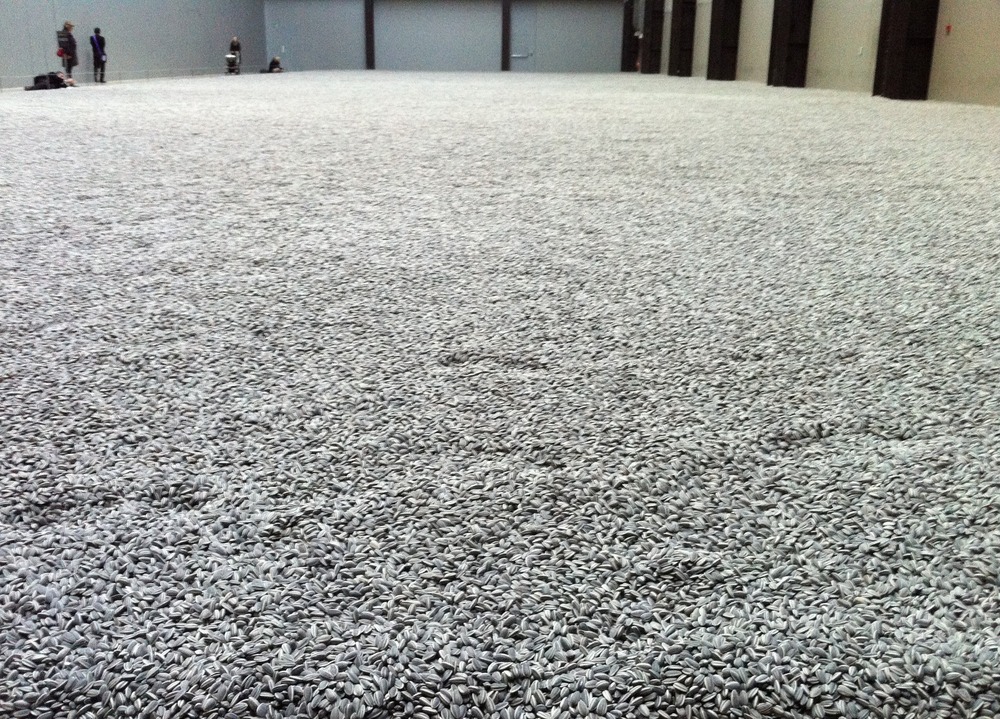
But the main reason for the visit was Ai Wei Wei’s Sunflower Seeds. It’s an impressive piece, made of one hundred million individually cast and painted porcelain seeds. It cleverly touches on ideas of craft, disposability and material worth while also being accessible and beautiful.
The problem is that it’s not the piece that was originally envisaged. Sunflower Seeds was supposed to be an interactive artwork, where the public were allowed to walk in the seed-field. This would have been wonderful, adding an extra dimension to a work that already resonates on a ton of different levels. Sadly, after two days the seeds were roped off. The excuse made was that the porcelain gave off dust that was potentially carcinogenic over time.
I find this to be disingenuous. The film that accompanies the artwork shows guys in dust masks smoothing out the seeds as they landed in the turbine hall. It was obvious they gave off dust.
I have another idea. The seeds are clearly covetable and collectible items in their own right. I remember an earlier exhibition in the Turbine Hall which featured pulpy SF novels attached to dormitory-style beds in a neat nod to post apocalyptic fiction. A month into the run, and most of those books had gone. If the public can squirrel away books, then it would be a simple matter to tuck a couple of seeds up your sleeve. There would be no way to police it, short of a “no stooping” rule. Oh, and a banishment of deep-soled boots in which some of the seeds could get caught. And let’s not forget, Sunflower Seeds runs until May next year. I wonder how long it would take for the Turbine Hall to empty completely?
Gods know, I was tempted, and there were a couple that were within arms reach. The gift shop’s missing a trick by not selling a handful in little baggies. A fiver a pop for a bit of controversial art? They’d fly out of the door.
Snack sized art. It’s the way forward.
Nanowrimo: A Few Useful Tools
There are just under three weeks to go until the start of the 2010 Nanowrimo, and already there’s a sense of real anticipation and nervous excitement. Wordsprints (where you write as much as you can for a given period; say half an hour) and timed exercises are happening on Twitter, with the #nanolove hash getting a lot of … well, love. The forums at the Nanowrimo site have reopened, and are buzzing with activity. It always seems a shame to me that they don’t stay open for the whole year, as for November they are a hive of crazed creativity and overwrought drama. It would be great to get some of that feeling all the time.
The Nano forums are essential for those moments when you just need to bitch about how badly things are going, or crow about your rapidly expanding wordcount, or wail about your lack of inspiration. In the forums, you realise just how many other people are in this with you, and feeling and suffering and exulting in exactly the same way. Nanowrimo puts you in touch with an awful lot of like-minded people, and if you sign up to the regional forums, you could even meet up with some of them face to face!
And of course, software developers are there to help the aspiring writer part with their cash – in the name of productivity, of course. There are a few tools out there that are worth your time, and funnily the good ones are open source and free.
I had great results last year with OpenOffice, which has hella good error correction and auto-complete functions – a boon for sloppy typists. On full-screen mode it’s a good distraction-free option and really helps you bang up the word count. The team behind it have just broken away from their corporate masters at Oracle to create the new LibreOffice, which I will be viewing with interest. I’m also eyeing up FocusWriter, which seems like a neat, prettier version of the Gedit/Notepads of the world. I’m having some issues installing it on my little Linux netbook, as it doesn’t come as a prettily packaged .deb file, but I’ll get there, I’m sure. With a choice of background, word count and daily goals built in, it seems to have been designed specifically for the shenanigans in November. But frankly, I’m happy as long as there’s autocap and a little something to help out my dreadful spelling.
Meanwhile, have you got your Dropbox account yet? and if not, why not? It’s free, it’s 2gigs of storage that seamlessly syncs across all your machines (including your smartphones), it’s a complete no-brainer to set up and use. It saved my butt during Script Frenzy early in the year, and it’s an essential for me now. In fact, if it sounds good, drop me a line. If you go through an invite from me we both get an extra 256mb for free. Used in conjunction with PlainText, I can jot down ideas on my phone and know that they will be waiting in a folder in my Dropbox whenever I need them. If you’re a writer on the go like me, these two bits of free loveliness are my solid recommendations.
And oh look, Scrivener is rolling out a major update in time for November! Scrivener is brilliant for thwacking out a first draft and letting you organise it at the same time. I used it exclusively for my first three Nanoes, and it’s still a favourite. The upgrade will set you back about $25, $45 for a new licence, with a thirty day free trial – just enough time to complete your Nano challenge. Totally worth it.
But these are only tools. When it comes down to it, Nanowrimo is about a very simple act. Writing 1700 words a day for a month, and being consistently surprised at what comes out. I know I always am, and that’s what brings me back year on year.
Want to know more? Feel like giving it a go? then start HERE. And if you need a friend, then this is me.

