The World Behind The Walls: X&HT Watched Arrietty

The Borrowers is a story that has been better served than most when it comes to big and small screen adaptations. Mary Norton’s classic tale of the endangered little people that live behind our walls is suffused with a sweet melancholy and sense of wonder in tiny everyday miracles. Hollywood has largely had the sense to hang onto that, and the 1992 BBC version took time to explore the nuances. The 1997 film version upped the slapstick and adventure quotient, but was still able to fit in quiet moments and a sense of warm sadness, of time passing and a culture slipping away un-noticed.

Continue reading The World Behind The Walls: X&HT Watched Arrietty

The Warrior’s Code: X&HT Watched Captain America: The First Avenger

NewImage
Give me a tweaked uniform over spandex any day...

Captain America: The First Avenger is not a superhero film. There, I said it. Oh sure, it’s got a superhero in it, and a supervillain, and a lot of the trappings and furniture of your average cape film. But what we have here is more akin to the legend of America’s most decorated soldier, Audie Murphy.

Like Steve Rogers, Murphy struggled to get enlisted, a puny, underaged dweeb who just wanted to serve. But heart, soul and tenacity succeed where all else failed, and Murphy would eventually go on to fight throughout Europe, winning the Medal of Honour, Legion of merit and the French Legion of Honour along the way. He went on to be a film star, musician and advocate of veteran’s rights – a true American hero whose image was used extensively in the post-war years as a positive national self-image.

NewImage
Captain America? This guy was a MAJOR.


Steve Rogers is a lot like Murphy. Fearless, determined to serve, always conscious of the need to do the right thing in the face of overwhelming evil. He gets the superserum and (eventually) the suit, but he gets them because of who he is on the inside. It’s a fairly typical wish-fulfillment strategy, based on the old saw that you can get what you want as long as you want it badly enough, but it works in this context. In a way, he has Murphy’s career backwards. Captain America is a propaganda asset long before he gets a chance to fight.

To reiterate, I look on Captan America as a pulpy war movie with SF trimmings rather than your bog-standard superhero joint. Director Joe Johnston understands this kind of material well. He helmed “The Rocketeer”, after all, still one of my favourite movies. He brings the same design flair and sense of fun to Captain America. It’s a good looking film, with a good-looking cast that understands the light touch required to make period SF work. Chris Evans fills the uniform out nicely, Hayley Atwell shines as the kind of glamourous Girl Friday that Cap would come to depend on in the 60’s, Tommy Lee Jones is a delight as the gruff-but-fair colonel in charge of the missions. Hugo Weaving was really the only choice as the Red Skull. Even under a thickness of makeup that would make Julia Roberts blanch, his villain skills shine through.

It’s a shame then, that even though Johnston has said in interviews that Captain America would be the stand-alone piece in the jigsaw of Marvel films that will piece together to form next year’s Avengers movie, the ending hauls it into line. Up to that point, the film had stood on it’s own two feet. You didn’t need to know who Howard Stark would sire, or where the cube came from that gave the Skull’s infernal devices their power. They were Easter eggs for the fans, but didn’t spoil the flow. The last five minutes, in which Steve is brought brutally up to date, are clangingly out of place with the tone and feel of the rest of the film. It was the kind of scene that would have been better suited to a post-credit vignette. It’s a real shame, because up to then I had really enjoyed the ride.

There’s a lot to enjoy in Captain America: The First Avenger. It’s pretty, funny and sharp. Good, pulpy fun with enough to keep both the fans and the non-comic reader happy. The ending aside, it’s a great summer movie.

The Wisdom Of A Dog: X&HT Watched Beginners

NewImage

A couple of weeks ago, The Corpus Crew decided to get our script looked at by a professional script consultancy, just to poke under the bonnet, kick the tyres and let us know if there was anything that needed tweaking.

It was an un-nerving and humbling experience, to put it mildly. Everything had problems. The film was structurally weak, had no real flow, the dialogue was mannered and out of place. We left the meeting feeling as if we’d been repeatedly kicked in the nuts. We got what we wished for, I suppose.

I wonder, then, what the consultancy guys would have made of Beginners, a film that seems to have no real structure, uneven flow and deeply unrealistic dialogue. I guess I’d be no good at the whole script breakdown lark, because cards on the table right here and now: it’s instantly one of my top five films of the year.

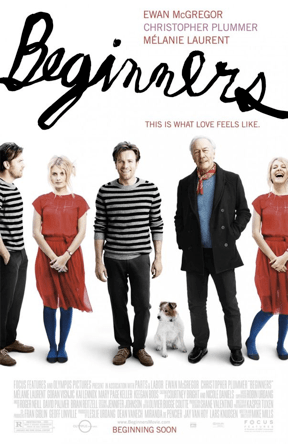
Beginners is a film about transformation. It’s about how radical change can bring on radical change in all kinds of other directions. It’s the story of Oliver, a David Shrigley-style artist, still numb with grief after the death of his father, Hal some months earlier. He meets a French actress, Anna, a Manic Pixie Girl with troubles of her own. As she enters his life, we find out that Hal had gone through changes himself, coming out at the age of seventy-five.

The film pings backwards and forwards in time, letting us see the changes in Hal and Oliver evolve, and how they come to life in the midst of tragedy and newly discovered love. Batting around the timeline makes perfect sense, and this lack of linearity never feels forced or cripples the storyline.

The acting is uniformly excellent. Ewen McGregor still can’t do an American accent, but that really doesn’t matter here. He’s open and vulnerable without being a damp rag. Christopher Plummer is an old-school delight, raging against the dying of the light. Melanie Laurent is a revelation as Anna, vibrant and unpredictable but never kooky. She was a fearless standout in Inglourious Basterds, and she is equally brave and luminous here.

Beginners is also the first film since Up to get away with a talking dog, and not have it come across as cutesy or irritating. In fact Arthur is a pivotal part of the cast, and his (oh, alright, subtitled) dialogue is on the button. But Cosmo, who plays the lonesome pup, gives an informed and naturalistic performance. Yes, really. Not bad for a Jack Russel from a rescue home.

Beginners is an autobiographical film, based strongly on writer/director Mike Mill’s relationship with his father. It’s filled with little flashes of memory and recollection. It feels like a scrapbook, or a compiled reel of old Super 8. Bopping between the 50s and the present day opens up the storytelling, allowing the performance and script room to breathe.

You could argue that the film is slow in places, perhaps a little mannered, but if you’re in the mood for an antidote to all the summer blockbusters, you honestly couldn’t do better than this lovely, vibrant, life-loving film. It certainly got me thinking about the biology of film-making, the bones and spine that have to be in place before you can give a script heart and guts. Beginners may seem scattered and haphazard on the surface, but every shot has a place and reason. It’s assured, grown-up film-making that shrugs off tired ideas about structure in favour of a pleasingly freeform approach. It hit me right in the sweet spots.

Don’t miss this one, Readership. It’s equal parts hilarious and heartbreaking, joyful and sorrowful, tart and tender.

A Lot Of Sustain: X&HT watched Sex, Food, Death … and Insects

I have a longstanding soft spot for Robyn Hitchcock. He’s one of our greatest songwriters and a godsdamned National Treasure. I have seen him live, covering Sgt. Pepper in it’s entirety, a gig notable for the moment when he knocked the jack out of his Telecaster and I handed it back to him.

You could, I suppose, if you’re feeling lazy, tie him in with the great wellspring of British eccentric artists that tracks through William Blake and Lewis Carroll, through Barrett-era Pink Floyd, the Bonzos, Ivor Cutler, Spike Milligan. Surrealism and humour backed up by a steely determination to tread one’s own path, and talent and ability up the hoozit. Long time fan and collaborator Peter Buck off of R.E.M. has said that he can’t understand why someone hasn’t taken his songs and made big hits out of them. I’d love to see one of the X-Factor clonoids do Brenda’s Iron Sledge or (probably more appositely) Sheila’s Having Her Brain Out, but I don’t think I’ll hold my breath.

The 2006 documentary Sex, Food, Death … and Insects follows Hitchcock, Buck and other musical collaborators as they work through the songs that would make it onto the Robyn Hitchcock and the Venus Three albums Olé Tarantula and Propeller Time. These songs mark a continued resurgence in Robyn’s fortunes, and are equal part rippling psychedelia and heartfelt pop-folk. It’s tough to write a song that can sound warm and tender while keeping in the weird angles and off-note touches that make Hitchcock’s stuff so much fun. These songs nail it time and again.

The documentary has a pleasingly intimate air, bringing us into Hitchcock’s rambling house, where Olé Tarantula was recorded. The process is ramshackle, ad hoc and spontaneous, leading to songs filled with happy accidents and unexpected guest turns. John Paul Jones drops in for a cuppa and a couple of chiming mandolin solos. Robyn’s niece Ruby Wright adds lovely, quavering musical saw to the proceedings. It feels like a delightful way to make an album. Defences drop. The famously grumpy Peter Buck airs his grievances about being part of one of the biggest bands in the world, and how much more he prefers the Venus Three. Certainly, his guitar work evokes R.E.M. at their jangly, shiny best.

But Hitchcock is the revelation here. Wise, centered and at peace, he seems the very opposite of the stereotypical eccentric. He observes things in a different way to most of us, certainly. But because he is so observant, he has a well-stocked cupboard of imagery to play with, and it’s the way he recontextualises these that brings up the surreality in his songwriting. When he talks about rotating elephants in the song Belltown Ramble, he’s talking about a sign he saw above a Seattle car-wash, in the district of the title. There’s reason and method to everything he does. The insight we get from these moments, along with the wonderful music are what make Sex, Food, Death … and Insects such a satisfying watch.

Tell you what, have a couple of clips.

Thanks and blessings to the inestimable Timothy P. Jones, without whom this documentary would not have hit my DVD playing machine.

Falling Skies: none more SF

You can have fun with FX’s new big-budget SF show Falling Skies by playing spot the reference. It’s so stuffed with nods to other shows that it becomes a commentary on the state and visual style of filmed SF in the early part of this most scientifictional century.

(Spoilers ahead. Break left. Engage thrusters.)

Continue reading Falling Skies: none more SF

The Mutant Question: X-Men First Class, prejudice and revenge

We humans are a venal, fickle bunch. We’re fine with superheroes as long as they’reaccidental (bitten, exposed to gamma radiation, struck in the face by toxic sludge); gifted by otherworldly outsiders (aliens or magical beings, or indeed aliens posing as magical beings); or if they’re otherworldly outsiders (aliens from a stricken red-sunned world, gods of thunder, Amazonians). If you’re unlucky enough to be born with your power, then we will fear and despise you. Talk about a mixed message.

(spoilers after the cut)

Continue reading The Mutant Question: X-Men First Class, prejudice and revenge

Out Of The Woods: X&HT Watched Hanna

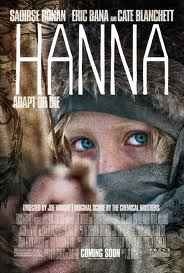
20110519-173058.jpgA girl and her father live in a cottage in the middle of a forest. It’s a simple existence. They hunt, and read together, and every so often the father will leap out of the undergrowth and try to beat the girl up. He warns her that she needs to be ready for attack even when asleep, and she assures him that she will be in several languages.

The girl decides she is ready to leave the forest. So the father digs up a military transponder. Once she flicks the switch on it, the world and all it’s dangers will come to her.

She flicks the switch, and the wolves come running.

Joe Wright, director of so-so adaptations of literary classics, has decided to radically change direction with Hanna, his first film based on an original story. It’s an up-tempo thriller with an SF twist, backed with a killer soundtrack from the Chemical Brothers (the best I’ve heard since Daft Punk’s Tron: Legacy monster). It boasts a couple of great central performances from Saiorse Ronan and Cate Blanchett and a nice story idea.

But it doesn’t hold together. The script is full of plot holes and dangling threads. Tom Hollander’s monstrous assassin is a bundle of cliches tied up in an ill-fitting Tacchini tracksuit. The nice bunch of middle-class hippies that offer Hanna a different definition of “family” to any she has hitherto known simply vanish at the end of act two, never to be seen again.

While watching, I kept coming back to the transponder, the literal flick of the switch that starts the movie going. Why would Hanna’s father insist that if she was going into the world, it would be as a warrior at bay? I waited for the reason, the revelation of the long game that he had been playing. The revenge play, the public exposure of the terrible plot.

It never came. There was no point to bringing Marisa, evil step-mother and big bad wolf in one power-suited package, back into the picture. It seemed to be an unnecessary sacrifice of everything that father and daughter had shared in the forest. It started to seem uncomfortably like a fit of pique.

As a movie, Hanna is dressed up nice and plays pretty. There are some sterling action sequences, some fun camerawork, and it’s not, at least, part of a franchise. But the lazy comparisons with the work of Luc Besson do both parties a disservice. Hanna is not Nikita meets Leon. It doesn’t have Besson’s bite and fire. Worse, it has a hamfisted way with visual metaphor (count the eyes on posters as Eric arrives in Germany. We get it. He’s being watched) and a final line and shot that you can see coming a mile off.

Summary: Not quite a wasted opportunity, but nowhere near as clever or groundbreaking as it believes itself to be. What a shame.

In Defence: Michael Bay’s “The Island”

the_island.jpg

The Island was Michael Bay’s last film before he disappeared into the creative black hole of the Transformers films. It had a difficult shoot, an advertising campaign from which Bay disassociated himself, and a public response that varied between lukewarm and actively hostile. He rushed it out in less than a year to get the jump on a mooted remake of Logan’s Run, and the experience and reaction to it nearly broke him. He retreated to a sweet franchise deal with a baked-in non-judgemental audience, where it didn’t matter what the critics said.

That’s a pity, because The Island has a lot to recommend it. The basic pitch is clear – Logan’s Run meets the Clonus Horror. A post-apocalyptic colony, isolated after an ecological disaster are gradually revealed to be clones, grown as organ donors for rich clients. The island of the title, allegedly the one uncontaminated place on the planet, is a mirage. It allows the evil scientists running the place to whisk away their bags of meat with no questions asked. Everyone in the colony wants to go to The Island, but being picked for the privilege means death. When two clones discover the truth about the world and their place in it and escape,  the running, chasing and shooting at which Bay excels can begin.

However, up until that point it barely feels like a Michael Bay film at all, and you can see why he and the studios were so concerned about the Logan’s Run reboot. The opening section of The Island is a solid rip-off of the early parts of the kitsch 70s classic, with a Nike-futurist twist. The surfaces are all glass, polished concrete and ribbed fabrics. The clones waft about serenely in form-fitting tracksuits, and the dome comes across less like a living space and more like a mall. The similarities between the lottery for The Island and the black crystal marking you for Sanctuary are clear. The idea of a friend moving on to a better place and leaving everyone behind, never to be seen again, and for that sudden loss to be an expected and normal event is the dark place at the heart of both films, and they both reap benefits from it.

In fact, there are quite literally dark places in both films. Evil scientist Merrick’s offices are clad in dark stone and underlit through patterned glass. The computer that controls life in Logan’s dome sits in a vast, dim, cathedral-like space, the status panels glowing like stained glass. Bay and his design team seem to be drawn back to the design cues and plot beats of Logan’s Run – Merrick’s private army are dressed like Sandmen, and are relentless in their pursuit of the two runners, Lincoln and Jordan.

Famously, Bay was drawn to The Island because of the script and its exploration of how much value we put on life. He’s never subtle, but the way in which the clones are treated more like prized and pampered cattle than people still packs a punch. The moment that drew him to the project has a shocking power that’s not matched by anything else in his back catalogue. A pregnant clone is “taken to The Island,” giving birth only to see her baby taken away before she is put to sleep. The newborn is given to her client duplicate, who shows no concern for the surrogate. This is the point of the movie. The clones have been sold to the public that use them as unthinking, unfeeling creatures. Jordan and Lincoln’s escape puts that fiction under threat.

The world outside the dome is a hard, cruel place with some harsh lessons for the childlike clones. Jordan and Lincoln are both confronted by their doubles, who are shown as vain and duplicitous – quite literally two-faced. Ultimately, it’s the clones, sheltered from the world, that come across as the characters with the most humanity. There’s nothing particularly original about the story or it’s themes, but compared to Bay’s other films The Island is Shakespearean in depth and scope.

It’s a real shame that Bay, one of Hollywood’s purest visual stylists, has retreated from scripts with a bit of resonance and interest to spend the last five years directing Shia LaBeouf shouting “Optimus!” into a bleached-teal sky. The Island is no masterpiece, but it’s interesting enough to be worth your time.

The Spirit Of The West: X&HT Watched Rango

Rango is a film that shouldn’t work. It’s a droll, adult-oriented Western pastiche featuring a wildly ugly protagonist, from a studio that had never done a full animated feature and a director that had never worked in animation. But it does, and not only that, it’s one of the best films I’ve seen all year.

Continue reading The Spirit Of The West: X&HT Watched Rango

X&HT MUSIC WEEK: The Bandcamp Option

Sorry, couldn't resist.

Yesterday I touched on how Radiohead had developed their own distribution and marketing after parting ways with their record company. You no longer need to be a big famous rock band to do that. These days, it’s as easy as signing up for Bandcamp.

Bandcamp is a bit of a paradigm shifter. It’s a quick and easy way for musicians to get their work out to an audience, with a good-looking home page featuring your own custom artwork and full previews. For a user like me, browsability and preview options are key, and Bandcamp has all this covered. Most interestingly, the pricing is set so that the minimum the artist is prepared to charge is always the default, but you can pay more if you think the music’s worth it. File options run the gamut from MP3 to massive lossless formats. It’s a great way of discovering new music at a pleasingly affordable price point, and compensating the artists appropriately.

My latest Bandcamp download is from Stepdad, who specialise in sunny, quirky synth-pop. They have the bounce and charm of early Depeche Mode before they discovered rubber leisureware. There’s nothing particularly original or innovative at play, but it’ll make you smile and jig about, and most days that’s all that you need. You can pick up the Ordinaire EP for under a quid. That has to be worth a punt, surely.

It’s not just the little guys that use Bandcamp. Longtime X&HT Crush Amanda Palmer has released her latest album on the platform after leaving her old label Roadrunner in 2008 – a process that she extensively documented on her blog and on stage, pleading to be released from her contract after it became clear that they were simply not interested in promoting her. Amanda Palmer Goes Down Under, a mix of live and studio recordings based around her regular trips to Oz and New Zealand, shows off her punk cabaret stylings beautifully. It contains odes on a mix of subjects, including one on the horror of Vegemite, and the joy and wonder of intimate female hairstyling in the hilarious Map Of Tasmania.

You can pick up the album for 69c, but there are a ton of other options, including vinyl, artwork packages and, for $5000, An Evening With Amanda Palmer where she will come to your gaff and perform. I’m not sure if anyone’s taken her up on the option yet, but I’m sure we’ll hear all about it when it happens.

Readership, I urge you to visit Bandcamp and have a sniff around. There’s a huge range of music to explore. The preview options make it a no-risk endeavour. Who knows, your new favourite band could be waiting there for you.