
We’re back on Music Week, looking at an album you can’t even buy in the shops – and that’s the way the band want it.
Continue reading Falling Off A Giant Bird: X&HT LIstened to The King Of Limbs
We’re back on Music Week, looking at an album you can’t even buy in the shops – and that’s the way the band want it.
Continue reading Falling Off A Giant Bird: X&HT LIstened to The King Of Limbs
Music week continues on X&HT as I look at the new record by my favourite band, R.E.M. Mentioning this has led to responses as varied as “Oh, are they still going?” through to “…pukies”. I can see I’ve got my work cut out with this one.
Continue reading Let’s Show The Kids How To Do It: X&HT listened to Collapse Into Now
Three of my favourite bands have released new albums in the last couple of weeks, and it would be remiss of me not to comment. It’s Music Week on X&HT, and I want to start with Elbow’s latest, Build A Rocket Boys.
Warning: contains fanboi gush.
Continue reading Angels And Drunks – X&HT Listened To Build A Rocket Boys!

It’s telling that Charles Ferguson’s Oscar-winning documentary Inside Job hits UK screens in a week when no less a figure than the head of the Bank Of England has made it clear that the blame for our financial woes should be placed squarely on the shoulders of the banks. Telling, and in some ways heartening, although the conclusion Ferguson reaches in his film isn’t at all comforting.
Like a financial version of An Inconvenient Truth, or a less schmaltzy Michael Moore, Inside Job makes no attempt to be objective. It’s a film that has no interest in painting the leading monetary figures behind the 2008 bust as anything but ogres or incompetents. Ordinarily, I’d be bothered about the fact that so many of the key players declined to be interviewed. But in these arena that doesn’t really matter. It’s the numbers that count, and Ferguson does a good job of showing how the venality of the banking sector tried and failed to skew those numbers in the interest of quick and massive profit.
It’s a film that demands your full attention. One point that the bankers who are seen in Congress sessions make time and again is that the situation is and remains way too complex for we mere mortals to understand. Ferguson uses graphics and a measured, careful narration from Matt Damon to ensure that we can.
We are taken though a history of financial deregulation since the Reagan era that led to investment banks packaging loans that were designed to fail, and betting that they would in the quest for spiralling short term profits and bonuses. It is complicated, I’ll admit. I’m a complete doofus when it comes to money, and I found myself squinting more than once at the screen to make sure I got it. But it’s worth the effort.
The end picture is clear. The banking industry in the US (and although it’s not mentioned, I realised there was a direct correlation to the UK bailouts of Lloyds and Northern Rock) has systematically engineered a structure in which it can operate without regulation or any real restraint, and with the clear understanding that they will be bailed out by government funds if they should screw up.
The failure to appear by most of the big noises in this perfect storm begins to look less like a flaw, and more like an admission of guilt. It’s a dirty journalistic trick, to be sure, and Ferguson doesn’t come across as a sympathetic interviewer. But the silence at the heart of the film speaks volumes, and you get the feeling that these guys very definitely have something to hide. Something that Ferguson’s simple, clear graphs and extensive research winkle out with mathematical precision.
In short, no-one in this story gets away clean. When the rot even extends to the compromised state of the educators at Harvard and the Columbia Business School (who, while they should have taken the Fifth that their smarter colleagues invoked, also provide some wonderfully squirm-inducing moments) you have to wonder if there’s anyone you can trust with your money anymore.
Inside Job is a brutal indictment of an awful situation that has been allowed to fester for years. Sadly, as Ferguson points out, not only are the banks in question unlikely to be punished for their misdeeds, many of the key players are still in power, and in many cases in central roles that will enable them to dictate US and hence world financial policy under the Obama administration. It’s not an easy or fun watch, but I think it’s essential, and left me wanting to know more. There’s a lot of cant and waffle about the state we’re in, and we need more work like Ferguson’s to at least begin to answer the unasked questions.
I wonder if George Osborne’s seen it.
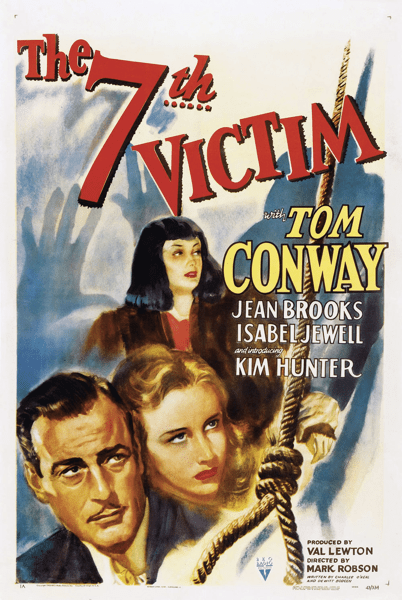
The crossing where the dark roads of horror and film noir meet is a place of fertile earth, where nightmares are easily grown. The ground, after all, is fertilised with a hefty dose of bone and blood. There are a ton of great films out there that take typically noir traits, and give them a shivery twist. Think of classics like Alan Parker’s Angel Heart, Jonathan Demme’s The Silence Of The Lambs. David Fincher’s Se7en. Kolchak The Night Stalker. Hell, half the X-Files was horror noir. Think of a film where a hard-boiled tec takes on a case, only to find that he’s hunting down something with a little more of the night in it than he anticipated.
Back in the heydays of noir, the 1940’s, this crosspoint was wide and broad. Noir has always been black and white in both visual and moral terms, and like horror, is not overly concerned that good should always triumph over evil. Both genres cast a bleakly jaundiced eye over human relationships, and easily find and stress-test the weak points.
The 1943 film The Seventh Victim saw producer Val Lewton take the psychological horror that he had pioneered in the classic Cat People, and add a noirish feel. Deep shadows and slashes of light were already visual cues for hard-boiled film, and this was a look in which Lewton’s long-time cinematographer Nicolas Musuraka revelled. On The Seventh Victim, he and director Mark Robson went a step further, soaking every frame in pools of darkness.
The Seventh Victim begins as the sheltered world of our heroine, Mary, is quickly stripped away. She attends a boarding school, the fees paid by her only relative, her sister Jacqueline. Jacqueline has disappeared, and the funds have dried up. Offered the choice to stay in the school as unpaid help, Mary instead opts to travel to New York to find her sister.
Once in the Big Apple, the mystery only deepens. Jacqueline has given away the family business, and got into some very bad company. Mary is quickly snared in a web of lies and deceit, and the hunt for Jacqueline will lead her to question the motives of everyone who pledges to help her.
The Seventh Victim casts an eerie, uncomfortable spell right from the first frames. Mary is urged to leave the boarding school and not return by the headmistress’ assistant, who tells her that “you must have courage to really live in the world” – a creepy foreshadowing of future events. Jacqueline is described as a rare beauty by everyone she meets, a light in the dark city – and yet she is obsessed with death, and rents a room above the Dante Restaurant (a powerfully appropriate name) containing nothing but a noose and a chair.
The film contains sequences that are the match of The Cat People in terms of shadowy shocks. Mary and a private detective who has taken her case search the cosmetics factory that used to belong to Jacqueline, at night. The one room they haven’t entered is barred by a black rectangle of shadow at the end of a dark corridor. Both Mary and the detective recoil at the sight of it. They are right to do so. There is death in that room for one of them.
The final fifteen minutes, in which Jacqueline wanders the streets after being cursed by the Satanists who have swallowed her life and shattered her sanity, are as powerful as any horror of the era. Vulnerable and alone, Jacqueline is threatened by shadows that turn out to be harmless, only to have new real, threats loom out of the darkness. Trapped by her own crumbling will, Jacqueline’s escape route is clear to us all, yet still a punch in the gut when it happens. Mary starts to hope for the future, unaware that her sister has already closed the door firmly on it. It’s an astonishingly bleak ending.
Noir doesn’t often get this creepy, horror doesn’t often have this atmosphere. Fans of both genres should find much to admire in The Seventh Victim, even if it’s a little too cold-hearted to love.
Leading Man Clive put me up to this, but then he knows my proclivities better than most. It proudly appears under the banner of the annual Film Noir Preservation Blogathon, raising funds to get classic and wrongly forgotten movies back into shape so they can thrill and chill a brand new audience. Readership, I urge you to support this worthy cause, which as I’m sure you can imagine is pretty near to my heart.
You can donate using Paypal by simply clicking on the lovely lady under the lamp-post below. Be gentle though. She may look like a kitten, but this cat has claws.

 For most, the defining image associated with True Grit is of Rooster Cogburn, grizzled, one-eyed, overweight U.S. Marshal, riding down on his nemesis Lucky Ned Pepper and his gang, a blazing six-gun in either hand. The Coen Brothers don’t argue with this view, and ensure that Jeff Bridges gets his moment to grip horse traces in his teeth in their lush new version of the tale. I shall not add a contrary voice to the consensus.
I am glad to see though that the focus on this re-telling is firmly on the girl who tells the story. Little Mattie Ross, only fourteen and yet taking on the world and all its hard lessons in her pursuit of the man who murdered her father. The hunt, it is clear from the beginning, is her way of grieving, and it would be tantamount to betrayal to abandon the chase, no matter what obstacles lie in her way. The world does not care about justice, it seems, but she does. Mattie will never tell a lie, never break a promise, never walk away from a contract.
Though small enough to be knocked off her feet by the recoil every time she fires a gun, she will sleep in a funeral parlour full of corpses and fearlessly negotiate with a hard-bitten stockman to ensure she has the funds to continue her quest. Set against her, everyone else seems compromised, foolish, crippled by their misdeeds and mistakes. Her prey, Tom Cheney, is a weak, venal halfwit. Laboeuf, the Texas Ranger who falls in and out of her company is a strutting loudmouth, incapable of silence even after he near bites off his tongue. Cogburn, well, Rooster is as mean as a long winter’s night and about as ugly. He’s a drunk, a brute and a killer, who’d be dead at the end of a rope years ago if not for the star that he wears. It’s no accident that everyone but Mattie is a grotesque, with mouthfuls of appalling teeth, scars and extraordinary facial hair. As Cogburn, Jeff Bridges manoeuvres his bulk around like a bear after a stroke, quick and graceful only in combat.
Mattie is no angel. She’s stubborn as two mules, inflexible as a new leather crop. She will shed tears for no man, although shed tears she does, in a truly heartbreaking moment. The world is a simple place in her eyes, a realm where there is no excuse for the wicked to remain unpunished, for the death of an honest man to go unavenged. Mattie is biblical in her wrath, relentless and unbreakable. She seeks a man with true grit to help her bring Tom Cheney down, but in the end it is clear that she has more grit than anyone.
Hailee Steinfeld provides us with a clear, unalloyed view of Mattie Ross. In tight braids, an over-sized hat, breeches and boots, she cuts an unyielding silhouette. She is clear-eyed, tough but with an underlying sweetness. It would be easy to turn Mattie into a vengeful automaton, but that is never the case here. She takes joy in tales told round the campfire, and in the company of her beloved pony Little Blackie. She learns some awful lessons out on Indian territory, but they never dispel her faith that justice will be done, and that the men she rides with will prove as equal to the task as she.
The re-telling of True Grit is a job that has been done with care and skill. Under the lenses of Roger Deakins, the New Mexico landscapes are harsh and clean. The Brothers Coen have provided a lean script, the dialogue florid yet spare, capturing the conversations of Mattie, Rooster and LaBoeuf with a delight in the eccentricities and formalities of the period. There is violence, and when it appears it is sharp and brutal. But that isn’t the point to the tale, and it’s well over halfway through the film before a gun is fired in anger. True Grit is a story about how when it comes to seeking justice, innocence is frequently the greatest weapon you can wield.
An excellent comic adaptation of the moment when Rooster and Mattie first crossed paths is available on the True Grit site for your perusal here. Fill your hands.
 Boxing movies, like most dance films, like most music films, are rags to riches tales. They tend to be “true stories” – as much as any Hollywood biopic can have any claim to veracity. They will be set in dirt-poor urban neighbourhoods, where everyone gathers outside stoops and porches when they’re not in the local bar starting fights and getting in trouble with the waitresses.
They will focus on the last shot at stardom, the fight or talent contest or rap battle that our hero or heroine absolutely cannot lose. Most importantly, they talk about how the family is the key to success, while at the same time pointing out what a bunch of monsters the family of the main character is.
The Fighter succeeds by taking all these elements and cranking them up to distortion point. It’s the tale of Micky Ward, a stepping-stone boxer used by better prospects to get up the ladder to the lucrative title bouts. Played by Mark Wahlberg as a doughy, sad-eyed lump of protein, Micky is a no-hoper, a never-gonna.
He’s crippled, not by lack of talent or fighting spirit, but by his family. Ma Ward is a manipulative harridan, seeing insult and disrespect in every stray comment. His sisters are a bunch of lemon-sucking, frizz-haired monstrosities. A Greek chorus of harpies. His brother Dicky, mentor, trainer, that guy that knocked down Sugar Ray Leonard that one time, is a manic, eye-bugging crack addict. Any one of these would be enough to send a normal person off down the street screaming. All three in one house give you a fairly close idea of the inside of a lower circle of hell.
In these kind of films, the main character always needs a love interest to help find the confidence and belief in themselves that will give them the chance to escape the traps that their live have become and live their dreams. Frequently they’re from the other side of the tracks, and it’s no different here.
Things are so low-rent in this world that Charlene, played with perky toughness by the delightful Amy Adams, stands out by having gone to college. She’s a dropout, but by sporting an education she’s some sort of interloper to the Wards, who view any outside influence with the kind of swivel-eyed suspicion that really deserves to be backed by a banjo and a hooting jug. She’s a threat to the family unit, and they make their displeasure clear.
Later in the film the ladies Ward will start a seven-to-one street catfight with the lovely Ms. Adams, as she is not only no better than she oughta be, but also indulges in lesbian threesomes, according to reliable scuttlebutt. Sadly, these speculated threesomes are never pictured, which I’m guessing means they didn’t happen. A boy can dream, I suppose.
So, there’s the inevitable schism. Dicky goes to jail, which gives Micky the excuse to break away from the Wards, and what a surprise, start winning fights. There are montages. Lots of montages. Training montages. Fight montages. Dicky in jail getting clean montages. Which is fair enough, and very much on model. Rags-to-riches tales need montages, because the process of going from rags to riches inevitably takes years and we are an impatient bunch that need to see progress fast. The dancer will slip and trip, but in a couple of lap dissolves we’ll see her pirouette across the studio floor. The rapper will frown over a blank sheet of paper, but we’ll soon see it fill with rhymes.
Dickie reappears with new teeth but the same old attitude, expecting to pick up where he left off, leading to yet more schisms and fights. Lockers get punched. I feel sorry for lockers in these kind of films. They come under all kinds of abuse.
Finally, Mickey decides that even those his family are a bunch of raving nutballs, he needs them. Or at least, the insight that Dickie has on his fighting. This again is textbook stuff, a reunion leading to the final triumph of the protagonist. Does he triumph? Well, this is the story of a fighter that won the WBU crown in 2000. There should be no surprises here.
And that’s the point, Readership. The Fighter is a film about the fight, not the victory. The important thing is not the conquest, but the battle to get there. Rags-to-riches tales make this point clearly. They end at the moment of triumph, dissolving away to a final series of cards telling us what happened next. But it’s not important. It’s all done by the time the boxer raises his hands into the flashbulbs of the cameras, or the moment that the dancer or the singer takes her bow in the blast of the spotlight. After that, we know the story. We can take over now.
One last thing. Cleverly, director David O. Russell runs footage of the real Micky and Dicky over the end credits. There’s been a lot of honking in the review columns about how broadly Christian Bale plays the manic Micky. Accusations of over-acting, of method gone mad, have been levelled at him. Watching the footage of the real Pride Of Lowell, you quickly realise that Bale calmed down his performance. The real Micky, a motormouth attention vampire, would drive you nuts in five minutes flat.
 Tangled is something of a landmark for Disney. It’s their fiftieth animated movie. It’s also, according to reports, most likely to be their last “princess” film. I’m still not sure if that’s a shame or not. Mind you, I’m not sure how many other princesses of legend are left to chronicle.
The film also marks a return to the core values and tropes that make your classic Disney films so satisfying. By going back to its roots, the House Of Mouse has made their most successful movie since 2007’s Enchanted; a film which took delight in extracting the Mickey out of the story beats that Tangled embraces and celebrates.
We all know the tale. A girl, imprisoned in a tower by an evil witch, whose only means of entry is by means of her long golden hair, is rescued by a handsome prince. It ties into the myth of the lost princess, one of the main building blocks of yer average fairy tale. Sleeping Beauty. Beauty And The Beast. Cinderella, stuck in near-slavery. Snow White, in exile with a bunch of vertically-challenged miners. It’s a base to build a story on, a solid foundation of myth and legend.
Tangled’s screenwriter, Dan Fogelman (sweetly, IMDB also lists Jacob and Wilhelm Grimm as co-writers) takes that core idea and answers the simple question that everyone asks. What happens if Rapunzel lets down her golden hair and breaks herself out of her prison, rather than waiting for a prince? By making her story a quest, a love story, a rite of passage and a return home, Fogelman does a great job of not just answering the question, but telling a story that bears retelling at bedtime. More importantly, by giving Rapunzel’s ‘do a point and a purpose, the story has an impetus, becoming the engine that drives the tale on.
It’s traditional enough, sure. There’s a happy ending (ok, fine SPOILER ALERT, Disney film has happy ending. In other news, water is wet, the sky is blue, yo’ mama wears an afro with a chinstrap) and cute animal sidekicks. It’s all set in that pleasingly ill-defined land of mittel-European castles, forests and jolly, clean, well-fed peasants that we may as well call HistoryLand. But there are subtle trims to the formula. The animals are unvoiced, letting the character animation do all the talking. Maximus the horse is bold and brave. Pascal the chameleon is loyal and sassy. We get it, and we don’t need a comedy voice to put a wig on it and make it do a shuck and jive. There’s plenty of slapstick and broad humour, but the jokes work on the grown-ups in the audience too. The main characters aren’t limp and lifeless. They’re sharply drawn and inhabit the screen with flair and verve.
 And I mean sharply-drawn in all senses of the word. The animation is, as you’d expect, stunning. But it’s not just the vistas, set pieces and special effects that make it special (although yeah, the lantern sequence, something in my eye, I’ll be fine). The character animation is beautifully nuanced. Every little flit of emotion on Rapunzel and Flynn’s faces is exquisitely done. This isn’t performance capture or any of the other cheats in which Zemekis, Cameron and Jackson have decided to base their careers. This is proper, honest to goodness cartooning, showing the magic that happens when talented animators use the best tools the 21st century can offer.
It’s bolstered with great voice work too. Thank goodness, for Tangled the directors plumped for actors with Broadway experience, who know how to project a line and make it sing. I’m so sick of animated films with all-star casts that don’t understand how to act for cartoons. You have to be larger than life. Instead, you so often get a flat, cold delivery that’s not so much “will this do?” as “screw you, pay me.” Mandy Moore, Zachary Levi and the amazing Donna Murphy get it so right that I’m astonished there isn’t a Best Voice category at the Oscars. They bring the gold, the final grace notes of wit and charm, menace and wickedness that make the characters shine. You get to believe in, and root for them.
By bringing back Alan Menken, the talent behind most of the Disney songs you know since The Little Mermaid, Tangled gets another boost. I’d gone off songs in Disney films, (and towards the end of Menken’s run they were kind of jammed on and lacquered into place) but here they do the perfect job – commenting on the inner life of Rapunzel, the relationship between her and Mother Gothel and in the riotous Snuggy Duckling sequence, showing that even hardened brigands and ruffians have dreams. They’re neatly done, don’t overstay their welcome, and move the story forward in graceful ways to which the writers of Glee should be paying note.
The fiftieth Disney animated film shows how far the studio has come since Snow White, and how much they’ve learned. It’s a company that has always been prepared to take risks with their movies, and to learn from them. After the major mis-step of Home On The Range (Don’t. Seriously. Just … don’t.) Disney retrenched, learning with the brilliant Enchanted how to laugh at themselves, and with The Princess And The Frog that it’s the story rather than the CGI that makes the film. Under the watchful eye of Pixar’s John Lasseter I feel quietly hopeful that rather than marking the end of an era, Tangled takes the best of the past and zshuzzes it up into something new and fresh.
Maybe I’m overthinking it. Tangled is one of those films that works as entertainment and history lesson, but ultimately, it’s a fun, smart and extremely pretty family movie. You can just let your hair down and enjoy it.

The fun of The Green Hornet lies in its familiarity. A millionaire tools around The Big City, fighting crime by night as a masked vigilante, in a souped-up super car, faithful sidekick at his … side. Holy ho-hum!
But let’s not forget, the radio serial in which Britt Reid and Kato first stung crime predates everyone’s favourite Caped Crusader by three years. The hidden lair and funky weapons that would become a staple of the crime-fighter’s armoury also made their first appearances here. As an urban version of the Lone Ranger, and a testing ground for all kinds of superhero tropes that included the mask’s uncomfortable relationship to the law, the Hornet was popular for decades.
The new film version has been a long time coming. Kevin Smith’s original scripts for a version that came close to shooting in 2006 have popped up as comics (Smith has form with heroes of the verdant hue, starting his comic career with a sterling run on Green Arrow. I’m sure there’s a Green Lantern script kicking around his hard drive somewhere). The Seth Rogan script that finally went before cameras helmed by French lo-fi wizard Michel Gondry was sat on by Sony for the best part of a year, and suffered innumerable reshoots. But it’s here now, and to my mind works as a fitting tribute to the gleeful silliness at the heart of all superhero fiction.
The film plays out as dumb, loud comedy, but it’s honest to its sources and to the shows and films they influenced in their stead. There’s a house-wrecking fight scene straight out of the Pink Panther movies (Blake Edwards loved the Kato character so much that the closest he came to disguising Inspector Clouseau’s sidekick’s origins was to change a consonant in his name). The irreverent tone and slapstick are nods to the William Dozier/Greenway Productions stable that sired both the Green Hornet and Batman shows in 1966. There’s a (possibly) clever skew here too though, as The Green Hornet was played straight, with little of the camp humour that made the Adam West show so popular. Nice to see the propulsive Billy May/Al Hirt theme tune popping up towards the end too.*
The neat twist to the Green Hornet story is that the true hero of the partnership is the sidekick. The Green Hornet show famously made a star out of Bruce Lee, and it’s a dynamic that, while hardly original these days, still has comedy and dramatic value. While I don’t think the new Kato, Taiwanese pop star Jay Chou, has the charisma of The Dragon, he has the moves. His masked counterpart Seth Rogen handles the many fight scenes with aplomb, floundering around after his black-clad buddy and getting in a couple of good hits … purely by accident, of course.
Whether you buy him as the hero of the piece depends on how you like him in general, because there’s no great artistic stretches in the acting. Rogan plays the same affable stoner he’s always played, giving Britt Reid the air of a low-rent Tony Stark (playboy crimefighters with daddy issues. The genre’s full of ’em). Christophe Waltz plays the Eurotrash bad guy Chudnovsky with flair, nailing the ridiculousness of the themed villain when he changes his name from one unpronouncable syllable salad to another. Cameron Diaz appears to be in it so that she can prance around in short-shorts at one point. Tom Wilkinson and Edward James Olmos add gravitas.
Michel Gondry finds himself in the same boat as any other cinematic stylist that takes on the Hollwood suitcase full of dollars. There’s little there to tell you that the director of Eternal Sunshine and The Science Of Sleep is behind the camera at all. The much-touted games he wanted to play with the 3D format aren’t really obvious. The action is frenetically comic-booky without going the extra yard or so that might have made it really interesting. I have the feeling that the director’s cut, should we ever see it, would be a very different film to the one I saw.
I wanted a 2D screening, but my local Vue couldn’t accommodate me. I had no option but to splash out for a 3D screening, and spent it popping the glasses on and off to see the differences. I found for the most part I didn’t really need them, and subsequently left the cinema without my usual stereoscopy-derived headache. The end titles looked nice in 3D though, and I was pleased to see that just about every Blambot font made an appearance in a crazed Lichtensteiny Benday-dot frenzy of OTT typography.
I enjoyed The Green Hornet quite a bit. It’s stupid, loud and nonsensical. But then so were the radio, movie serial and TV shows based on the character that came before. In that sense, the new version is carrying on the tradition admirably.
*Pop Quiz: an X&HTrophy to the first person to answer this in the comments: in which Quentin Tarantino film did the Green Hornet theme make an appearance?
Let’s get the disclaimers out of the way before I start. Last week’s Friday Play on Radio Four was directed and based on early childhood experiences by Christiana Ebohon, who’s an old college friend of mine. She let me know about it in her Christmas card to X&HTowers. It’s almost certain that if she hadn’t told me it was on, I wouldn’t have tuned in. I barely listen to radio any more, least of all drama.
That, it would appear, is my loss, because if Ob’owa is any indicator of quality, there’s a lot of good work simply flying under my radar.
Ob’owa tells the story of Francesca and her younger brother Joseph. We first meet them in Peckham, sometime in the 70’s. They’re good kids, smart, funny, obsessed with the Bay City Rollers. They live with their mum, a divorcee. Dad still has visitation rights, which he uses to kidnap the two kids, whisking them off to Nigeria to live with his family. Their grandfather, his three wives, and their many children.
Ob’owa works on many levels. It’s a story about belonging, home and family. But it’s also a fish-out-of-water tale. Francesca and Joseph struggle to cope in a world where if you want meat for dinner, you have to go out in the yard and kill something. The wives react in horror when Joseph tries to help in the kitchen (“women’s work!”). School is tough, and worst of all there’s no telly.
The story could be unrelentingly grim. There are scenes of spousal abuse, musings on racism on both sides of the fence (ob’owa means “white”, a term that is used to taunt the two English kids both in the playground and the family compound) and a teeth-gritting moment where Francesca bravely submits to ritual scarring. But Christiana and writer Moya O’Shea have a light touch with the material, and the funny and sweet moments are a nice balance to the drama. The 70’s references come thick and fast (I snorted particularly hard at the jab at the truly dreadful Love Thy Neighbour), and the play is both pacy and absorbing. It’s also very well acted, with the kids in particular, Rhiannon Baccus and Jayden Jean-Paul-Denis giving sterling performances. Aural texture, recorded partly on location in Nigeria gives the whole thing the weight and heft of reality.
Ob’owa is a sharp and fearless look at the serious subject of child abduction. It would be easy to slip into hysterical pontification or cheap drama when telling a tale like this. Christiana and Moya do neither, treading a precise line, seeing both the humour and the heartbreak in the situation into which Francesca and Joseph are dropped. It’s great storytelling, and a very worthwhile excuse to simply switch off the telly for a bit and be told a story.
Ob’owa is available on the BBC iPlayer until 10pm this Friday. Do yourself a favour and cock an ear at it here.
 EXCUSES AND HALF TRUTHS