Rampaging elephants couldn't tear me away from this article on how technology is disssociating us from the wonders of nature.
The time has finally arrived. This Friday, the 28th, the iPad will finally be on sale in the UK. I can already, with a sinking heart, report some of the things that will happen on that day.
There will be photos in all the papers of Steve Jobs holding up the iPad in his keynote at the Macworld conference back in January. You will recognise this photo, as it’s the only one the papers have been using to illustrate news about the device since its announcement.
There will be a sad and slightly droopy queue of obsessives outside the Apple Store in Regent Street, who just have to be there to pick up the iPads they preordered, rather then have the devices FedExed to their front door like a normal person.
There will be live-blogging. Dear gods, there will be live-blogging. Each and every one of these will include the phrase “The queue is starting to move. No, wait, false alarm.”
These people will be interviewed by BBC Breakfast. They will look slightly desperate, and a little crazy. They will be condescended at by an over-styled moron who has to get his eight-year-old daughter to sync his iPod. There will be an in-studio interview with an advocate like Rory Cellan-Jones, or Hugo Rifkind of the Times, who will gush like a perfumed faucet about the device. The phrase “game-changing” will be used to excess. This will be followed for balance by a spokesman from Sony, whining that it’s really just a big iPod Touch.
The queuers will be applauded by Apple staff when they finally pick up their iPads. They will feel the urge to hold their newly-purchased devices above their heads as if it’s the World Cup. They will look a little desperate, and slightly crazy.
Any coffee shops with wifi in the immediate area around Regent Street will be absolutely fucking unbearable until about 4PM, when purchasers get bored with the novelty of reading the Times or watching Star Trek on their new toys and go home to irritate their partners instead. There will be much discussion of the on-screen keyboard, and everyone will be insanely jealous of the smug git in the corner with the venti macchiato who splurged on the keyboard dock. He will merrily spend the afternoon whooping it up on Twitter instead of doing any actual writing.
Meanwhile, those of us in the know will be patiently waiting for June the 8th, and the moment at WWDC when Steve Jobs digs in his pocket.
I have a certain hind-brain, illogical attraction to the new Renault Megane. No idea where it came from. I hadn’t been a fan of the marque since they did that weird thing with the boot that turned it into a shelf, and ran advertising that claimed that made it sexy. To my mind butt-heavy is good, but not in cars.
But there was something about the Megane that gave me pause. And it’s only today that I’ve sussed what that something might be.
The last time I bought a video camera was in 1999. It was to document our first trip to America, a two centre run round Boston and New York. It was an amazing trip, and one that I won’t forget any time soon. New York in those edgy, pre-millenial days was some place to be, and the red moon I captured rising over 666 Broadway seemed to sum up the weird feeling perfectly. I’d promised that I would cut those shots down to a short film in time for the New Year. Needless to say, those tapes are still in my store at home, untouched in ten years. It’s always going to be a thing to do when I have more time. And don’t get me started about the Australia footage that’s sitting in boxes beside it.
I love that camera. It’s a Sony MiniDV, and it cost us a fortune at the time – getting on for a grand. I blanch at the thought of spending that much dosh even now. But it’s earned it’s keep. It’s been to the States, Oz, Africa and Europe, and still gets used as a back-up camera for interview shoots. It’s small enough to tuck unobtrusively into a corner, and works brilliantly for cutaways and closeups. It’s got a decent lens and a good optical zoom. And the big battery I bought for it still gives nearly 4 hours recording time. And of course, plugged into the Mac it still does the business as a transfer dock for the Super 8 transfers I get done for films like Code Grey and the upcoming Time Out.
But of course it’s been ten years. So I’ve been humming and harring about getting a new camera. Clare’s Panasonic shoots HD video, and that’s fine, but it’s not MY camera. And much as I believe in the “what’s yours is mine” ethos, there are some boundaries that it’s uncomfortable to cross. I don’t touch her laptop, for example. It would be like going through her knicker drawer. There needs to be some respect for privacy. The Panny is hers, and she’s doing great work with it. And video is my field, after all.
I have therefore been mooning around Currys and Comet, eyeing up the camcorders, astonished by the drop in size and price. £350 would seem to get a hand-filling, sexy little number with a decent hard drive that would stow in a bag nicely.
But at the same time… they’re still consumer machines. And I’ve had my head turned by Dom’s lovely Sony cam, a professional piece of kit that he uses for paid gigs. If I ever needed it, he would let me borrow it without question. So really, I have no need of another video camera. The arguments go round and in my head, distilling down to the simple phrase, “Don’t need. WANT.”
Then I came across an Amazon link for the Kodak Zx1, an example of the “good enough” school of basic pick up and play vidcams that have none of the frills or functionality that I was used to. But it shoots HD video to an SD card, runs off a couple of rechargable AA batteries, has stills capability, and is small enough to go in a pocket. It’s the same size as my first-gen iPod. It was on sale.
£50.
Readership, I bought one. I very nearly bought two.
The picture quality is redonkulously good for something of this form factor. It’s fixed lens is sharp and clear. It won’t do macro, and barely has a zoom worth talking about, but so what? It’s the complete opposite to the kind of thing I wanted, and all the better for it. It will be used this summer for a short film mixing HD video and Super 8, and in the meantime for filmlets and squibs that I can shoot, cut and upload while an idea’s still fresh. I’m excited all over again.
Here’s the first fruit of my labours. Clare wanted documentary proof that I’d done the mowing on a day off. So that’s what I did.
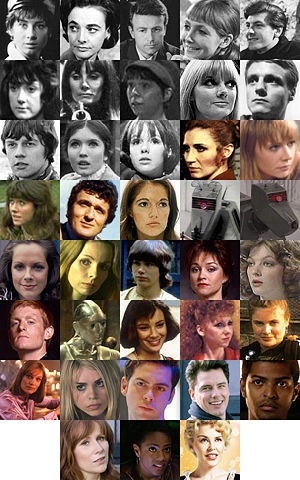
I loves me a bit of old school Doctor Who on a weekend morning, especially when Tom Baker lurches on screen and gives me that classic wide, wild-eyed grin. I watched a few stories back to back recently, cherry-picked from different points in the run, and something struck me (TLC, persuading me to do the hoovering, but that’s another story). In each, the companions served a specific and carefully maintained position. Sarah Jane, Harry, Leela, Adric, Tegan and Nyssa were on the show to ask questions and get themselves into trouble. Maybe hold up a hatch while the Doctor went at whatever was inside with the old sonic screwdriver. That was pretty much it.
Compare and contrast this with the companions in the new shiny version. Frequently the show will be about these characters. We will find out about their home life and their love life. We’ll meet their family. If you’re Martha Jones, you’ll get your own theme tune.
More importantly, they are on an equal footing with the Doctor. They will become part of the solution to the problem of the week. They can no longer be seen as bumblers or screamers. Sometimes, they will save the day after the Doctor has given up. Rose Tyler, I’m looking at you and your bonding with the Tardis here.
And then there’s the sex. The days when the Doctor would have entirely chaste relationships with the ever-changing panoply of pultrichude that swanned through the Tardis control room are long gone. He either falls for his companion, or the companion falls for him, hard. Martha’s unrequited pash for the Doctor became a defining part of her time on the show.
Oh, you lanky ginger sexpot.
So let’s look at Amy Pond. A girl who grew up with an image of the man in the box that gradually twisted and mutated, developing a crush which turned into – something else. I have no idea exactly what it is Amy feels for the Doctor, but it sure as hell ain’t healthy. In the new series, Bow-Tie Doctor (I’m sorry, but the easiest way to refer to them is by costume. Long Scarf Doctor. Dandy Doctor. Cricketing Doctor. Which makes Christopher Eccleston Leather Doctor, and there’s an image that’ll be with me for days) has to struggle with a companion that has developed some very strange ideas about the nature of love. Dropping everything to run away the day before your wedding with a figure you built childhood shrines to is not normal behaviour.
The love triangle that’s emerged as Amy’s fiancee Rory has joined the crew brings Doctor Who closer to soap opera than it’s ever been. The most recent episode, Amy’s Choice, in which she’s forced to choose between which of “her boys” survives is genuinely new territory for telly Who, and it’s telling that no punches are pulled in the acting or writing. The villainous Dream Lord is played by Toby Jones, one of the finest actors of our generation. It’s written by Simon Nye, a new name to Who but an enormously respected name in the industry, and a man who can track the path of the dysfunctional heart with more sytle and aplomb than most. This is hardly the Doctor Who of memory and archive.
You can track this change in direction to Doctor Who’s most interesting period – that 15 year chunk when there was no televised Who at all. The franchise lived on in audio dramas and books, and explored new and strange directions, unencumbered by budgetary constraints or duff special effects. The lives of the supporting cast could be explored at whim. The main players in TV Who nowadays, Russell T, current show-runner Steven Moffat and writers like Paul Cornell all come out of this explosion in creativity, and their influence is clear. It was a time of tacitly endorsed fanfic, with all the strangeness and charm that comes out of that arena. These were new stories told by writers that had no agenda other than a love of the show, and a wish to see it done right. And of course, the sexual tension that’s now a part of the show is a big feature of the fanfic scene.
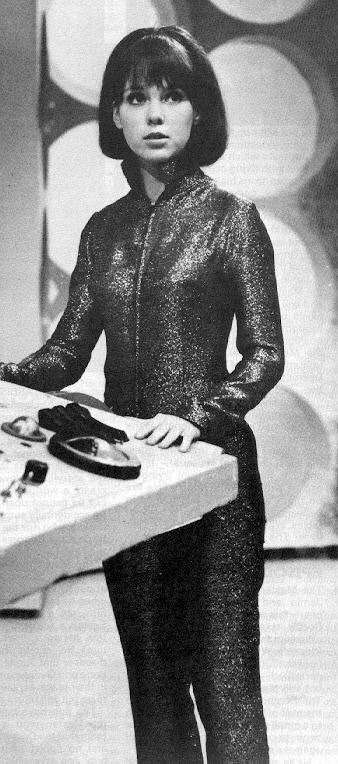
While I’m on the subject of sex and Who, I found the whole furore about Amy Pond being a “sexed-up companion” to be Daily Fail over-reaction. Not only was Moffat veeery careful with the definition of Amy’s day job – kissagram, not strippergram – but there was an almost deliberate blindness to the fact that feamle companions have always been eye candy in the show. Consider Louise Jameson in her torn chamois leather.Peri Brown in her bikini. Wendy Padbury in the skin-tight sparkly catsuit. THAT picture of Katy Manning. Something for the dads, although that ignores the fact that boys of a certain age would also discover that funny feeling in their tummy while watching supposedly innoculous Saturday afternoon telly. I know I did.
The companions are key to the success of the new Doctor, not just because they are avatars for the watching audience. Their role has changed, and they are now interesting and involving characters with their own motivations and needs. You would never see Sarah Jane Smith throwing herself at the Doctor the way that Amy does, largely because she was never written to be anything more than the standard bit of fluff. I never really thought the episode where she and Rose bumped up against each other rang true, because I never really saw her having those kind of feelings for the Doctor. Or indeed any real feelings whatsoever. The focus of the show was simply not on her. She screamed, asked questions, and got loomed at by a tall bloke in spray-painted bubblewrap. That was it. Curiously, it’s only in her starring role in kid’s show The Sarah Jane Adventures that she comes across as a grown-up with feelings and responsibilities. Once again, the show-runners of Who always understood that you could sneak adult stuff into kids shows as long as you were ever so slightly subtle. Look at Moffat’s Press Gang – to my mind still one of the best TV shows out there. No-one could ever accuse that show of lazy writing or characterisation.
Doctor Who has expanded it’s remit. It’s a central part of the BBC schedules, which is exceedingly sweet to fans like me who could always see the charm in the wonky sets and air of slight silliness, and could enjoy the stories and writing. The fact that Who is now so very writer-driven, despite the Mill’s endearingly cheap special effects, is the reason it’s doing so well. It’s never been a cold show, and wears it’s faith in humanity boldly and without irony. By turning the focus a little away from the ancient alien in the blue box, and towards the boys and girls who share his life however briefly, that faith and warmth have only become more obvious.
But you do have to wonder about what’s going on with The Doctor and Captain Jack…
Well done, you! You increased your majority by a good few thousand, and with Martin Salter out of the picture, this makes Reading a fully Tory town. You must be really pleased. It’s a vindication of your sterling work as a local MP. It must be. Cos it’s got nothing to do with the policies under which you campaigned.
It must be amazing to be part of the parliamentary process at a time when it’s going through the most profound shift in half a century, with the chance of even more profound reform coming up. It was truly astonishing to see David Cameron on the steps of No. 10 with Nick Clegg as his deputy, and downright fall-off-the-sofa stunning to see the list of what they’d agreed to as a framework for future co-operation. The Repeal Act alone takes most of the issues I’ve written to you about over the past couple of years and fixes them in one fell swoop.
But there’s more, and as I read through the policy changes and announcements, I feel more hopeful than I have done in a long time. There’s balance here, the feel of a proper partnership. We have a cabinet that contains almost a third of all Lib Dem MPs, and although I’m disappointed not to see Vince Cable as the Chancellor, I can understand the reasoning. He’ll be kicking arse and taking prisoners in the banking sector soon enough. I’m a bit worried at a junior figure like George Osbourne taking on such a massively important job, but it’s not like he won’t be getting the Vincester to check his sums, after all. I know it’s not fair, but I saw this on Twitter and laughed, by the way:
“George: Vince, can you check these figures for me?
Yeah, sure, there’s still some things in the new agreement that make me wince. The cap on non-EU economic migrants is likely to come up and bite the government in the bum when the NHS can’t get hold of the skilled staff they need from overseas anymore. As for the limits on the application of EU Working Time Directive – we already work longer hours in the UK than in any other country in Europe. Control on working hours is necessary legislation, and vital for the work/life balance that’s critical for everyone in these stressful times. But for the most part, I see policies that will help this country to become a fairer place.
So, what do you think of it all? I know it’s not ideal for you, but then let’s face it, I don’t think this is a situation that any of us voted for, or expected. We’re in genuinely new territory now (although our European partners must be viewing the freaked reaction to the changes with some bemusement. After all, on the continent, coalitions are the norm and you don’t se gloomy pronouncements of economic and social meltdown on a daily basis there. But then they don’t have the Daily Mail, I suppose.)
So, Rob. I’m kind of pleased to see you back. It’s good to have a familiar face here in this unfamiliar territory in which we find ourselves. I’m looking forward to writing to you again. I hope you’re looking forward to hearing from me. We’ve been through too much together to let a little thing like the restructuring of British politics stand in the way of an amicable relationship.
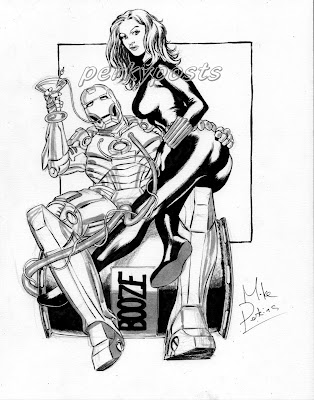
...and an extra $200 if you wear the helmet and call me Howard.
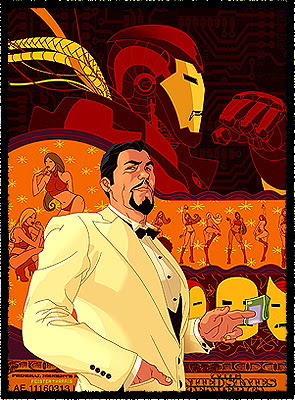
I dutifully trekked to the movies last week to check out Iron Man 2. Following the runaway success of the first film, and it’s winning formula of laughs, action and a fittingly dramatic tale of an arms dealer’s epiphany and redemption, expectations for the new one were high. There have been some poor reviews, and general complaints that in this movie you didn’t get to see that much of the armour. It’s a fair point, given that this is the first of the tentpole big bang movies of 2010. But I really enjoyed the film, for precisely that reason. The enduring fascination for me lies in the flawed, self-destructive character of Anthony Stark.
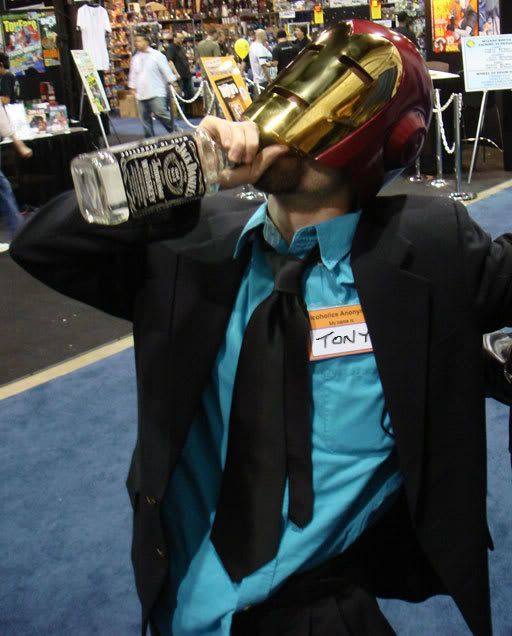
He’s based, according to Stan Lee, on Howard Hughes, the playboy billionaire technocrat turned paranoid recluse. Like Hughes, Tony Stark is a glamourous, globe-trotting ne’er-do-well. Like Hughes, he’s also fundamentally broken at base level. He’s bi-polar, alcoholic, has serious daddy issues and seems unable to have any real friends outside his staff. He’s dating his secretary, fercryinoutloud…
That Stark/S.H.I.E.L.D. consultancy - not going so great.
With this in mind, it becomes much easier to sympathise with the bad guys in Iron Man 2. Vanko has a very clear and obvious grudge against Stark, whose father used and deported his dad for pretty nebulous reasons. “He was only in it for the money”, we’re told. How vile, an industrialist trying to make a profit, never heard of such a thing. Similarly, Justin Hammer and Senator Gary Shandling have justifiable grievances against this raving narcissist who somehow has access to bleeding edge tech, is using it in one-man vigilante operations without any sort of international sanction, and keeps it locked down and proprietary. I can’t help but imagine that this is like Steve Jobs moving into weapons design. The implications for someone with Iron Man tech using it for means that are not US friendly are never really explored in the film. Sure, Vanko will probably sell his designs on (to the usual bloody suspects, Iran, North Korea et al, when he’d be much better advised simply undercutting Stark and Hammer and making a mint out of the US military, who have no bones about dumping manufacturers if they can make a saving) but his primary motivation is revenge. I’m lost as to why he doesn’t just sue Stark Enterprises for a half share of the profits. It’s not like he doesn’t have any evidence. It’s all a bit – well basic and unimaginative, really.
As befits the industrial espionage theme at the story’s core, most of the villains or opponents Stark comes up against are after the Iron Man tech, and it’s his refusal to hand over or share that causes conflict. The principal villains in both movies are industrialists first and foremost, and more honked off about Stark’s assault on their profit lines than anything else. His petulant outburst at the Senate hearing “It’s mine, and you can’t have it!” tells us everything. The guy simply cannot play nice with others. When you consider that the arc reactor at it’s heart wasn’t his idea in the first place, and that it’s his father’s blueprints for the new element Starkonium (as I’ve decided it should be called) that save his life, that petulance is a bit rich. Ivan Vanko has just as legitimate a claim to the tech as Tony, and yet somehow he’s the bad guy? I walked away from the film feeling that Vanko had been spectacularly hard done by, simply because he chose to deal with the grief of losing his father in a more direct fashion than might have been advisable.
Well, tell him I'm in a MEETING or... somethng *urp*
As ever with comic book adaptations, it’s better to go back to the source. Here we see some really interesting developments in Tony Stark’s character. For the last couple of years in the Marvel universe, he’s been effectively a villain. Heading up an initiative to unmask the superhero community that split them down the middle, taking over S.H.I.E.L.D. after an assassination attempt on Nick Fury, he has become an authoritarian stuffed-shirt with little of the joie-de-vivre that fans of Robert Downey Jr. would expect. He is trouble, pure and simple, melting down into a puddle of booze or paranoid delusion just when the planet needs him most.
He can be even more toxic to those around him. The moment when Tony, in an attempt to bring Pepper a gift to apologise, offers her strawberries, the one thing she is allergic to, says a lot about the character. The flippant comeback line, “I knew there was something connecting you and strawberries” is the capper. He doesn’t care about her. He only has a vague idea of her likes, dislikes and the fruits that could potentially kill her. I genuinely felt that he was closer to the robots in his lab than to Pepper, Happy or Rhodey.
But maybe there is another aspect to the character that needs to be tied into the mix. The Iron Man armour itself. A major part of the film is the hunt for a power source for the suit that won’t kill Stark (palladium poisoning won’t give you techno-emo tattoos, by the way. It’s nasty stuff). In the comics, Rhodey’s take-over of the War Machine armour nearly kills him too. The suit is dangerous. Stark has no qualms with flying unproven prototypes of the armour in to combat, regardless of the risks (and as the arc reactor generates almost absurd amounts of power, the catastrophic failure of that device could cause the end of everything. Imagine Iron Man losing containment over China, airbursting with a force equivalent to every nuclear weapon ever made at once. That, my friends, is an extinction level event. All because Tony-baby couldn’t wait to play with his latest toy.)
So, let’s sum up. Our hero is a narcissistic drunk, incapable of a meaningful relationship, and a hoarder of world-changing technology who has taken it upon himself to police the planet without any form of oversight or supervision. All it would take is one bout of alcoholic hallucinations leading him to believe that Kim Jong Il is actually a lizard from outer space and he could spark off World War 3.
I dunno about you, but Tony Stark flippin’ terrifies me.
I wanted to push a couple of things that my friends and fellow travellers are up to in the coming weeks and months.
Ben Woodiwiss, writer of Blood + Roses and the opening segment of Habeus Corpus is screening his short film You Look And You Think on Monday, 17 May It’s at RICH MIX 35 – 47 Bethnal Green Road, London, E1 6LA. The film will screen at 7pm. Ben, ever the shameless self-promotor, has this to say about You Look And You Think:
Please do not feel in any way obliged to attend.
The film is 6 minutes long. Do not haul ass across London for 6 minutes.
I have the feeling that it’s going to be an uninspiring evening.
The big tease.
Meanwhile, the amazing Kiki Kendrick will be taking her one-woman show Next! to Edinburgh for the 2010 Arts Festival. It’s on at The Baillie Room in The Assembly Hall, from the 5th-30th August. She describes the show thusly:
You know what dying feels like? The job interview that goes tits-up, the exam failure, redundancy, divorce, not being selected or elected? “NEXT!” is one woman’s tragicomic ‘die every day’ exposé of real life auditions. Live the dream, feel the pain, and discover there’s a lot of muck among the stardust.
She’s told me and Dom a couple of the stories that are in the show, and had us in stitches. There will be previews in London from the 20th-22nd July, at The Etcetera Theatre, in Camden High Street. I’ll certainly try and make it to one of those if a roadtrip to Edinburgh turns out to be a bit too much of a push. At either location, it’ll be worth your time.
I’ve become much more politically active over the past couple of years. I don’t mean in terms of joining a particular party, going to demos and the like. This is a self-proclaimed introvert talking, after all. Some days you’re lucky to get me out of the house. But I have found that I’m reading political blogs, signing petitions and posting about issues that are desperately important to me. Things like freedom of speech and expression. The right to privacy. An unassailable Human Rights Act. Protection of the vulnerable. Tolerance for all, regardless of skin colour, religion or cultural differences.
I’m writing and acting on these issues because I increasingly see them under threat. I’ve been stopped and searched twice under section 44 of the Terrorism Act, for no reason that I can see other than the bulky backpack I toted around back then (my Gabe bag of choice is considerably slimmer nowadays, and it’s not just out of consideration towards my back). It’s becoming more and more difficult to take a photo on the street these days without a uniformed jobsworth demanding to see the contents of your memory card. Even bloody Facebook is making it virtually impossible to keep control of what I can and cannot share with the world. (I know, I know, the government has nothing to do with Facebook. But it keeps my righteous anger simmering nicely.)
But I remain hopeful, which is why I campaign and sign and write letter after letter to my MP. I believe that once people organise, pool their resources and knowledge and make a stand against issues that concern them, then things can change. I contribute regularly to groups like 38 Degrees, the anti-BNP organisation Hope Not Hate, and have been a paid up member of Amnesty International for years. I’m not telling you this to brag or to show off my wishywashy liberal credentials. I’m telling you this to make it clear that by sitting at a laptop for a half-hour a day and bashing out an angry letter or two, you can genuinely make a difference. Thanks to online campaigning, the Liberal Democrat stance on the Digital Economy Bill, the awful, flawed, rushed piece of legislation that seeks to cut off a family’s internet connection based on an unverified accusation of copyright infringement, has hardened to the point where it’s repeal is now policy.
Furthermore, thanks to blogs like Angry Mob, Tabloid Watch and Enemies Of Reason, I now feel much more secure in my ability to counter the poison spouted by rags like the Mail and the Express about immigration and Europe. I learnt early on to take anything I read in papers with a large handful of salt, and that’s considerably more palatable than the bitter gall that the Murdoch, Desmond and Rotherhithe papers gush on a daily basis. I find it worrying that much of the guff that’s spouted by the BNP and UKIP comes directly from the unsubstantiated lies that these papers serve up on their front pages and editorials.
Tomorrow, then, there’s a chance to change all that, or at least point our nose away from the brow of the waterfall. These past couple of weeks have been utterly illuminating, as the two main parties suddenly see an electorate sickened beyond patience with the current political system, and scurry wildly from one extreme to the other in a desperate bid for power. Frankly, they’re as bad as each other. Better writers than me can come up with a pretty long list of what Labour have done to the country over the last decade and a half, but I’m also absolutely convinced that if the Tories were in power at any point in that period, they would have made the same choices, if not worse. For the Cameronbot to talk about change when a cursory glance at the policies makes it clear that they’re offering the same old bullying tactics towards the poor and helpless, focussing cuts in public spending towards the services that do the most good.
I think it should be pretty plain by now which way I’m voting tomorrow, so I won’t be crass enough to spell it out. But I will point out that I’m in the fortunate position of being able to vote both tactically, and towards my conscience, towards the path that I feel will do the most good.
If anyone reading this is planning not to vote tomorrow, then can I urge you to think again? This is the first time in a generation that the public in general has been so involved in an election campaign, and I’m fascinated to see what the turnout is going to be, and whether we wake up on Friday morning to a genuinely new political landscape. Arguing that “it doesn’t matter who you vote for, the government always gets in” is a specious and reductive argument, and one for which I no longer have any patience. That’s the sort of argument that has led to painfully low voter turnouts, and the smug, unrepresentative government that we have suffered for far too long. We can do better. And we have the chance, tomorrow. Get your asses to a booth, and make your voice heard.
If you’re still not sure of who to vote for, spend five minutes with Votematch, which should point you in the right direction.
It’s been an interesting week, filled with activity of all sorts which could make 2010 a very fulfilling year for me creatively.
First up. I hit page count on Script Frenzy. I made it a couple of days before the deadline, which is always a nice feeling. Not having to race to the line gives you a feeling that you’re ever so slightly more in control of the material, and not just lobbing random words at the screen in the sure and gloomy knowledge that they’re all coming back out when it comes to the second draft.
Writing a comic script is different from anything I’ve ever tried before. I’ve had to be much more aware of the way the story flows from page to page, keeping things moving while leaving little bits of room for the story to breathe, for the characters to come to life. Essentially, I’ve had to write 96 little stories, each with their own cliffhanger. It’s been fun, and a challenge.
The job now is to get an artist on board. I can layout and probably do character design, but I’m fully aware of my shortcomings as an artist. I know I couldn’t do the story in my head justice. Any takers out there that might be interested collaborating in a dose of decent old-fashioned skiffy?
In Straight8 news, Dom and I finally got together with the brilliant Kiki Kendrick for a morning of reshoots on our 2009 film Time Out. It’s been over a year since the initial shoot, and we’ve been trying to merge schedules for the last nine months. Third time turned out to be the charm. In an intense two hour session we nailed five shots in two locations. The film is being processed, and with luck and a fair wind we can drop these shots into our existing cut and have something we can show you in a couple of weeks.
Finally, potentially the biggest news of all. Leading Man Clive and I are collaborating with Simon Aitken, Ben Woodiwiss and Brendan Lornegan, the guys behind Blood + Roses on a feature horror, Habeus Corpus. It’s an anthology movie, and we’ve all contributed a short script. The overarching theme of the film will be “the exploitation of the dead”. Treating the dead as a resource, rather than a threat. Humanity doesn’t come out well in our tales.
We’ll be directing our own segments, apart from Ben, whose opening segment will be helmed by the mighty Paul Davis of Beware The Moon fame. I’m incredibly excited and gut-wrenchingly nervous about this. It’s a massive step up for me, and I really hope I can do it justice. It’s some comfort to do something like this with friends, though. People whose judgement and skill I trust without question.
The script is just about locked and it kicks significant barrelfuls of ass. We’re starting on the long painful task of looking for finance. It’s going to be hard work, and I know blood will be spilled. But at the same time it’s another step up, another barrier to vault.
Rufus Wainwright is in the country, touring his new album All Days Are Nights. The show he’s put together has a certain schizophrenic charm. The first part is a straight run-through of the album, with projected visuals, gloomy lighting, and Rufus in costume, wearing something that’s a cross between a black bridal gown and a pageboy’s suit. It’s an enormously theatrical set, showcasing a very strong collection of songs. The stark setting works well, I think, highlighting the simplicity of one man at the piano. In the second half, he’s more relaxed, chatting and telling stories, and even forgetting the words to old favourites like Cigarettes And Chocolate Milk, allowing the audience to cheerfully yell out reminders.
There’s a discussion to be had here about an artist’s relationship to his audience, and what they can and can’t get away with. Any fluffed lines in the carefully rehearsed and constructed first half of the show would have been unacceptable in the heightened atmosphere he had created. This sepulchural feel was extended to include a request that there be no applause until he had left the stage at the end. His walk-off was part of the act. This has raised some eyebrows and comments, and it was a request that was ignored at his show in Glasgow. I think it’s fair enough to ask for this, but there was a palpable sense of relief in the second half. It’s also interesting to note that his request that there be no photography in the first half was respected, but also taken as a tacit approval for the cameras to come out for the second half. Which they did, with a vengeance. It’s been a while since I’ve been to a theatre gig, and it was interesting to see that the stop and search approach for cameras that seemed to be the case a couple of years ago seems to have evaporated. Madame WDW was accompanying TLC and I, and was certainly making the most of the opportunity, taking photos and shooting video with her new Flip HD. But then, let’s face it. You can’t very well confiscate everyone’s phones at the door, and a couple of YouTube vids of Rufie fluffing the second verse of Cigarettes is hardly going to hurt his profile.
Separating new and old material quite so directly is bound to be a polarising approach, though, and Rufus Wainwright is not for everyone. A couple to the right of us couldn’t wait to get out of the theatre, tutting “I hope you won’t force me to watch that rubbish again.” I thought it was a bold approach that suited Rufus’ theatricality. This is, after all, a man that has written his own opera, which is not something you can say for your average singer-songwriter. Furthermore, performing All Days Are Nights in it’s entirety meant that there was none of the “here’s something off the new album” moment that’s normally a cue in a gig for a rush to the loos. He made the new material an event in and of itself, and by creating a church-like atmosphere, gave these songs of mourning and release a framework and context that they wouldn’t have had otherwise. But it did mean that the audience was slightly tentative in the second half, and Rufus had to remind us that it was OK to applaud – hence the quote that makes up my title. There was a genuine air of not knowing what to expect – which I think is unusual in a rock show these days. I’d imagine there was a certain set of expectations – after all, he was touring a bare-bones set of piano ballads based around the death of his mother. I think if you wanted show tunes and costumes you were an album too late.
On the whole, then, one of the more unusual gigs that I’ve attended recently – and one of the most memorable.
Here’s a taster, with my favourite song on the album thus far. This is Zebulon.





 First up. I hit page count on Script Frenzy. I made it a couple of days before the deadline, which is always a nice feeling. Not having to race to the line gives you a feeling that you’re ever so slightly more in control of the material, and not just lobbing random words at the screen in the sure and gloomy knowledge that they’re all coming back out when it comes to the second draft.
  Rufus Wainwright is in the country, touring his new album All Days Are Nights. The show he’s put together has a certain schizophrenic charm. The first part is a straight run-through of the album, with projected visuals, gloomy lighting, and Rufus in costume, wearing something that’s a cross between a black bridal gown and a pageboy’s suit. It’s an enormously theatrical set, showcasing a very strong collection of songs. The stark setting works well, I think, highlighting the simplicity of one man at the piano. In the second half, he’s more relaxed, chatting and telling stories, and even forgetting the words to old favourites like Cigarettes And Chocolate Milk, allowing the audience to cheerfully yell out reminders.
 EXCUSES AND HALF TRUTHS