Thank You For Smoking

As the weather starts to draw in, and you start to think about digging jumpers and coats out of the wardrobe, you might think it's time to pack the barbecue away. Although it's probably past the time of year for you to be standing in front of a blazing grill in your shorts and “Kiss The Chef” apron, you might still get a bit of traction out of that unused bag of charcoal yet.

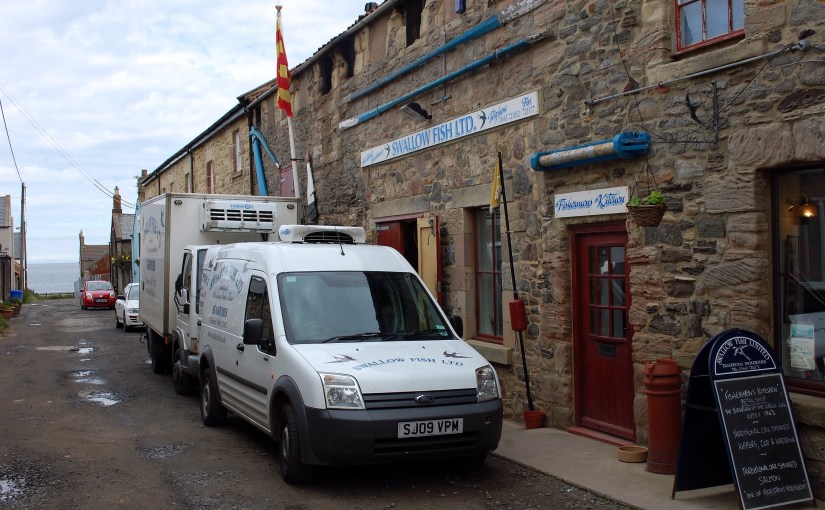
Readership, you may recall that I have been playing around with the notion of smoking my food. Certainly, our recent trip to Seahouses and the beautiful kippers and smoked prawns that they served up sharpened my appetite for all things hot-cured. Let's not forget, autumn is a time of bonfires and woodsmoke. Why not use that to our advantage?

Oh yeah. Daddy likee.

Now, my slightly cobbled together smoker is a testament to what can be done with an unassuming starting point–to whit, a lidded barbie from B&Q that we picked up half price a few years back. It's never really done the job, sadly, somehow managing to take ages to come up to heat. I'm an impatient man when dinner time is near, and it's very tempting to just slap that steak on my cast iron griddle, especially if I'm just cooking for the two of us.

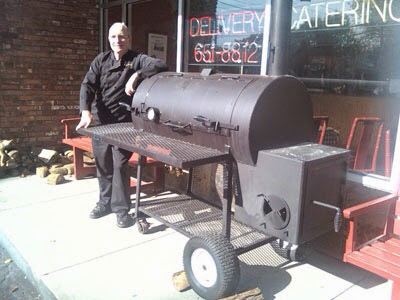
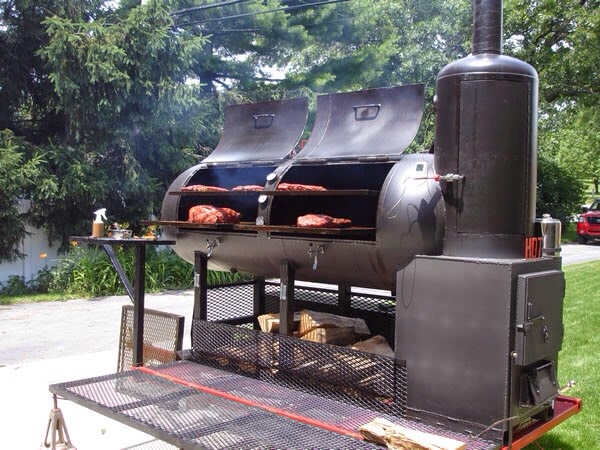
But really, a lidded barbecue is all you need to start smoking. WIth the addition of a thermometer that gives you the optimum temperature for cooking with smoke, you're away.

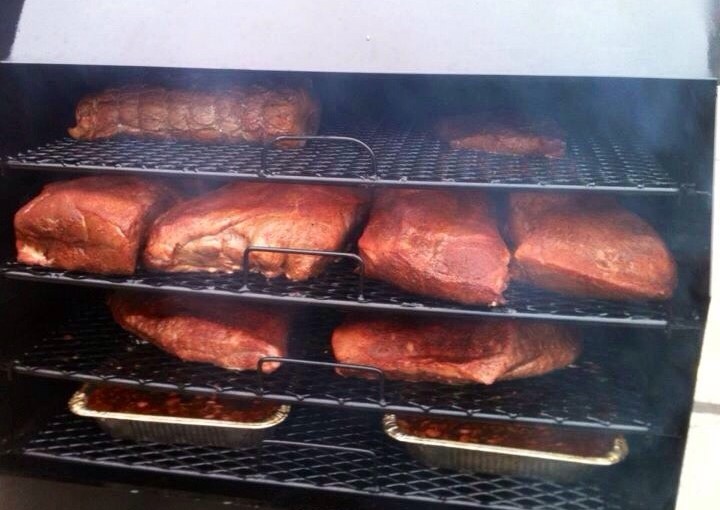
Now, I mentioned that I'm not a patient man, but this method of cooking will teach you how important that virtue is. There are no shortcuts when you're smoking food. When you're cooking ribs or a pork shoulder, you need to be thinking in terms of 12 hours or so, 8 at a bare minimum. Fish or chicken won't take as long. Maybe six hours. The serious players in the US barbecue scene put their meat on overnight. The really dedicated guys sleep with their ovens, all the better to tweak the temperature or wood mix.

Slow and low, that is the tempo. The Beastie Boys said that, and who are we to argue? Do not allow your coals to go over 225 degrees (farenheit, that's about 110 celcius). I find it's best to just use one of those little bags of self-lighting coals, which will heat up and cool quickly, but hold enough residual heat to keep things ticking over nicely. If I need to change over, It's just a case of covering the meat in foil while I dump another bag in.


Steam train


You'll need wood in there as well, of course, soaked for an hour or so beforehand so they'll smoke rather than burn. Some barbies have a tray in which you can spread the chippings. If not, just form a rough bowl out of a couple of sheets of foil and pop the wood in that, next to the meat or fish. A sturdy jug of water will help to keep the atmosphere in the oven nice and moist too, helping the smoke to permeate deeper into your dinner.

The choice of wood is yours, and most garden centres have a reasonable selection (or, of course, there are online resources). Oak's better for fish and chicken, the more robust flavours of mesquite work brilliantly with beef and pork. Play around, see what works.

IIt may sound perverse after you've got up at six in the morning and spent all day watching a barbecue puttering away, but it's really nice to char your meat a little on a grill once it's smoked. It's the double cooking that makes the end result so mind-blowing. We had some pork ribs recently that, after 8 hours smoking, I drenched in Sweet Baby Ray's (the one and only barbecue sauce, accept no substitute) and blasted on a hot griddle. The end result was full of smoky flavour, absurdly rich and unctuous. Even TLC, who normally won't go near a rib, had three or four.

It's early days for me with this technique, and I'm absolutely guaranteed to have messed something up (all advice, hints and tips welcome, drop 'em in the comments if you would be so kind). I haven't even touched on the complex subject of wet and dry rubs, marinades and sauces. Again, any suggestions are very welcome.

But I'm eyeing up the bag of chicken in the freezer, thinking about a big bag of prawns, maybe a side of salmon. And considering how nice the sharp autumnal air in my back garden is going to smell with the sharp tang of woodsmoke in it.


Movies Unplugged: Berberian Sound Studio

And we're back. After a long hot summer, in which the last thing on my mind is sitting in X&HTower's screening theatre (plush and opulent though it may be), the weather has turned appropriately autumnal. Time to close the blinds, fire up the projector and dig into the teetering pile that is the Unwrapped archive.

Today's choice was informed by the fact that Peter Strickland's The Duke Of Burgundy has lit up the Toronto Film Festival. Time to look at the movie that brought his name to the public eye: Berberian Sound Studio.

Plot dump approaching, topped with the red flag that is the Spoiler Alert.

Gilderoy and Nagra

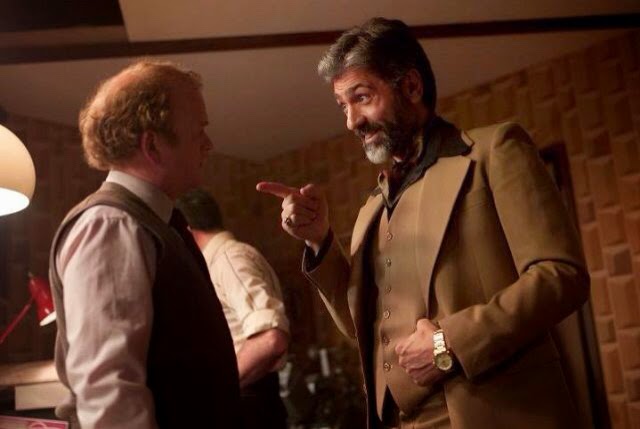
Gilderoy (played with twitchy reserve by Toby Jones) is a renowned dubbing mixer, who is hired by an Italian sound studio to help rescue an Argento-like horror film that has run into problems. He quickly finds that the environment, people and material are hugely different to the world of pastoral documentaries and children's programmes that he knows, and quietly begins to lose his mind…

Shot on a tiny budget on location at Three Mills Studio in East London, Berberian Sound Studio is a prime example of a film-maker getting the most out of his environment. There's no questioning the authenticity of the production design, and the attention to period detail is astonishing. If you're a fan of old film gear, be prepared to fangasm now. I was especially pleased to recognise an Albrecht sound follower: a piece of kit that I still use on a near-daily basis.

Gilderoy ponders the best way to eviserate a watermelon


The action is kept completely indoors. There isn't an exterior shot in the film, adding immeasurably to the airless, claustrophobic atmosphere. It's all artificial light, pools of darkness, empty corridors.

The word that kept springing to mind while watching the film was Kafkaesque. Gilderoy is an outsider, floundering in an environment in which he doesn't understand the rules, where he keeps making the wrong impressions. His efforts to reclaim expenses are thwarted as the accounts department claim there's no record of him flying to Italy in the first place. As his work in sound-designing the film starts to become an ordeal, the walls and dark rooms of the Berberian Sound Studio start to look ever more like those of a prison—or an asylum.

Gilderoy and Santini


Let's make one thing clear, directly from the lips of Santini, the maestro behind The Equestrian Vortex, the movie on which Gilderoy labours. This is not a horror film. Sure it takes plenty of cues from the mise en scêne of giallo. Just look at the black gloves of the never-seen projectionist, the pumping, Goblin-like soundtrack from Broadcast. The film is full of attractive Italian voiceover girls, of just the kind that would find a horrible end in yer typical Eurohorror. But if you're looking for gore, best keep looking. The only things to see the edge of a blade in this movie are the fruit and veg that Gilderoy attacks to provide the sound effects for Santini. We don't even see a single frame of the film itself that the diminutive sound engineer reacts so strongly against. That being said, the sight of a witch being vaginally violated with a red-hot poker, the scene that causes Gilderoy the most problems, is one that I could do without.

Strickland's refusal to bow to expectations as to what Berberian Sound Studio is or how events in the film pan out have led many to view the film as a frustrating experience. I understand that. The film is deliberately slippery, dodging away from genre tropes and formula story beats. Santini isn't an anagram for Satan, however hard you try to make it so.

Elena: giving the film a voice


The trouble with slippery things is, of course, that they're hard to grab hold of, and Berberian Sound Studio remains opaque, asks far more questions than it answers. How much of it is real? Are we, as is suggested at the end, simply watching a film within a film? There's no definitive answer, and loose ends aplenty. It famously divided opinion right down the middle when it was screened at Frightfest in 2011. Even now, synopses of the film differ wildly and are mostly inaccurate, pitching the movie as proto-giallo when it's nothing of the sort.

Which brings us to the 64,000 lire question—was Berberian Sound Studios worth Unwrapping?

Yes, it was. Difficult but tought-provoking, it's at once a treatise on the craft and sheer hard work involved in getting a film made, and a warning of the cost that the process can exact on you. The people that Gilderoy encounters are, for the most part, monstrous. One of the ADR actors even goes by the nickname 'The Goblin'. Gilderoy, the very image of the innocent abroad, has no chance amongst these creatures.

As a stylistic exercise Berberian Sound Studio is a storming triumph, and there's enough going on to keep you watching, and guessing, until the end. And indeed after. Enter without expectations, and you just might find yourself ensnared.


Hit The North

The Northumberland Coast. Border country. North of here, and you're dealing with rebellious Scots. It is a place where the air and light are pure, where the skies are a riot of stars at night. The people are warm and generous. The food has the tang of the sea air, and the richness of the fertile land from which it has been harvested. And the sights… well, I'll let you judge for yourselves.

Seahouses harbour, Northumberland
On watch, Bamburgh Castle, Northumberland
The Keep, Bamburgh Castle, Northumberland

 
Bamburgh Castle, Northumberland


Andrew Burton, Light Vessel, Cragside, Northumberland.


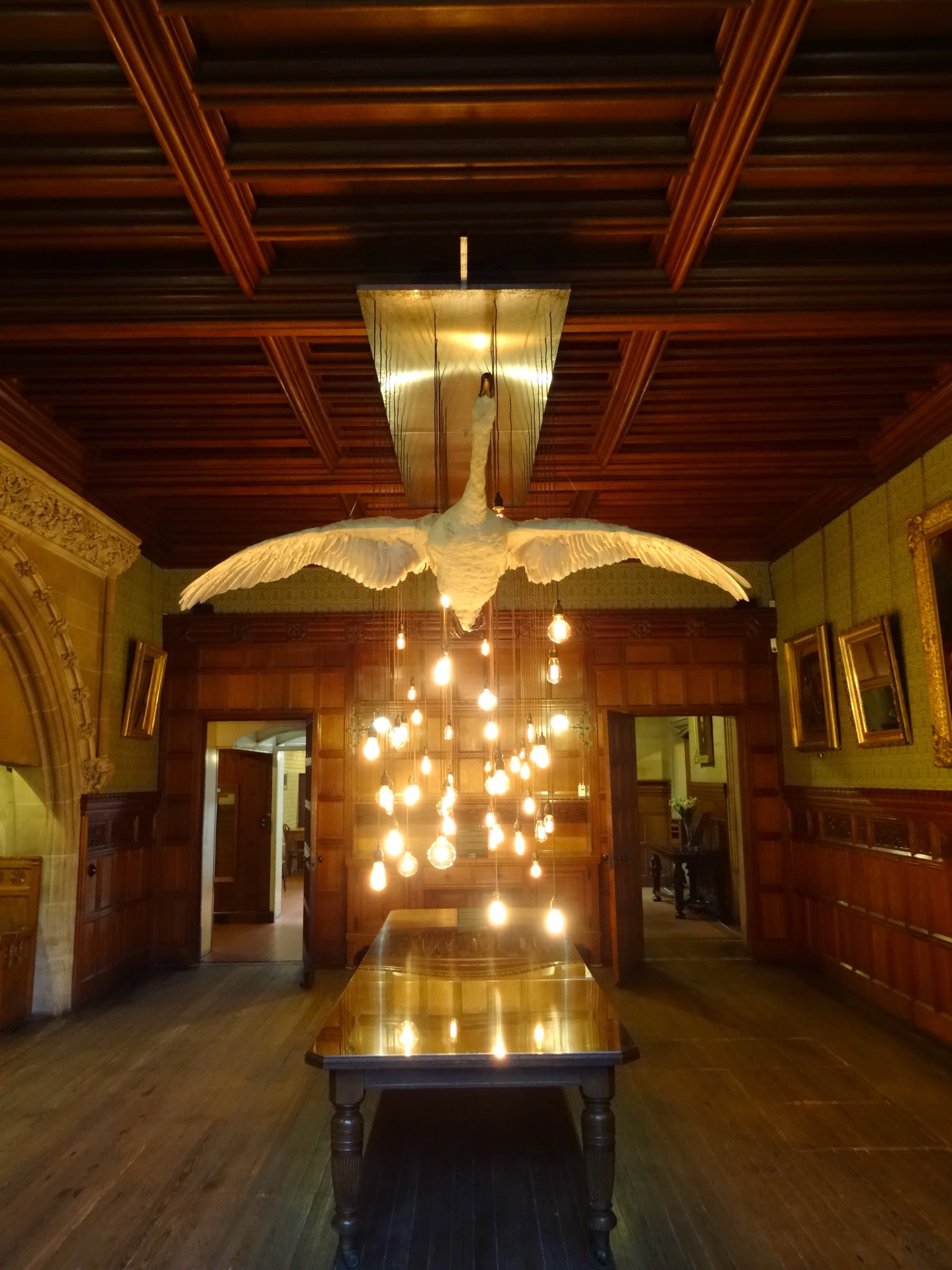
Imogen Cloët, Illumine, The Dinig Room, Cragside House, Northumberland


Imogen Cloët, Illumine (detail), The Dining Room, Cragside House, Northumberland
Green Man, Cragside, Northumberland


Cragside Through The Trees
Owl Spirit, Cragside, Northumberland
Bridge, Berwick, Northumberland


The King In The North, Cragside, Northumberland

We are in The North, and in this point in proceedings, I don't wanna go back.


The August Soundtrack Special!

Eat My Crescendo!

This month on The Speakeasy, Rob and Clive are joined by actual honest-to-heck film composer Neil Myers. Along with adagio and strings from the mighty Keith Eyles, we highlight composers we think are unfairly overlooked, and pick out a soundtrack each that’s a bit of a hidden gem.

First movement and opening titles, everyone…

https://soundcloud.com/rob-clive-speakeasy/august-film-music-speakeasy

Here’s a Spotify playlist with a lot of what we’re talking about…


and a few that Spotify couldn’t help us out with.

Cobra by Sylvester Levay

The Haunting Of Julia by Colin Towns

Perfume by Johnny Klimek, Tom Twyker, Reinhold Hell

To find out more about our very special guest, check out http://www.neilmyers.com.

The American Burger

The chunk of time between sixth form and college was tough for me. I didn't get the grades I needed for university, so I had to stay behind while a lot of my friends, the best and brightest of my year, went off to study. My girlfriend was one of those that left. She went to Cambridge, and she found someone else. Someone who was, you know, there. I read the Dear Rob letter on a busy Victoria Line train into work. I burst into tears in a packed tube carriage.

Like I said, tough times.

Family life was equally interesting. Mum and Dad had split up while I was studying for 'A' Levels, and as I studied for retakes, I realised I needed to take some time away from the tumult of life with my mum and brothers. I had become one of those sensitive teenagers who wrote poetry and moped constantly. With a broken family home and my romantic life in tatters, I suffered as no young man ever had before or would after.

Christ, I was insufferable.

Dad, at the time, was living in a small house in Wanstead, and I moved in over that summer of 1985 to get my head together and sort out enough of an improvement in my grades to get the heck out of Essex. It was a peaceful time. I looked after Dad's shop (he was even good enough to call me the manager) to earn my rent and a little beer money, wrote and studied.

And Dad started to teach me how to cook. It was, he said, an essential skill for when I set off on my own. Also, he'd had to bloody learn when mum kicked him out, so he was going to pass the pain on. He had a limited repertoire, gleaned mostly from the two cookbooks on his shelf, but one treat was always his American Burgers, a recipe he'd found in a newspaper and carefully noted down in his round, solid cursive.

Common knowledge now is that burgers are at their best treated simply, with care taken as to the mix of fatty and lean meat used. Back then, Dad used what he had, knowing that the flavours and spices that went into the burger would give it the right taste. They became a weekly treat for us, one that we would often cook together, with the tape player blasting out Bruce Springsteen.

The other week, TLC and I drove up to Essex to visit the 'rents. Time has been kind. Mum and Dad got back together during my first year at college, buying a new house and making things right with each other. I had done enough to get a place at the Dorset Institute Of Higher Education (now Bournemouth University) and packed my bags for the south coast in the autumn of 1986. In one of those bags was the notebook in which I had cribbed my favourite recipes from my time with Dad. The American Burger was in there, of course. It was a connection to home, and to a peaceful, healing time.

Dad doesn't cook very often anymore, but when he does the grub is always good. We had a sort of indoor barbecue on the Saturday night, and he pulled out the big guns. The American Burger was on the menu. He still has the notebook in which he wrote the recipe, stained and brown from decades of use. The Burger tasted just as delicious as it always had. I had no Proustian moment connecting me to the tumultuous past, no great epiphany. But I have fond memories of cooking with my Dad in that summer, as he and Mum gently negotiated a truce, then the rebudding of a romance.

I'd like to share that recipe–as best I can, anyway. You can't get the Knorr onion soup mix it recommends any more, so you'll have to manage with what you can find. Dad uses an Ainsley Harriott mix, if that's any help. If you do have a fatty mince blend, then you can probably get away without the egg. But try it as is, just to give you an idea of the flavours of my bumpy adolescence.


AMERICAN BURGERS

  • 1lb minced beef
  • half-package Knorr dried onion soup mix
  • one raw egg
  • seven squirts, Lea & Perrins Worcestershire Sauce
  • three squirts of Tabasco
  • one tablespoon of Daddie's Sauce
  • four shakes of garlic salt
  • half a chopped onion


Mix together. Makes 3

Cook in hot frying pan, cover, 2-3 minutes each side.

Extras:

  • white sesame-seed bun
  • iceberg lettuce
  • Kraft cheese slices


A Quick Summer Traybake

Those working weekday dinners are such a bind. The clock's ticking from the moment you get in the door to the second that food hits the plate. You want something that's nutritious, tasty and above all quick. Is it any surprise that, as the hardest-working nation in Europe, we've fallen back on ready meals, pasta or pizza? When you've done a full day's work, gathering up the energy to sort out dinner is tough.

But there are ways and means. Although I'm the first to admit that I sometimes fall back on rigatoni with sauce from a bottle, there are other alternatives for that dull Wednesday evening when the tempation is high to roll past M&S or the chippy. How about this summer traybake–really easy and full of the flavours of this golden season?

As you walk in the door, get the oven on and preheating to 200C, and put a pan of water on to boil. I have been known to do this before I take my jacket and shoes off. Now you may kiss the partner and tickle the cat.

Once the water's bubbling, throw in some salt, then a handful per person of new potatoes. They'll need ten minutes to parboil. Now grab a sturdy roasting tray. Chuck in some chicken thighs or breasts, cut into slightly bigger than bitesize pieces, a thickly sliced red onion, and cherry tomatoes. Leave them whole. If you don't have cherries, normal size ons are fine, but quarter them.

Once the spuds have had their ten minutes, drain them and throw 'em in with the rest of the meat and veg. Mix everything up and give it a generous seasoning and a good glug of olive or rapeseed oil. Fresh herbs would be nice here too: robust thyme or fragrant rosemary. Oregano works as well.

Then just pop the whole lot into your hot oven, and set a timer for twenty minutes. Time for a beer, perhaps.

After twenty minutes, check the tray, and give everything a stir around. The potatoes should be golden at the edges, the onion soft, the chicken a bit sticky. If it's all looking a bit pale, just give it another ten minutes. Bear in mind that the spuds won't go as crispy as roasties, but they will go fudgy and soft. Half an hour in total is all this dish'll need at absolute maximum.

Once time's up, just mix everything up a bit, squirt over a little lemon juice, sprinkle on some parsley and serve. Looks good, eh?

Now, this dish is really tweakable. You could use little pork chops or thick fish fillets to replace the chicken (if you're using fish, no more than twenty minutes in the oven). If you're feeling bold a whole fish would work beautifully. You could add mushrooms, peppers, some whole garlic cloves, maybe parsnips or steamed sweet potatoes as the weather cools. Have a play, put in the flavours that you love and make it your own.

That's better than an M&S curry, isn't it?