
Sometimes you just have to take the opportunities that are offered to you. Thus, I found myself escorting TLC and MadamWDW to the Sheldonian Theatre in Oxford, to hear Lord Rees of Ludlow deliver the annual Romanes Lecture. I am, apparently, cultured.
Graf Your Grub
 A little something to bear in mind next time TLC and I have a bite to eat with that damned elusive docoBanksy. German food co-op The Deli Garage has come up with an edible food spray that could add an extra blingy touch to the Christmas dinner. Currently available in gold, silver, red and blue, the manufacturers claim that the colour is both odour-free and tasteless. Which is a bit of a shame. I kinda like the idea of spray-on barbeque flavour in a hot-rod red.
Flavoured spray could also add a whole new dimension to the graffiti shenanigans at Leake Street. Your line and fill might be a bit suspect, but boy does your piece taste good. Why cover up a rival’s graf when you can just lick it off? King Robbo: tastes like chicken. I know you can get spray cheeses and oils already. It wouldn’t take much to make my little dream come true.
It would certainly put a whole different spin on the idea of pepper spray…
Church Of The Poison Mind: X&HT Read The Wicker Tree
One of the big disappointments of this year’s FrightFest was the not-very-long-awaited-at-all-actually sequel/companion piece to Robin Hardy’s 1973 pagan shocker The Wicker Man. Hardy had warned the audience not to expect a typical horror film. This is a risky strategy in front of a FrightFest crowd, and when they were confronted with a broadly satirical take on the subject of religion, sacrifice and pagan belief, they reacted as you might expect. Too broad to be either funny or scary, the best you could say about it was at least Nicolas Cage or bees didn’t make an appearance.
Continue reading Church Of The Poison Mind: X&HT Read The Wicker Tree
Halloween Humbug
I’m with the ghosties and ghoulies and two-headed beasties and things that go bump in the night when it comes to Halloween. They stay out of the way every October 31st to let the foolish mortals muck around with pumpkins and sexy witch outfits.
I’m sure it’s just that I find any kind of commercially-driven mass hysteria (assorted parent’s days, any number of quasi-religious holidays, royal weddings etc) deeply tiresome, but for some reason Halloween really grinds my gears. The prospect of having to buy Haribo and then give it away to a bunch of kids in sheets or cheap masks seems to be against nature to me. Somehow, I feel that my passions are devalued. It’s like a ghost dies every time a trick-or-treater eggs a house.
The element of coercion involved also honks me off. If I don’t give you sugar you’ll vandalise my gaff? How intriguing. First up, Fat Casper, the last thing you need is more sweeties. Second of all, give me a minute while I switch on the hose.
That being said, our road, despite it’s name, is generally quiet on All Hallow’s Eve. Maybe the cemetery at the end has something to do with it. It’s nothing to do with the road being creepy. I think it has more to do with respect. After all, let’s face it, Halloween is not the most dignified of festivities. I refer you back to the sexy pumpkin.

In fact, Halloween seems to be the one time of the year when I really go off the idea of horror. It never lasts, and by the first of November I’m back to my happy evil self again. And as I’m not doing Nanowrimo this year, I can really concentrate on getting some scary stuff written. Kinda looking forward to that.
However, if you really must do something scary tomorrow, can I recommend the brilliant Trick ‘R’ Treat, a seriously under-rated gem of an anthology horror? It’s available to stream from Lovefilm, and I can’t think of a better movie for the season.
I, meanwhile, will be keeping a low profile. Go ahead, amateurs, have your fun. On Tusday, the professionals get back to doing what we do best.
 No, I meant BOO, not… oh, never mind.
Let’s Talk About Psoriasis
In the spring of 1993, I noticed a rough scaly patch developing behind one of my ears. At the time, I didn’t worry too much about it, thinking it was something to do with my glasses chafing.
The patch was soon joined by another in the folds of my other ear and slowly they began to spread upwards and round, into my scalp and across my brows. Alarmed, I went to the doctors for a chat.
The Friday Foto: Paint The Whole World
It’s been funny old weather for the past week. Thin bands of rain clouds shooting across the country, dousing us in a downpour while a low sun bathes us in light.
Which makes for top rainbow weather, of course, and a doozy arched over the back garden earlier this week. Not a double, sadly, but I think a full ‘bow is just about as good.

Bad Seed: X&HT Watched We Need To Talk About Kevin
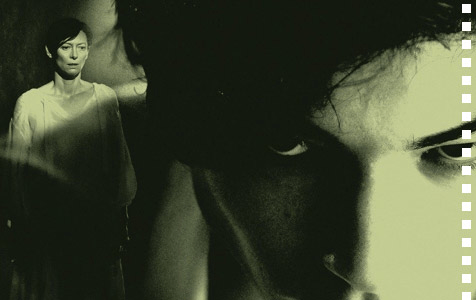
The evil child has been a powerful symbol in horror and fantastic fiction for decades. The Children Of The Damned. The Children Of The Corn. The Others. Most boys called Damian.
To that roster we can finally add Kevin Katchadorian. In Lionel Shriber’s acclaimed novel, he stalked the pages while never really springing out at us. The book’s structure, built as a series of letters, provided a sense of distance from him. That may have been a kindness. Thanks to the extraordinary work of director Lynne Ramsey and the actor she chose to play Kevin, Ezra Miller, we are drawn uncomfortably close to Kevin. Close enough to see the fire rising in his eyes.
The story is simple, and resonant. Told through the eyes of Kevin’s mother Eva, we are led through Kevin’s life, and how from the very beginning he was somehow … different. Incapable of love. Manipulative, to an extent that Machiavelli would have admired. Utterly free from morals, from any iota of empathy with the world. A monster.
Ramsey plays with time, sliding us back and forth along the eighteen years from Kevin’s birth to the awful event that he engineers to define himself. We realise early on what he has done, but the director is canny enough to keep one big shock from us until the end. Meanwhile, the monster grows. Throughout, we see Kevin as Eva sees him. In some ways, she is the only person who Kevin chooses to be honest with. With her, he doesn’t hide his true state. With her, he is always truthful.
The film is soaked in crimson, scarlet, bloody washes saturating the screen. It’s the most painterly film I’ve seen in a long time, giallo-garish, lush as an Argento. Ramsey, her DoP Seamus McGarvey and colourist Stuart Fyvie have done extraordinary work here, flooding the screen with coloured light.
The performances throughout are equally remarkable. Ezra Miller, and the boys that play him as a child, create a brooding, demonic presence. A trickster, charming when he needs to be, terrible when the mask slips. Tilda Swinton shines through the horror, bruised, wounded yet never defeated. The final meeting between her and her son tells you everything you need to know about a mother’s love for her son, no matter what the cost. Thinking about it, it also tells you why she stays in a town that despises her – and why, to a certain extent, she is blamed for Kevin’s actions. The greatest horror of all is how unconditional, how illogical, how unbreakable that love can be.
2011 is becoming a bumper year for horrors with strong central female characters, and to my mind We Need To Talk About Kevin fits right in with films like The Skin I Live In and The Woman. These are films that deal with aspects of womanhood, and the darkness at the core of that state. WNTTAK is by far the subtlest of these, keeping the nastiness largely off screen. Yet it still has the power to shock and chill, largely because Ramsey builds a skewed, disturbing atmosphere and allows our imagination to do the rest. This is an astonishing achievement from film-makers at the top of their game. You need to see We Need To Talk About Kevin.
Washing Instructions
Yes, it was late, and yes I was tired, and yes I had been drinking. And there is certainly an element of pareidolia (the phenomenon where we see faces in clouds and Jesus in a bit of toast) in what I saw.
So I have to take comfort in the fact that the washing instructions on our new hand towel aren’t really telling me to OBEY.
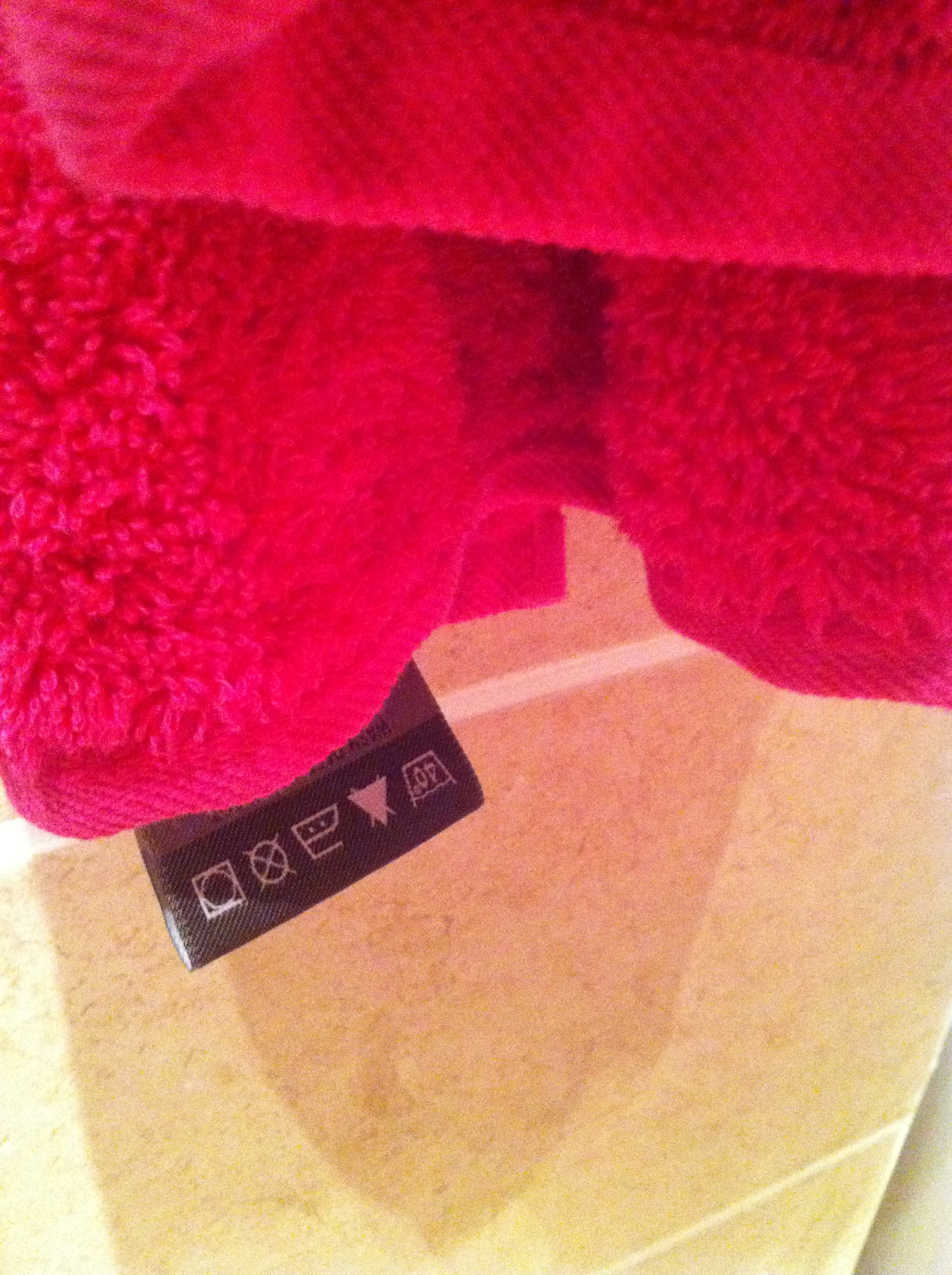 Because gods know, that’s all I can see now when I look at that tag.
Forty Years Of Fear: The Exorcist, reissued
The following is a crosspost with For Winter Nights, the excellent literary blog from my good friend WetDarkandWild. She doesn’t really do horror, so I volunteered to help out when a review copy of the reissued Exorcist dropped through her letterbox. On this occasion, I was very happy indeed to do the favour…
 For any horror fan that knows the genre, The Exorcist is the alpha and the omega. A dark, brutal trap of a film, and one of the few whose reputation remains unsullied and potent.
But the book, published in 1971, came first. A sensation on it’s release, a large part of the success of William Friedkin’s adaptation is due to how closely it cleaves to the original story. Now a fortieth-anniversary edition has been brought out, with tweaks and tidying by William Peter Blatty – an excuse, as he says in the foreword, to polish “the rhythms of the dialogue and prose throughout.” The original, as he admits, was rushed, and subject to editorial meddling. We have been presented with something closer to a director’s cut. Although fear not – there’s no George Lucas-style redecoration here.
Blatty began his writing career as a screenwriter, and those skills are obvious in the book. The story moves like a runaway train, at a pace that becomes ever more hectic. The purple prose that he uses in the prologue, set in Northern Iraq, is something of a red herring – the main body of the book uses a cool, distant style. Reportage that only makes the horrifying events in the book that bit more awful.
Do I need to tell the story? In broad strokes: actress Chris McNeil lives in a rambling house in a suburb of Washington with her daughter, Regan. The girl, a sweet-natured creature, starts to talk about an imaginary friend, Captain Howdy. The good captain gradually takes over, slipping into Regan as if he was shrugging on a suit. Howdy is no friend. Regan has become possessed by a demon.
The book is soaked from the first lines in a thick sense of dread. We’re never sure where Howdy comes from. A relic bearing his likeness is unearthed at the Iraqi dig that begins the book. Regan has been playing with a Ouija board. It’s never clear. It doesn’t need to be. All we need to know is that the girl has been taken, and that she will not be easily recovered.
In some ways, the story unfolds like a police procedural as Chris, and later the priest who becomes entangled in the case, the conflicted Damian Karras, try to find evidence that Regan is sick, suffering from delusions, somehow self-hypnotised. Like Sherlock Holmes, they eliminate the impossible to reach the incredible truth. The exorcist of the title, the haunted Father Merrin, only appears three-quarters of the way through the book. Before then we, like Chris and Father Karras, are struggling to make sense of the senseless.
The book still holds the ability to shock and unsettle. Sweet Regan’s transformation (is it any coincidence that her nickname is Rags? Howdy treats her as a puppet, throwing her around like a rag doll) is rapid and terrible, her foul language a shock when we have witnessed how her mother can’t even swear properly. Blatty’s clear, uncoloured description of what the possession is doing to Regan brings us to horror and revulsion in equal measure. We are rarely out of the Georgetown house, and as the focus becomes more claustrophobic, the tension builds. When Merrin arrives, in a moment that is the most memorable image of the film, the relief is palpable. But the worst is yet to come.
Blatty delivers his shocks like a swordsman’s coup de grace, leaving them to the end of a chapter, often in the space of one line. Then away again, leaving the resonance of what we’ve just read to clatter like a man thrown down a set of steps. It’s key to the pacing of the book. He doesn’t dwell on the horror. He knows that we’re more than capable of doing that ourselves.
The Exorcist remains a remarkable achievement in modern horror, a book that transcends any danger of pulpy exploitation in favour of something much darker and richer. Seen at the time as harsh commentary on the corruption of the American soul during Vietnam, it stands today as an allegory on the ugliness that lurks in everyone, and how it can infect even the most innocent of victims.
Howdy may be otherworldly, but he takes a lot of his material from the people around him. The book digs more deeply into the characters than the film can, drawing you more deeply into their suffering, into their conflicts, and into the awful understanding that is The Exorcist’s black heart. The sacrifice at the end of the book is almost inevitable – you can see it coming from page one. Evil has a price that has to be paid before any form of salvation can be reached.
Joy Unconfined
I love a wedding. Any excuse to get dressed up and drink too much and dance like a fool. Friday saw us at a lovely hotel in the heartlands of the country, at the nuptials of TLC’s mum and her long-time beau.
It was one of the most joyful occasions I’ve ever been to, and I’ve not laughed so hard or so freely at a social occasion in a long time. The bride was consumed in fits of giggles through the ceremony, and I’m still not convinced that she repeated all the vows. Once the papers were signed, the bride and groom danced back down the aisle (I’m taking the blame for that; I did, after all, show them the JK Wedding Dance). The first dance was livened up by the bride going a-over-t during an attempt at a pirhouette. And I don’t even think she’d been drinking that much up to that point.
And yes we danced and yes we drank and yes we laughed. And yes we chased off a bunch of wedding crashers and yes we all had headaches the next morning. But oh my word, you want something like that to be memorable, and this is a wedding that will live on for quite some time. You sometimes forget that a solemn occasion doesn’t have to be without joy.
Pam, Joe, the future is yours. That’s one hell of a way to kick it off.
 EXCUSES AND HALF TRUTHS