

Hands up who knew there was a new Terry Gilliam movie out. Continue reading Theories Of Invisibility: The Zero Theorem
Author: Rob
Writer. Film-maker. Cartoonist. Cook. Lover.
A Quick Summer Traybake
Those working weekday dinners are such a bind. The clock's ticking from the moment you get in the door to the second that food hits the plate. You want something that's nutritious, tasty and above all quick. Is it any surprise that, as the hardest-working nation in Europe, we've fallen back on ready meals, pasta or pizza? When you've done a full day's work, gathering up the energy to sort out dinner is tough.
But there are ways and means. Although I'm the first to admit that I sometimes fall back on rigatoni with sauce from a bottle, there are other alternatives for that dull Wednesday evening when the tempation is high to roll past M&S or the chippy. How about this summer traybake–really easy and full of the flavours of this golden season?
As you walk in the door, get the oven on and preheating to 200C, and put a pan of water on to boil. I have been known to do this before I take my jacket and shoes off. Now you may kiss the partner and tickle the cat.
Once the water's bubbling, throw in some salt, then a handful per person of new potatoes. They'll need ten minutes to parboil. Now grab a sturdy roasting tray. Chuck in some chicken thighs or breasts, cut into slightly bigger than bitesize pieces, a thickly sliced red onion, and cherry tomatoes. Leave them whole. If you don't have cherries, normal size ons are fine, but quarter them.
Once the spuds have had their ten minutes, drain them and throw 'em in with the rest of the meat and veg. Mix everything up and give it a generous seasoning and a good glug of olive or rapeseed oil. Fresh herbs would be nice here too: robust thyme or fragrant rosemary. Oregano works as well.
Then just pop the whole lot into your hot oven, and set a timer for twenty minutes. Time for a beer, perhaps.

After twenty minutes, check the tray, and give everything a stir around. The potatoes should be golden at the edges, the onion soft, the chicken a bit sticky. If it's all looking a bit pale, just give it another ten minutes. Bear in mind that the spuds won't go as crispy as roasties, but they will go fudgy and soft. Half an hour in total is all this dish'll need at absolute maximum.
Once time's up, just mix everything up a bit, squirt over a little lemon juice, sprinkle on some parsley and serve. Looks good, eh?

Now, this dish is really tweakable. You could use little pork chops or thick fish fillets to replace the chicken (if you're using fish, no more than twenty minutes in the oven). If you're feeling bold a whole fish would work beautifully. You could add mushrooms, peppers, some whole garlic cloves, maybe parsnips or steamed sweet potatoes as the weather cools. Have a play, put in the flavours that you love and make it your own.
That's better than an M&S curry, isn't it?


Two Careful Owners
Mike Tack goes for the throat in his latest urban horror short. Continue reading Two Careful Owners
Soul Food
I have an old and slightly crummy barbecue, that I converted into a smoker yesterday. Continue reading Soul Food

The Blake-easy!

https://soundcloud.com/rob-clive-speakeasy/blakeseasy-part-1
https://soundcloud.com/rob-clive-speakeasy/blakeseasy-part-2
The climax of Blake’s 7 Month on Excuses And Half Truths: our gigantic (no kidding, I’ve had to split it in half) retrospect-o-view of the classic British SF show. Join Clive and I, along with Speakeasy regular Keith Eyles and friend of the blog Chris Rogers as we look at the characters, costumes, production values, themes and soooo much more. Settle in, Listenership. We’re heading for Galactic Edge with this one…
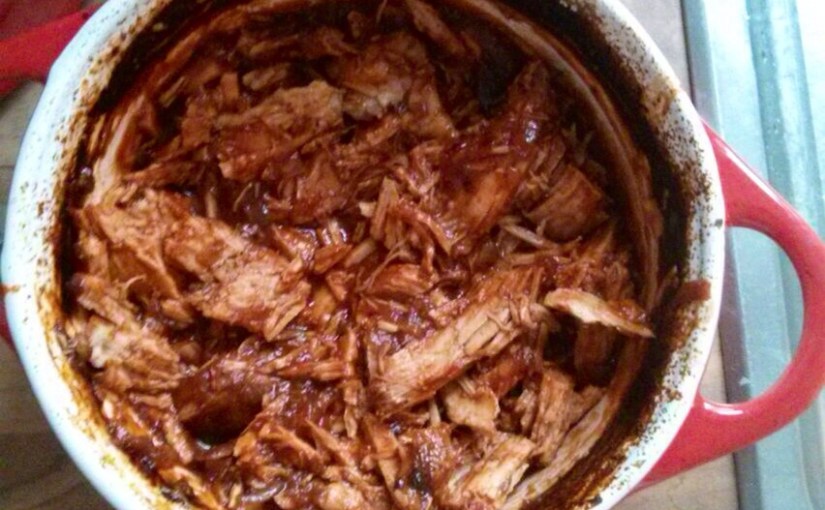
Crock-pot ‘Barbecue’ Pork
There's been a lot of talk about Blake's 7 recently. It's made me real hungry. Continue reading Crock-pot ‘Barbecue’ Pork
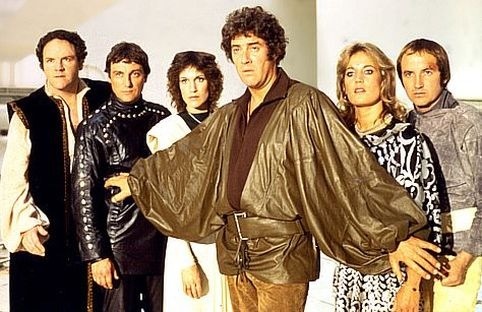
Recasting Blake’s 7
Last week we looked at the notion of a Blake’s 7 reboot, and I gave my version of what it could look like. But who would we cast in a B7 for the 21st century?

Blake’s 7: The Next Generation
In talking and thinking about Blake’s 7, you can’t help but wonder what a reboot would look like. Continue reading Blake’s 7: The Next Generation

Blake’s 7 Month
Next month’s Speakeasy is our longest yet, and it’s the very definition of nerdgasm–a three hour exploration of seventies SF classic Blake’s 7. Continue reading Blake’s 7 Month

Chef: satisfying the hunger for a good food movie
The problem with food movies is that they are fundamentally incapable of expressing the two most important things about their subject: smell and taste. Don't mention Smell-O-Vision. A scratch and sniff card can no more evoke a beautifully cooked plateful of food than a kazoo can accurately reproduce Beethoven's Ninth. The end results are the same: faintly amusing but not the experience you want.
That's probably why there have been so few films explicitly about the subject. And of course, they can't just be about food–as much as I enjoy the M&S adverts, I couldn't sit through 90 minutes of them. All the good food movies deal with those aspects of the human condition that we most readily connect with food: love, sex and family. Look at Babette's Feast, where a woman expresses gratitude for the community that has taken her in by cooking them an extraordinary banquet. Or Big Night, a film that tracks the struggle for supremacy between two feuding brothers, which culminates in a remarkable wordless climax where they cook breakfast together. Tampopo contains one of the sexiest scenes featuring an egg yolk that you'll ever see.
Jon Favreau, he of Iron Man and presidential speech-writing fame, has taken a risk with Chef, his latest movie. Food films don't do well at the box office, for the reasons I've mentioned above. But Chef is first and foremost a film about the sacrifices that a really good cook will make to get to the top, and what happens when he's forced to reinvent himself–a process that reconnects him with the things he holds dearest.
OK, Cliffe Notes (and note that from this point, a SPOILER ALERT is in operation). Favreau plays Carl Casper, a top chef who feels as if he's stuck in a rut. It's a feeling that's starting to come out in his cooking. He's filling the house every night, and his boss is happy. But the reviews are stinkers, and Casper is starting to lose his way. After a cake-crushing meltdown in front of his food critic nemesis, Casper buys a ratty old food truck, and goes back to basics, cooking and selling the food he loved back in the day. With his estranged son and buddy line chef in tow, Casper sets off on a road trip that takes in some of America's culinary hotspots, and finds the flavour in life again.
So, it's a bit on the nose from an elevator pitch. But Chef works, for me, because it's good on the details. Favreau spent months in restaurant kitchens, working his way up from herb-chopping to line work. The restaurant scenes feel authentic and sharply observed, down to the way Casper cleans down his station att the end of a shift. Favreau enlisted the help of food truck maestro Roy Choi and Texas barbecue pit king Aaron Franklin to give his film some old-school patina. That's Choi's Cubano that everyone's talking about, and Mitchell serves fall-apart pork shoulder just like the one in the movie every day.
The clever thing about Chef is the way it dials into modern trends in food fandom. Food trucks and real-deal meat-smoking are obsessions with many foodies. Favreau also nails the importance of social networking to the scene: Instagram and Twitter are the way a lot of people initially hear about the hot places to eat, whether that be a Michelin-starred joint or a high-sider on a street corner pushing out the greatest food you can get on a paper plate. Let's also note here that Casper's meltdown is sparked off by a food blogger, not a traditional critic.
Chef is a deeply sensual, warm and funny film, with a great soundtrack of classic Cuban cuts, reggae and blues and solid performances from Favreau and his supporting cast. John Leguziamo buzzes and pops as Casper's line chef buddy, and Emjay Anthony, playing his son, is sweet and charming. I thought it was a shame that Scarlett Johannsen and Dustin Hoffman seem to disappear once Casper gets his food truck (which is a lust object in and of itself: that chrome! that griddle!) and that we didn't see more of Carl's life pre-restaurant in Miami. Where does that love of Cuban food come from? Maybe a director's cut is in the offing. Anyway, I wanted to see more, which has to be a good thing.
With the long-mooted adaptation of chef Anthony Bourdain's autobiographical/crime novel Bone In The Throat finally looking like it's going in front of cameras, there's a chance we could be seeing more interesting movies set in the world of food. On the evidence of Chef, I'd be happy to see more. The film has the highest of accolades from me–TLC and I left the cinema absolutely starving hungry.

