
He who conquers others is strong; He who conquers himself is mighty.
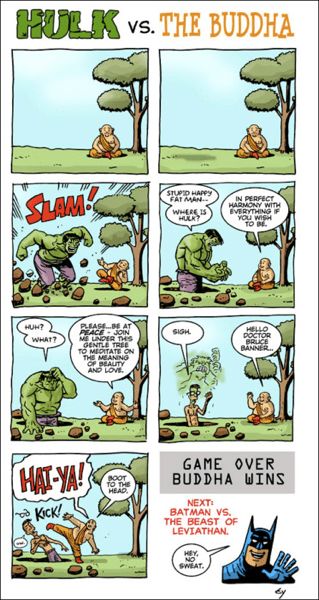
Your moment of zen is brought to you be the incredible Ty Templeton.
He who conquers others is strong; He who conquers himself is mighty.
Your moment of zen is brought to you be the incredible Ty Templeton.
I was pleased to see that the Lloyds Banking Group has posted pretax profits of £2.2 billion. It’s cheering to see a publicly owned company announcing healthy returns on our investment.
However behind the headlines, the news isn’t all so rosy. Despite the increase, shares in Lloyds have dropped sharply, and their profit forecasts for 2011 have been downgraded. The group as a whole has also dropped over 26,000 jobs in it’s quest to cut costs – in a week when it’s departing chief executive, Eric Daniels, pockets a £1.45m bonus, and is in line for another £6m payout based on shares he already owns.
Let’s not forget, this is the guy who railroaded through a toxic merger with HBOS at the height of the banking crisis. This is the guy that saddled the group with billions of pounds of bad debts, and still seems to think it’s a good investment. It’s thanks to Daniels that the UK taxpayer is a major shareholder in Lloyds. We should all be worried about his financial acumen, and loudly question his bonus.
The profit announcement also serves as a reminder not to swallow the Coalition Koolaid, and believe the line that our current financial difficulties are due to overspending in the public sector. It was the bailouts of banks like Lloyds and Northern Rock that did for the deficit, not the NHS. If the Tories were in power at the time, they’d have had to do exactly the same thing.
Bail-in protests are going on this Saturday, turning HBOS banks across the country back into publicly owned and run spaces. These actions are great at pointing out the wild disparity between the profits that huge financial institutions make and the bonuses they pay, while vital services are being cut to the bone. Check out the UK Uncut site for more info, or follow @ukuncut on Twitter for the news on the ground as it happens.
Meanwhile, I’m going to find someone to help me dump these toxic shares I’ve been saddled with.
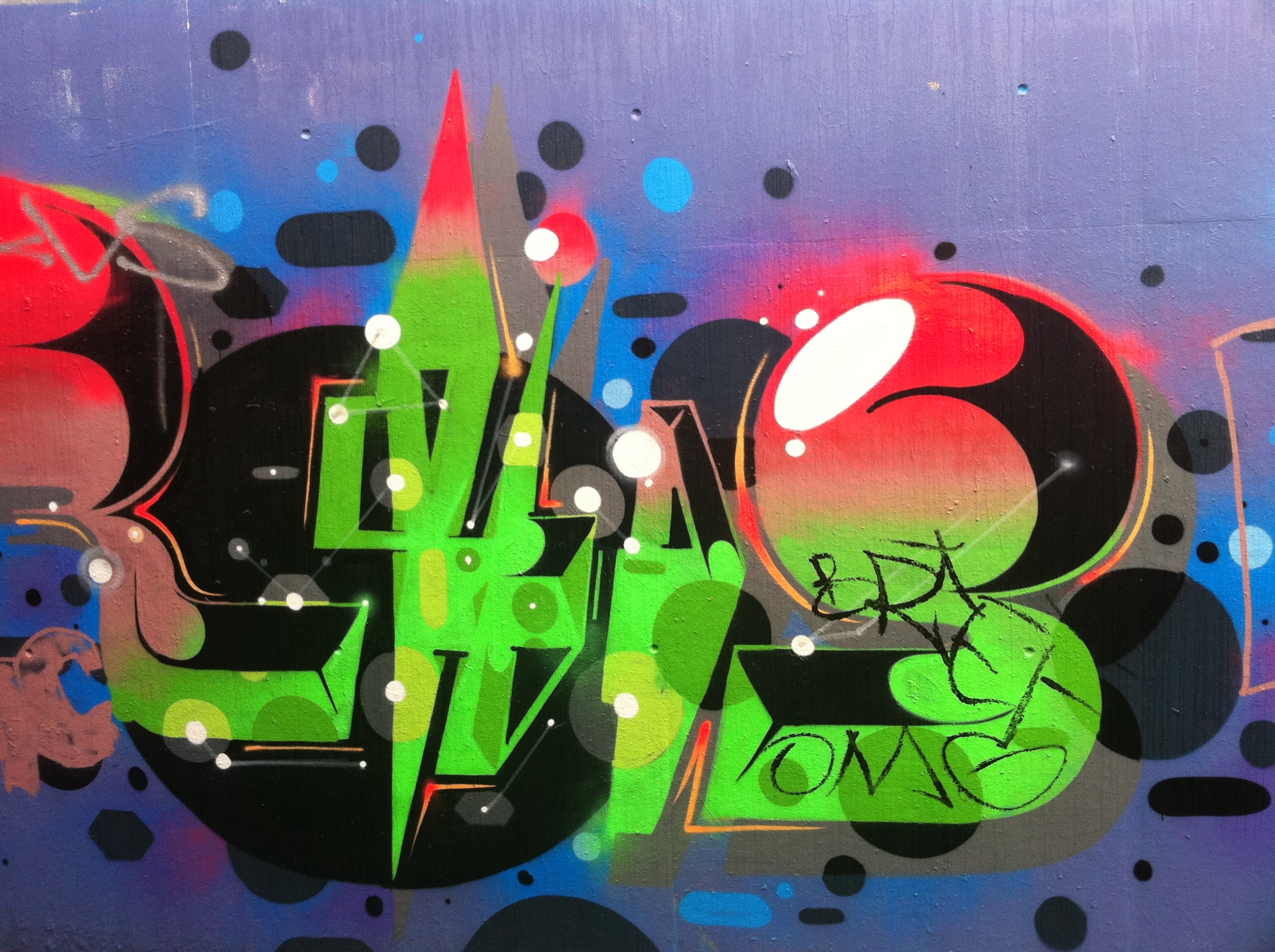
Leake Street in Lambeth is for the most part a pedestrian access tunnel that runs under the old international hanger at Waterloo Station. It used to be a dank, grim and depressing place. Until, in 2008, the Cans Festival was held there. In conjunction with a ton of high profile graffiti artists, Leake Street become a free expression zone – a safe place for writers to show what they could do without fear of prosecution. It’s a showcase for world class freestyle work.
The rate of change at Leake Street is frantic. New work is thrown up almost daily, over the top of what’s already there. So if you see something you like you’d better have a camera on you. It’ll be gone the next time you show up. The tang of volatiles from spray cans is always thick in the air. Leake Street is a heady, dizzying place, and I make a point of visiting whenever I’m in the Waterloo area. If you’re at all interested in street art, you should check it out.
You can view my latest Flickr set of the art in the tunnels here.
As Libya is on the verge of shrugging off the chains of the most comic-book of the villainous Middle Eastern dictators, I thought it would be fun to look at some slightly more fictional varieties of Gaddafi et al. With his elite guard of female killers and penchant for a fancy costume and ranting speeches, I reckon he’d fit in nicely amongst this lot.
Continue reading Gaddafi’s Role Models: Five SF & Fantasy Despots
Just a quickie for now, although I may well update later. On a train into That London, for to meet with the mysterious docoBanksy.
The project that has taken well over three years of our life is now close to completion. A virtually complete version is going out to film festivals worldwide. We meet today to plan, strategise and plot our next move. We’re pleased and excited about the end project, and hope you will be too.
In 2011, docoBanksy will have you.
It’s looking more and more likely that Libya will be the latest of the domino nations to shrug off an oppressive regime, and hopefully find a better alternative. The power of social networking will be heavily cited as a prime factor in the destabilisation of hitherto unbudgeable despots like Mubarak and Gaddafi. Or, if you’re Malcolm Gladwell, nothing whatever to do with it.
A busy day in the kitchen yesterday. A fresh loaf, a blueberry cake, and hell, I’m in the kitchen anyway, I might as well go the whole hog and make a fish pie.
This is more or less Nigel Slater’s famous recipe, and I’ve been making it for long enough that I can quote it from memory. It’s a messy job, there’s no doubt about it, but I’ve tweaked it enough that it’s reasonably straightforward. Even if it wasn’t, fish pie would be worth the fuss.
I start with about half a pound of fish in my big saute pan. Enough milk to cover goes in, with a bay leaf if you’ve got one and some peppercorns. Bring it to a simmer, and cook until the fish is about done. Should take about ten minutes. While that’s bubbling, chop a couple of big leeks and some mushrooms (enough to give you a couple of big handfuls of dice) and a stick of celery. I also put four fist sized potatoes in the steamer to cook, as they are, in their skins.
Fish done. Fish comes out of pan, and put somewhere to stay warm. If you’re a big ole cheaty-head like me, you’ve used a fish pie mix that’s skinless, boneless and already chunked up. If not, the skin and bones will come away easily from the cooked fish, which you should keep in chunky pieces. No mince here. Pour the fishy milk into a jug through a strainer. Keep this with the fish.
Wipe out the pan. Back on the heat with a little oil and butter, and cook the leeks and celery over a lowish heat with the lid on until the leeks are soft and bright green. Whip those out, reheat the pan and do the mushrooms, letting them soak up the oil and butter. You can do these in two pans if you like, but do them separately to stop the mushrooms going wet and sloppy, rather than flavoursome and slightly caramelised.
Once the mushrooms are nice and brown, add the leeks back in, and sprinkle over a couple of tablespoons of flour. Let this cook for a minute of so until you can’t smell the flour any more, then throw in the milk. Let this bubble until the sauce you suddenly have in the pan thickens a bit to a nice creamy texture. A big spoonful of creme fraiche, lots of salt and pepper, then stir the fish back in. If you fancy chucking in any fresh herbs, flat leaf parsley, maybe some celery leaves, hell, even basil, now’s the time. Give this another five minute love in. The sauce should be creamy and rich, not at all runny or sloppy.
While that’s doing, check your spuds. They should be done. Do what you have to do to turn them into mash. I’m not going to tell you how to do it. You’re a grown up. Be comfortable with your mash-making technique.
Pile the mixture into a baking dish. Now the spuds. I use a ricer, and squish cooked unpeeled potato straight on top. Saves on peeling, and gives a nice light result. Then cheese. People say you shouldn’t put cheese on a fish pie. Screw them. I like cheese. I used a nice strong Wyke Farm cheddar with horseradish for a little doink of heat. If you’re going to be all huffy about it, just dot some butter over your mash.
Hot oven (about 200C, Gas 6) for 15 minutes or until there are nice brown toasty peaks on your mash.
Serve to someone you love (you’re not gonna go to all that effort for someone you don’t at least fancy) with some peas and a little soft music.
Worry about the washing up later.
One can not reflect in streaming water. Only those who know internal peace can give it to others.
There are several reasons why I choose to allow my Sunday posts to be quiet and reflective. The main reason, I think, is that I am in a quiet and reflective place at this time of the week.
All is still here. A cup of tea, steaming faintly. An empty plate, toast crumbs stippling the surface. Upstairs, the sounds of my wife preparing for the day. The light outside is cool. The sky seems a flat, gray bowl, but if I look carefully, I can see the faint colour changes of the cloud cover, slightly deeper hues shading away from the monochrome into blue. A bird flits from branch to branch on a tree outside, as busy as I am still.
For a moment, I let the day sink in, and distraction slip away.
 The big news this weekend for music fans is the sudden appearance of the new Radiohead album, The King Of Limbs, which I’m happily downloading as I write. But if you like horror, then there’s another reason to celebrate.
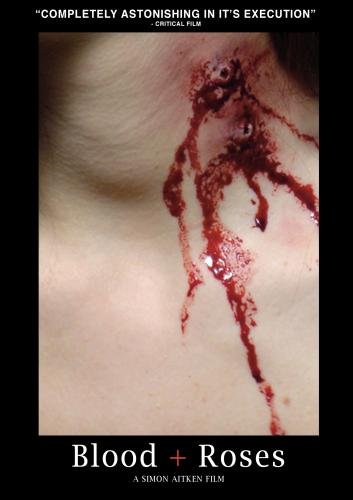
Simon Aitken’s smart, grown-up vampire film Blood + Roses is finally, finally available to buy from Amazon. OK, yes, I have a deep connection to the film. I have a big fat colourist credit, and edited the behind the scenes documentary Love Like Blood. But I believe in the film. I think it’s a clever update on the mythology and iconography of the vampire trope. It’s well written, and has a sterling brace of leading performances from Benjamin Green and TV’s own Marysia Kay (she’s on Take Me Out tonight on ITV1). Those in the know are already calling Blood + Roses “Twilight For Grown-ups”. I’m really pleased that you all have the chance to enjoy a film that I’ve been banging on about for the last couple of years. Do yourself a favour, and snag a copy of Blood + Roses, Readership. You know it makes sense.
I’m thinking out loud here, so please do indulge me.
Adrian Faulkner tells a story on his excellent blog about a work colleague with a newly acquired e-reader, and his attitude to the cost of content for the device. In short, he thinks e-books are overpriced, and has taken to torrenting. Adrian recoils at this, and I agree. But at the same time…
I’m in the same position as his workmate John. I received a Kindle as a birthday gift, and love it to bits. But I was immediately struck by the disparity of pricing on the online store. Like most people with a new Kindle, I zealously hit the free or dirt cheap options, grabbing the complete works of Dostoyevsky and Dickens for less than I’d pay the lovelies at AMT Coffee for my morning cup of joe. But there were also Penguin editions of the same works that cost exactly the same as the paperback editions. There will, granted, be differences in translation, and of course e-books are liable to VAT, but apart from that I can’t see how that justifies a 700% difference in price point.
Modern authors also exhibit this disparity. Stephen King’s Under The Dome is a whopping £16.99 in the Kindle Store. You’ll pay half that for the paperback. I love Stephen King, but I’m caught in a bad place here. I don’t want to lug a breezeblock sized brick of paper around with me. That was a prime factor in buying an e-reader in the first place. At the same time, I’m buggered if I’m paying the thick end of £20 for it. Thus the dilemma that John has easily solved by merrily downloading his books for free. I don’t agree with what he’s doing, but I can kind of see his point. (In my case, I shall get the book out of the library, assuaging my conscience and supporting an essential public resource at the same time).
Part of the problem is the perception of worth. John thinks e-books are worth less than a hardback book. He sees craft and manufacturing cost in the heft and weight of a fat wodge of paper. He seems unaware of the fact that the paper is simply a carrier for the important stuff, the words on the page. But it’s not surprising he’s confused. There’s no consistency of pricing. A best selling CD, book, or DVD will cost you different amounts depending on where you buy it. And frequently when you buy it. Wait a few months after release, and a lot of titles suddenly have a huge discount applied, or turn up in twofer deals. Or sometimes free on the covers of newspapers.
Here’s a challenge. Given the choice between a vanilla DVD title in a cardboard sleeve with no extras for nothing, and a “normally” priced copy of the same thing with all the extras, I will lay money that the majority of people will plump for the freebie. I’m not talking your film buff or cineaste here. I’m talking about the man in the street. The sort of person that doesn’t want a director talking over the top of their Saturday night movie. The sort of person who doesn’t care about deleted scenes because if they were any good, they’d be in the film, wouldn’t they?
Of course, these films aren’t free. They’re promotional items, and you pay for the newspaper to get them. But they have the word FREE all over them. In the same way, musicians are now expected to put tracks online for free, again as promotion for full works. And here’s the problem. There’s already confusion over an object’s perceived worth. The idea of not paying anything for your entertainment has become an encouraged, acceptable option, regardless of the intention behind giving it away.
Neil Gaiman has extolled the virtues of this approach, citing the uptick in sales after doing just that for an audiobook of American Gods. Thriller writer Stephen Leather has done the same thing, putting his early work on the Kindle store for under a quid a shot. Again, this has been highly successful. But these are established artists, able to control the pricing structure of their material. If you’re a struggling author or film-maker, the appearance of your work on a torrent or Rapidshare feed chews up your revenue stream in a moment. If the film or book is all there is, if there’s no back catalogue for which you can use that free item as a loss leader, then the strategy seems to have failed.
That sounds incredibly negative, I know, and there’s no easy answer. Once people get used to the idea of free, then it’s really tough to change their minds. It’s easier than ever to get your work out to an audience, and much more difficult to get them to pay for it. It’s completely doable, of course – look at the success Amanda Palmer has had. She completely gets the vital role in keeping her audience sweet. She works incredibly hard at connecting and communicating with her fans.
There are ways of turning negatives into positives, too. Steve Lieber’s “Die Hard in a cave” comic Underground was merrily pirated by fans on 4Chan. Instead of complaining or issuing lawsuits, Leiber went on the site, and began chatting with the fans of his work, pointing out that the book was available as a print edition. Net result: a massive spike in sales. Similarly, fantasy author J.S. Chancellor asked people who had downloaded her work to leave reviews of it on Facebook and Amazon. It worked, and again, an uptick in sales was the result.
Self-pub and self-distribution is a tricky business to get right. It takes imagination, guile and a lot of effort to make a buck in this new marketplace, and the strategies that work for one artist are more than likely not going to work for another. Persuading your public that your work has value is more than half the battle, but if you can win that battle then good times approacheth. The Johns of this world can be talked into paying for their books and movies, if you talk to them in the right way.
(EDIT: to correct the schoolboy error JS Chancellor pointed out in the comments.)
 EXCUSES AND HALF TRUTHS