Food For Thought

I love flicking through cookery books. I’m a complete sucker for them, always have been. I’m a curious cook (that is, someone that enjoys playing and investigating in the kitchen, not someone that’s a bit odd when he puts on an apron (although that accusation has also been quite fairly laid in front of me. That does not necessarily mean I have to eat it)). I believe in reading round the subject. Post-austerity cookery books of the 50’s are especially good value, their garish colour schemes never quite disguising the fact that the lovingly photographed spam fritter is just that, and therefore in-flippin-edible.

I enjoy cookery books that bring something more than recipes to the table. My enthusiasm for Nigel Slater knows no bounds, and it’s not just because his relaxed and improvisational way with a meal perfectly suits my own. He brings so much of himself to the page that the process of cooking becomes more… conversational, I suppose. Plus, he has a way of slipping dirty jokes and innuendo into the recipes, in a way that just adds a certain naughty charm to proceedings. Anyone that doesn’t believe that cooking is all about sex should try reading some of his dessert ideas.

Anthony Bourdain’s Kitchen Confidential is another book that I go back to time and again for inspiration, although it doesn’t actually contain any recipes at all. Rather, it’s the passion and the attitude that he slathers across the page that I sometimes crave. Part autobiography, part cautionary tale (it is thanks to Bourdain that I will never order fish in a restaurant on a Monday), part business plan, part manifesto – all great. He writes crime books too, with the same elan and skill. The book was transferred to a lacklustre TV show, that failed in my mind because there wasn’t half enough Bourdain in it. His greedy enthusiasm for everything edible renders the book almost lickably good.

However, if cornered, my favourite food book comes from the mighty, and sadly missed, Keith Floyd. He was the first TV chef I took seriously, and certainly the one that inspired me to cook with a glass in hand. One for the pot, one for me. His American Pie is an extraordinary travelogue. Floyd tears across the States in a big red Caddy with a crazy blonde PA in tow telling a story that is in equal parts crazed, elegiac, evocative and drop-the-book funny. It’s a bonus that it just happens to have an addendum filled with some extraordinarily good recipes. I will admit to not being brave enough to try to make chitlins or collard greens his way (offal and I have never seen eye to orifice) but his small section on the great American slumgullion has informed my cooking from it’s formative stages. Again, it’s that slightly experimental approach. I like all these ingredients. Let’s chuck ’em all in a pan together, and see what comes out. It’s worked so far. Well, I haven’t poisoned anyone yet…

I’ve found a couple of pieces online recently that have nourished me in a similar way. Roger Ebert, the famed movie critic, has posted a wonderful piece on his recollections of food. It’s a piece that’s Proustian in it’s detail, and heartbreaking in it’s central conceit – following a series of operations, Ebert can no longer eat or drink. The memory of food is all he has left. Although there is a wonderful moment where he talks the doctors into putting some coke into his IV…

Then there’s this, from Stuart Ian Burns, AKA Feeling Listless. Slipped into the middle of his musings on frozen pizza and Costco steak, there’s a moment where he talks about a Pan du Chocolat he ate …well, half-ate, at the Musee d’Orsay Café in Paris. It’s beautiful and frankly … heartbreaking.

There’s plenty more food for the soul out there. Any suggestions?

The White Event

X&HTowers, busy as everWell, Reading really caught the brunt of the cold weather this time around. X&HTowers is blanketed under about a foot of cold crisp white stuff, and looks more festive than Santa’s new socks. I’ve been really lucky with shift patterns over the festive season, and am happy to report that The Big Freeze, as most unimaginative news outlets are calling it, coincided with three days off. Yes, OK, I have to work this weekend, but I don’t have to work now, which pleases me greatly.

2010 is, I think, the year when Working From Home becomes much more important, especially if the country continues to be caught out by EWEs (Extreme Weather Events, Ⓒ Rob Wickings if no-one’s snagged that term yet). It’s like taking a duvet day without the guilt, or the chance of getting caught out by the boss. With the prelavence of netbooks and smartphones it’s now so easy to Work From Home that you can do it from a cafe. Or if you prefer, the pub. Why pay for all those expensive business premises when you can just bitch about your colleagues and play soduko in the nearest Barstucks? It’s been coming for a while, and all it takes is one more EWE, one company where no-one bothers to come in, business continues as usual and the clients don’t notice and … well, I reckon it’s time to start investing in multi-purpose public spaces. Wave of the future, I’m telling you. Make ’em weatherproof and give ’em free wi-fi and creche facilities, and you’re rocking. Why close libraries, when you could turn them into something like that?

Happy Feet
Happy Feet

I wish I had the option. Sadly, my work still requires a physical presence, which means braving public transport and the train services. I have a bicycle. Buggered if I’m going to use it in this weather. I can walk to Reading Station if I need to, which I have to frequently as buses and taxis evaporate in Reading as soon as the weather takes a turn for the rotten. If you need a workout, nothing beats walking uphill in a snowstorm. It’s that heel-toe action that you have to adopt to prevent the comedy prat-fall and inadvertent face-first snow angel action. It works muscles that you’d forgotten you had. Muscles that have taken the opportunity to remind you of their presence by complaining loudly.

The House Elf Takes The Strain

The end result of all this has been that I have taken great pleasure in spending the last couple of days with my butt in a chair, laptopping. I have been working hard on a New year treat for you all, which is the first step in what I am calling The Year Rob Makes Contact. I have great hopes for this year, despite all the evidence so far that it’s going to be rubbish. Come on, we’re only a week in. Give the new guy a chance.

In the mean time, here’s a little something. Below is a PDF to a short piece called The Body Politic. It’s excerpted from a longer piece, Under Glass, which I SWEAR will never see the light of day. It was a badly-misjudged piece of erotic writing, and it makes my toes curl in all the wrong ways. Not pretty. The bit I’m sharing has a few merits, though. It’s here as a PDF. I’d appreciate it if you can let me know if you have any problems either reading it, or dumping it onto your hard drive. My reasons for this will become clear soon enough.

Click the arrow to download THE BODY POLITIC

branches_download.png

There Is A Light That Never Goes Out

Stay warm, everyone.

He Knows If You’ve Been Bad Or Good

That's G MINOR, Santa!

Christmas is not Christmas to me unless the first song played is the Bruce Springsteen version of Santa Claus Is Coming To Town. This has been going on certainly since the mid-eighties, where it was used as reveille, a blast of joyous noise to get you out of bed. Or at least to signal that Dad was up.

I suspect his adoption of the song as the Wickings Christmas anthem came out of the song’s appearance on the B-side of the My Hometown single, which made it the first time you could own the song as opposed to just listening out for it on the radio. It’s always been a Dad-sponsored thing, although I’ve carried it on, and I suspect I am the only one of his three boys that does so. I got my love of The Boss from him. That being said, It’s also his fault that I like prog rock, so there’s swings and roundabouts.

There’s just something about the song that sends the hairs up on the back of my neck at this time of year. The quiet opening with the sleigh bells and Roy Bittan’s gentle piano. The Big Man’s solo. The bit where Bruce nearly loses it as Santa arrives behind him.

I love the video, that was a regular feature on the Old Grey Whistle Test for at least three years, that I think is a recording of the 1978 Winterland gig where the version we know came from (UPDATE: memory serves me poorly, it seems. There IS a version shot in ’78, but it’s from Passaic, New Jersey and it’s black and white. I’m probably getting that and the version of Rosalita that Hepworth and co always used to play mixed up. Still good, though. Have a look.)

This year Dad mentioned in passing that he was thinking of playing the Dylan version of “Must Be Santa” instead of Bruce first thing on Christmas Day.  It’s a good version, sure, and the video is a riot. But it’s not the same. And I was quite genuinely shocked. The very thought that he might play something else to blast the Nans and Mum out of bed on Christmas morning seemed so alien. It pulled against the tradition that we two had so carefully set up and kept running for all those years.

I’m happy to report that he didn’t break the chain, and the Big Man still blared over Havering on Friday morning, in the same way that the Micra shook to the beat as we whizzed down the M4 to join him and the family.

Some thing are just sacred at this time of year.

Buying In The Name Of

Rage Against The Machine is the UK’s Christmas No. 1. That still feels like such a strange phrase to write. It outsold the record that most industry voices had assumed would be a shoo-in, Joe McElderry’s “The Climb”, by a cool 50,000 copies. This is A Very Good Thing, for a number of reasons.
Of course, there is the argument that both records are effectively making money for the same company, Sony. This misses the point. The X-Franchise has lost the war of hearts and minds pretty severely this year, and that is going to hurt the brand badly. The realisation that there is a large enough percentage of the population out there that are not just indifferent or unwilling to spend money on supporting the X-Franchise, but despise it actively enough to independently source another track, successfully campaign for it and buy it in sufficient numbers to make it the popular choice must be horrible for Cowell and crew.

This year has seen a bit of a sea change in the way music is offered and distributed to the public, and Rage’s victory shows that clearly. It was not available to buy in the shops, and had not been re-released by Sony. It was a song that went to number one because people wanted it there, and the fact that it has made it the top slot today could send marketing departments in record companies worldwide into a panicked spin. What do you do if your carefully concieved, hideously expensive campaign to push the next big thing to the top of the charts gets shoved aside because some scrote with a Facebook camplaign decides it’s time Mr. Blobby made a comeback?

This is the harbinger for absolutely massive change in the delivery of music, as it proves without a doubt that crowd-sourced PR works. It’s to Rage’s credit that they saw the groundswell and ran with it, zipping to London to record a live session on Radio FiveLive (“now, let me get this straight. You’re telling me that you don’t want me to sing the line “Fuck you, I won’t do what you tell me to. That’s what you’re telling me. Just so I’m clear.”) that will go down as a classic comedy swear moment in radio history. They have announced that the profits from the single will go to Shelter. There’s a seperate campaign running that has already raised over half a million quid for the charity. I’ve dropped a fiver to that one. Seemed only fair. The download of the single cost me 29p from Amazon.

Rage have shown themselves to be connected with their audience, filled with humour, charity, compassion and fun. The X-Factor camp, on the other hand, have come across as curmudgeounly, whiny and increasingly self-centred. It seems to be all about little Joe’s dream of getting to number one, and anyone that buys the Rage single is stomping on that dream.

Aces. I bet people started buying “Dying In The Name Of” twice when they heard that tripe.

But the one sign that has cheered me most this Christmas is contained in the choice of song that the X-Franchise chose to launch little Joe’s career. Choosing a ballad for the grannies to swoon over is a decision that has stood Cowell and his band in good stead for several years, but it’s backfired pretty impressively in 2009. Let’s not forget, this campaigning idea began last year when Jon and Tracy Morter put Rick Astley’s Never Gonna Give You Up against Alexandra Burke’s Hallelujah. Then, the campaign was too fragmented, with a lot of punters choosing to buy the Leonard Cohen or Jeff Buckley versions of the song instead. But the point was that the song won. Hallelujah is an excellent choice for a Christmas No. 1 record, with the right balance of festive charm and bittersweet sentiment. Never Gonna Give you Up was a bit too joky a choice.

This year the choice was a lot clearer, and a lot simpler. The ballad was trite and turgid, and up against a song you can jump around to while swearing at the top of your voice. Barely a choice at all, really. But the result could have been very different.

One of the early choices for Joe’s first single was a cover of the journey track “Don’t Stop Believing”. A much stronger song, and one with the right balance of cheese and X-Franchise will-to-power. I think it would have won.

This shows us something rather enlightening. This is the point where Cowell has either lost his sure touch, shown he’s either fatally out of touch or has simply stopped caring about the singles-buying market. He’s facing a public that has clearly demonstrated that they do care about music and the charts very much, thank you, and are perfectly prepared to show that they have the will and the ability to take the wheels off the hit-making machine. It’s a lovely moment, and a great Christmas present for music fans across the country.

The only thing that could make it sweeter is for the franchise to release Joe’s version of “Don’t Stop Believing” as the next single. And for the Journey original to make it to number 1 instead.

So Long, Dan O’Bannon

I was very sad to hear of the death last week of Dan O’Bannon, one of the greats of SF and horror cinema. As the co-writer of Alien, he gave us Ellen Ripley. With Total Recall, he wrote one of the best Philip K. Dick adaptations to make it onto the screen, and certainly the only one where Arnold Shwartzenegger pulls a tracking device the size of a tennis ball out of his nose. With Return Of The Living Dead, he hit the hat trick, with the first appearance of fast moving zombies, giving the genre one of it’s most enduring tropes (BRAAAINS!), as well as writing one of the best lines in horror movies to date.

And of course, he was there at the beginning of John Carpenter’s career, co-writing the script of Dark Star as well as starring as the nutzoid Sgt Pinbeck, whose battle with a rubber ball alien is one of the sheer joys of the movie.

Coilhouse has a fine tribute of clips and previews up for a man that has had a significant impact on the genre and movies I love the best.

Some More Thoughts On Genre

This post will be a bit random, I’m afraid, but I can’t really find a way to make anything coherent out of them, so feel free to view it as a bit of a braindump.

1. I like cross-genre stuff best. My favourite John Carpenter movie is Escape From Precinct 13, which is effectively a zombie siege movie hashed up with a blacker-than-black film noir and fairly explicit tips to the hat to the westerns of Howard Hawks. My favourite fantasy writer is KJ Parker, whose novels are exquisitely-researched military procedurals that just happen to be set in a made-up land. To my mind genre fiction of any kind is at it’s best when it takes the standard tropes and furniture and tweaks it.

2. I love zombie films (hi to everyone at Zombie Command who wanders in, BTW) but I reckon the reason I like them the best is because they are effectively dystopian science fiction. They’re end-of-the-world stories writ large. They’re infection-panic, fear of the silent invader/Red Menace noir. Think about it. Zombie films rarely have star casts, mainly because you like that frisson that just about any character in there could be turned. No-one is safe from the de-humanising influences that batter at your doors and windows, waiting patiently to grab at you and infect you if you let your guard down for a second. That’s classic 50s I Married A Communist From Outer Space paranoia.

I’d go further and say that the recent trend for running zombies makes this even more explicit, because a running zombie simply isn’t scary. A horde of running zombies even less so. Then you’re in the arena in which James Cameron’s ALIENS played so effectively. I thought Zac Snyder’s remake of Dawn of The Dead was one of the best SF films of recent years, but I didn’t jump or scream like a girl once. (another reason why TLC hates going to see movies with me. I do so get sucked into the action…)

The best example of this cross-connection between the two genres to my mind is Philip Kaufman’s 1979 version of Invasion Of The Body Snatchers. It’s genuinely creepy, and utterly disorienting as everyone you think you know and trust becomes something … other.

3. Moving back to my earlier post for a second, the brilliant quote from Tamzin Outhwaite came from Dave Langford’s Ansible, the most Hugoed fanzine ever, and a must read for SF fans anywhere. It’s particularly good on the media’s view of SF as a whole, and those that enjoy it in particular (hint: it’s never a particularly flattering view) and skewers the increasingly prelavent claim from actors, writers and directors that the piece of SF that they’ve written/directed/appeared in isn’t SF because… well, try out the random sampler of quotes and see what I mean.

4. One last thing. Fans of the fantastic in general must have been saddened by the news that Robert Holdstock, one of our greatest fantasy – no, scrub that, one of the finest English novelists of the last 40 years, died suddenly and unexpectedly at the end of November. His work, most famously in the extraordinary novel Mythago Wood, dealt with the power of myth and legend, and in the way that our history and the lives of our imagination can frequently intertwine. Here’s the Guardian obit, but really all I can suggest by way of a memorial is to ask you to read Mythago Wood if you haven’t already done so. A whole new world awaits you.

When is SF not SF?

16F863FA-C336-4C72-8044-9E24B9F968AE.jpgI could, I suppose, pretend that the labours of the last month have been a hard slog, or that getting a 65,000 word novel out has been difficult. I could, but I won’t. PIRATES OF THE MOON has flooded out of me pretty much as quickly as I could type it, and although there’s a long way still to go before I consider it ready for a bigger audience than you, esteemed, Readership, I think in a lot of ways it’s the best thing that I’ve ever written.

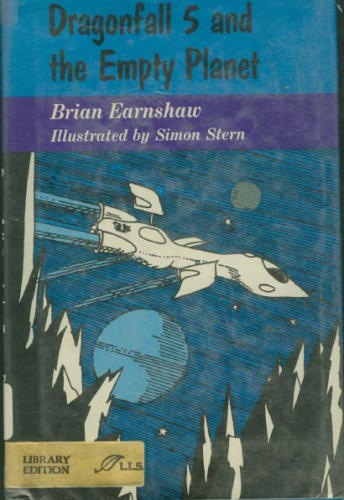
Which is why I’m saddened to learn that according to some people, it will never get anywhere. Because it is utter, unashamed old school science fiction. It’s set on another planet. There are aliens. There are spaceships. There are robots. One of the main reasons I wrote it is because I wanted to write a story that harkened back to the stuff I loved as a kid, and still do now. It’s a very deliberate homage to authors like Robert Heinlein, Andre Norton and most importantly, a forgotten favourite, Brian Earnshaw and his Dragonfall 5 novels. These books were a massive influence on me when I was a kid, and Earnshaw’s idea of a space-faring family running a decrepit spacecraft came instantly to mind when I started hashing out the plot for Pirates.

But apparently no-one reads these kinds of books anymore. I had a Twitter and Livejournal chat yesterday with Adrian Faulkner, who is a thoughtful and perceptive writer of dark fantasy. He put me in the direction of a piece by Mark Charan Newton, who said just that. It’s here, and worth reading in full. And to an extent, I agree with him. Although good ole-fashioned space opera is booming on the big screen, fewer people are reading it. Or at the very least, not admitting to it.

And herein lies the problem. Proper wide-screen unrepentant space opera has a bit of an image problem. It’s viewed by the vast majority of the population as infantile, as a bit silly. It’s OK to watch Star Wars or Battlestar Galactica and enjoy it, but the idea of picking up a Midshipman’s Hope or Honor Harrington, or even perhaps a copy of Joe Haldeman or John Scalzi’s work seems to be beyond the pale. I’m not entirely convinced by this argument, especially when you look at the robust health of the fantasy market, and the Harry Potter fans and Twilight Moms who will happily read books that are badged and racked as Young Adult. I’ll admit, I have deliberately pitched PIRATES at this very market. Partially as an attempt to break into a burgeoning market, but also as an attempt to try to write something without any sex or swearing in it. That was a challenge, I can tell you.

I would say, though, that the idea that literary SF is dying out is just plain wrong. One particular, tiny facet of it may by in decline, but on the whole we are living in a time when SF novels have never been in such a strong and accepted position. Let us, for example, consider Pulitzer Prize winning novelist Michael Chabon, whose latest novel, The Yiddish Policeman’s Union is an alternate reality story that won the Hugo and the Nebula this year. Let us consider the 2007 Pulitzer Prize winner, Cormac McCarthy’s The Road, a bleak dystopian vision of a ruined earth. Margaret Atwood has been hilariously tying herself in conceptual knots for years by claiming that her stories of the future featuring clones and bio-engineering are not SF.

Going back to Mark Charon Newton’s piece, we can see that he too agrees that while what he calls “the core genre” is not doing so well, the tropes, imagery and themes of classic SF are alive and well and in the mainstream. He calls it appropriation. I call it assimilation. Let’s face it. We live in the 21st century. We live in a world where space travel is humdrum, where the planet is ringed with satellites. Where we can access more data than we could properly absorb in a lifetime on the bus, while listening to music and telling our mates what we’re up to all at the same time. A lot of what we’re living now was SF thirty years ago. So does this mean the genre is dead? No, of course not. SF has always been more a mirror to the world now than a vision of the future. At the moment, escapism is in, which is why fantasy is doing so well. And there’s another factor to consider.

Horror and fantasy fiction are both enjoying a resurgence off the back of the Young Adult market. Big, broad stroke movies and simple tales of magic and paranormal romance (shudder) have opened the market up in ways that could not have been imagined five years ago. It’s not going to take much for an SF story with the same broad appeal to have midnight openings at bookstores across the planet. My money is on Scott Westerfeld doing the business with the next book in his Uglies universe. And it’s telling that Stephenie Meyer’s latest book The Host is a story of good ole-fashioned alien Body-Snatching. That’s a sure way of getting the tweens and their moms off sparkly vampires and onto something with a little more (ahem) bite.

I’ll just sum up with a quote from Tamzin Outhwaite, star of the BBC show Paradox. This is a programme about an elite police squad that attempts in a Minority Report stylee, to solve crimes before they happen. She said:

Initially I thought it was a sci-fi project … Then I read the script and realised it wasn’t. It’s about police officers trying to work out whether there is a worm hole between two time zones.’

It does the old soul good to hear technobabble like that, it really does…

The Results Are In…

…and it looks like my hopes for continuing the story of the Armstrongs on the Moon will have to wait. At least for a while.

I have a day or so left to go on the first draft of PIRATES OF THE MOON, following which I will be jumping back into the dieselpunk world of Sohu, to complete the dark urban fantasy that I call THE PRISONER OF SOHO.

I’d like to give you a flavour of what you’ve voted for, so here’s a short extract. Our hero, Inigo Jones, has just been shoved through a portal that leads to … well, this.

He frowned up at the sky. It was an unhealthy turd-yellow, and black at the edges. It had been bleak and grey when he disappeared underneath Soho, but this looked more like sunset to Inigo. He checked the Nixon. That concurred with his internal clock.

12:23. No more that a couple of hours had passed since he had first met Litany, but there was a distinct chill in the air that slipped through his damp suit like a razor.

Something was not right at all. Further, there was something odd about the air. It smelt wrong somehow, even through the stink of garbage. It had a softness and a spiced fragrance to it that was utterly unlike the pissbeerrot stink that he found familiar. And there was music. A pulse. A beat that he knew. A skipping, skittering vibration that tangled up in his spine.

A shudder zapped up his spine. He suddenly felt very alone.

With his hand on his knife, he stepped out of Kraiey Court, and into another world.

Boulevard Francescu Bacon was wide, filthy and crammed with people. Porn shops, bars and strip joints lined both sides of the thoroughfare, while stalls selling clothing, knock-offs and hot snacks spilled off the pavements into the road. Traffic was a growl away from a snarl-up. Pedestrians and cyclists weaved through whatever gaps they could find.

There were no vehicles Inigo recognised. The street looked like three different car collector rallys all competing for the same exhibition space. There was nothing even remotely modern. Two-stroke powered Trabants thakkered their way through tiny gaps in the gridlock, while Morris Oxfords engaged in automotive combat with high-sided Bedford vans and the occasional tricked-out Wolseley. He could see nothing that dated any later than 1965. Adding to the carnage, sharp-dressed geezers on scooters buzzed through the throng, mounting the pavement if it made things easier. They scattered pedestrians as they went, screaming insults and jeering at the tops of their voices.

The noise was huge, filling Inigo’s head to straining point. Blatting horns provided a 4/4 kick overlaid with the shrill yelps of street vendors and the throb of over-revved engines. The battering thud of music blared from every open door, a wild mix that Inigo struggled to find familiar elements. Algerian rai was mixed in with Kodo drums, the sweet majesty of qawwali backed with the sonorous drone of Nepalese throat-singing, and somewhere at the back of it all, sweetening the mix, the same pulse, the same intoxicant throb of a backbeat, twisted through the mix like silver wire, the lost chord that tied everything together.

He swayed, dizzied by the noise, assaulted by the stench of petrol, hot fat and frying meat, a tang of decay that made his tongue arch. It was a Ridley Scott remix of “Absolute Beginners”. It was 50s Soho mashed together with 22nd century Algiers, coated in chilli paste and microwaved until it fizzed.

The buildings looked sort of familiar. To his left a narrow cylinder-ended construction reminded me of the Sun And 13 Cantons pub in Beak Street. Unlike the Sun, this building had been festooned in rickety neon signage, bilious pink worms of light that proclaimed … something … in a language that looked like a bastard mix of Pashtun and Cyrillic. Every building sported the same encrustation. Some had two-storey mediatronic screens flaring out commercials at blipvert speed. None of them touted a brand name Inigo recognised.

He stumbled backwards, eyes puppy-wide. He’d walked into some bizarre Arab-Stalinist version of Times Square, and it was squeezing his head out of shape.

You likee?

The End Of The Beginning

It’s December, for those of you who might not have noticed. The start of the Christmas month. Time to open the first door on the advent calendar. If you’re anything like my nephew Conor, it’s also time to open the second, third, fourth and fifth. Well, there is chocolate to be had.

And of course, the end of NaNoWriMo for another year. I finished on a bit of a high this year, getting sixty thousand words of a first draft out by ten pm yesterday at which point my brain and hands gave up and insisted I drink wine and watch the end of Face/Off.

But this is a great start. Notice the stress there. Most people doing Nano hammer away crazily for a month, then put what they’ve done away and don’t build on it. I’m as guilty of this as anyone. And it’s a waste. I reckon I have five grand left before I can stick “The End” on Pirates Of The Moon. Or in this case, “The Armstrongs, Arty and Quiddity will return…” in the best tradition of all the Bond movies.

Because the characters are growing and changing as I write them, and a continuation of the story is gathering at the back of my head even as I shape the end of the first place. I do believe I may have an honest to goodness trilogy on my hands.

However, first things first. Pirates gets done, and then I will honour the results of my poll and finish off another draft. At the moment my dieselpunk epic The Prisoner Of Soho is in the lead. I’ll keep the poll open until Saturday morning (at some point during Saturday Kitchen while Masterchef is on, probly) so get yer votes in if you want a say in what I do next!

It’s been a great November but time, and the writing, goes on.

Oh, and just so you don’t think it’s all wine and roses and happy creativity here, let’s finish with this year’s NanoSnark, from the brilliant Ariana Osbourne, which I love to bits because it absolutely PROVES MY POINT.