

Next month’s Speakeasy is our longest yet, and it’s the very definition of nerdgasm–a three hour exploration of seventies SF classic Blake’s 7. Continue reading Blake’s 7 Month
Tag: featured

Chef: satisfying the hunger for a good food movie
The problem with food movies is that they are fundamentally incapable of expressing the two most important things about their subject: smell and taste. Don't mention Smell-O-Vision. A scratch and sniff card can no more evoke a beautifully cooked plateful of food than a kazoo can accurately reproduce Beethoven's Ninth. The end results are the same: faintly amusing but not the experience you want.
That's probably why there have been so few films explicitly about the subject. And of course, they can't just be about food–as much as I enjoy the M&S adverts, I couldn't sit through 90 minutes of them. All the good food movies deal with those aspects of the human condition that we most readily connect with food: love, sex and family. Look at Babette's Feast, where a woman expresses gratitude for the community that has taken her in by cooking them an extraordinary banquet. Or Big Night, a film that tracks the struggle for supremacy between two feuding brothers, which culminates in a remarkable wordless climax where they cook breakfast together. Tampopo contains one of the sexiest scenes featuring an egg yolk that you'll ever see.
Jon Favreau, he of Iron Man and presidential speech-writing fame, has taken a risk with Chef, his latest movie. Food films don't do well at the box office, for the reasons I've mentioned above. But Chef is first and foremost a film about the sacrifices that a really good cook will make to get to the top, and what happens when he's forced to reinvent himself–a process that reconnects him with the things he holds dearest.
OK, Cliffe Notes (and note that from this point, a SPOILER ALERT is in operation). Favreau plays Carl Casper, a top chef who feels as if he's stuck in a rut. It's a feeling that's starting to come out in his cooking. He's filling the house every night, and his boss is happy. But the reviews are stinkers, and Casper is starting to lose his way. After a cake-crushing meltdown in front of his food critic nemesis, Casper buys a ratty old food truck, and goes back to basics, cooking and selling the food he loved back in the day. With his estranged son and buddy line chef in tow, Casper sets off on a road trip that takes in some of America's culinary hotspots, and finds the flavour in life again.
So, it's a bit on the nose from an elevator pitch. But Chef works, for me, because it's good on the details. Favreau spent months in restaurant kitchens, working his way up from herb-chopping to line work. The restaurant scenes feel authentic and sharply observed, down to the way Casper cleans down his station att the end of a shift. Favreau enlisted the help of food truck maestro Roy Choi and Texas barbecue pit king Aaron Franklin to give his film some old-school patina. That's Choi's Cubano that everyone's talking about, and Mitchell serves fall-apart pork shoulder just like the one in the movie every day.
The clever thing about Chef is the way it dials into modern trends in food fandom. Food trucks and real-deal meat-smoking are obsessions with many foodies. Favreau also nails the importance of social networking to the scene: Instagram and Twitter are the way a lot of people initially hear about the hot places to eat, whether that be a Michelin-starred joint or a high-sider on a street corner pushing out the greatest food you can get on a paper plate. Let's also note here that Casper's meltdown is sparked off by a food blogger, not a traditional critic.
Chef is a deeply sensual, warm and funny film, with a great soundtrack of classic Cuban cuts, reggae and blues and solid performances from Favreau and his supporting cast. John Leguziamo buzzes and pops as Casper's line chef buddy, and Emjay Anthony, playing his son, is sweet and charming. I thought it was a shame that Scarlett Johannsen and Dustin Hoffman seem to disappear once Casper gets his food truck (which is a lust object in and of itself: that chrome! that griddle!) and that we didn't see more of Carl's life pre-restaurant in Miami. Where does that love of Cuban food come from? Maybe a director's cut is in the offing. Anyway, I wanted to see more, which has to be a good thing.
With the long-mooted adaptation of chef Anthony Bourdain's autobiographical/crime novel Bone In The Throat finally looking like it's going in front of cameras, there's a chance we could be seeing more interesting movies set in the world of food. On the evidence of Chef, I'd be happy to see more. The film has the highest of accolades from me–TLC and I left the cinema absolutely starving hungry.

Rob’s Dirty Rice
There's nothing wrong with plain, simple white rice. It's calming, pure, and my accompaniment of choice to most meals. As a counterpoint to spicy flavours, you can't go wrong. In some cuisines, it serves as a mop-cum-utensil for sopping up a gravy-thick stew.
But the joy of rice comes around when you start adding stuff to it. Risotto. Paella. Fried rice. Biryani. And the Deep South way: dirty rice. Now, my way with dirty rice is completely inauthentic. Regular members of The Readership will be aware that I have a tendency to read through the traditional method, and then merrily go my own way. But know this: my dirty rice is damn tasty and even… a little bit healthy.
Start, of course, with the star of the dish. For this, basmati or sticky rice won't give as good a result as plain ole long-grain. Cook it first, using whatever method suits, and let it cool slightly. My rice cooker, as ever, does sterling service here, and I'm sometimes frugal and forward thinking enough to throw a couple of corn cobs in the steaming basket to cook over the rice. Saves time, effort, energy etc.
Heat a couple of tablespoons of oil in a big, deep, frying pan, and when hot, add two teaspoons each of cumin and sweet paprika. If you're feeling frisky, throw a little chili powder in there too. Let that bubble for a minute or so. Now for some veg. Traditionally you'd add the cajun trinity of onion, celery and green pepper. I used a big spring onion and half a red pepper. I was feeling lazy, had a scallion to use up and there wasn't a green pepper in the house. I am unrepentent.
Aaaanyways. Give the veg a couple of minutes to soften, then add a handful of frozen peas, and a few pucks of frozen spinach. This stuff is genius. It softens quickly in a hot pan, adding a shock of greenery and all the benefits of a leafy green, without needing to cook down huge bags of the stuff. A cheeky way of getting some goodness into any stew or ragu.
Now, bear in mind you've just thrown frozen stuff into a hot environment. That means the temperature in the pan will drop, but you'll also add a little moisture, which will create a kinda-sorta sauce to coat the rice. Season, then simmer until the spinach has broken apart and the peas have gone bright green.
Now throw in a handful of raw prawns, and the rice. Stir through, and cook until the prawns have gone pink. A couple of minutes, which should be enough time to heat the rice through. Once all is steamy and sizzly, throw over a handful of chopped parsley, pile onto plates and dig in. 
Needless to say, this is astonishingly versatile. Great with grilled chicken or fish, as part of a barbeque, or alongside a spicy stew. You can zazz it up with some cooked chicken, chorizo or sausage, maybe sweetcorn. As a weekday lifesaver, I think this is an essential part of the repertoire.
Oh, and I found myself humming this while I was at the stove. Dirty rice, I want you, dirty rice I need you, oh-whoa…
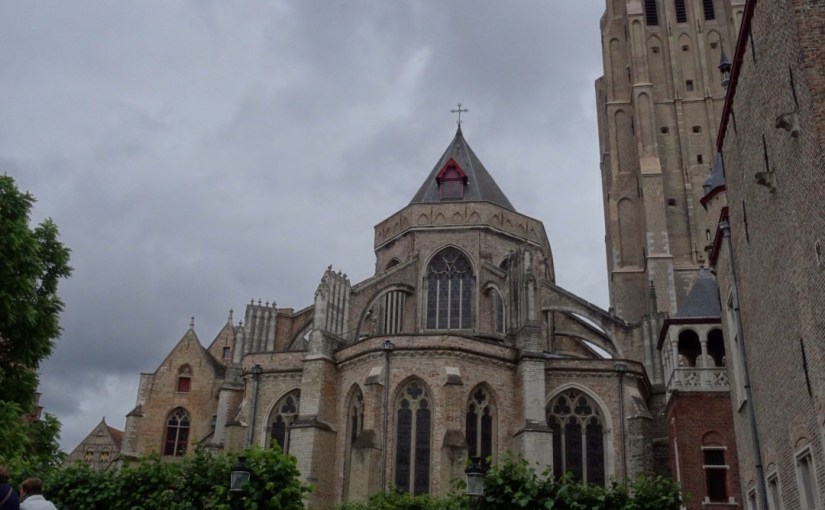
Bruges: Art, Architecture And Mortality
Bruges is a curious town. It's almost a bubble: a city that's also a World Heritage Site, a place that is home to hundreds of thousands of people, yet contains more functional medieval buildings per square foot than nearly any other urban centre on the planet. Ringed by a canal and a four-lane highway, Bruges is a place out of time, and one that embraces that most modern of money-making activities: tourism.
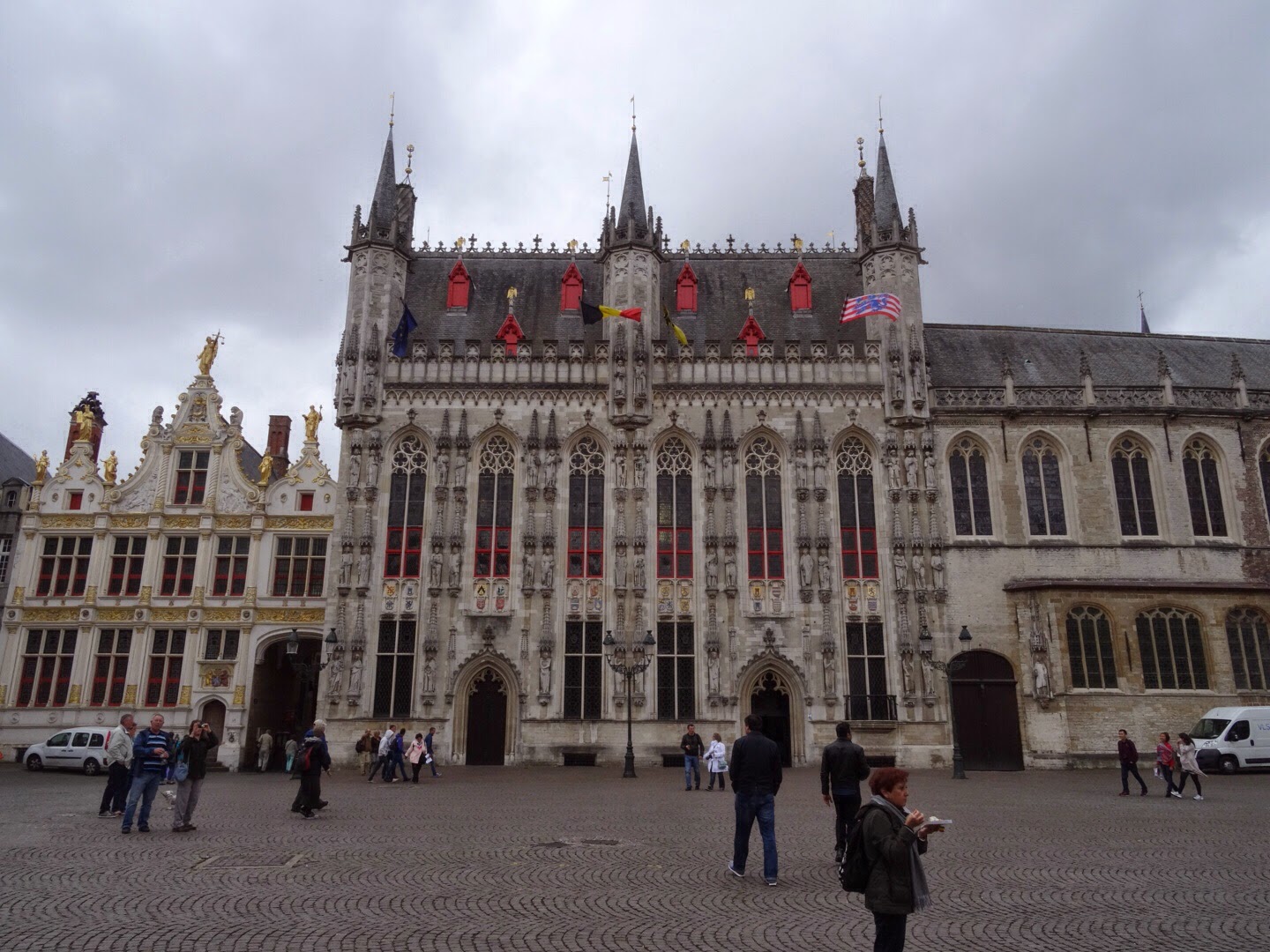
It is, without a doubt, an astonishingly pretty town. Centred on the town square, the Markt, Bruges is stuffed with ancient churches, beautiful statuary, imposing public buildings and many, many low-ceilinged dim little bars. Everywhere's walkable or, if you like, it's even quicker to whizz around on a bike. The canals that cut through the city are well worth a boat tour explore, giving you a different perspective on a place that offers new camera-fodder with every corner. There are many bridges but one, overlooking a weeping willow, is one of the most photographed sites in Europe. Cars are tolerated but, in the civilised fashion of most towns in the Low Countries, they're viewed as second-class citizens: on the narrow, winding streets of Bruges, the motor car is a liability.
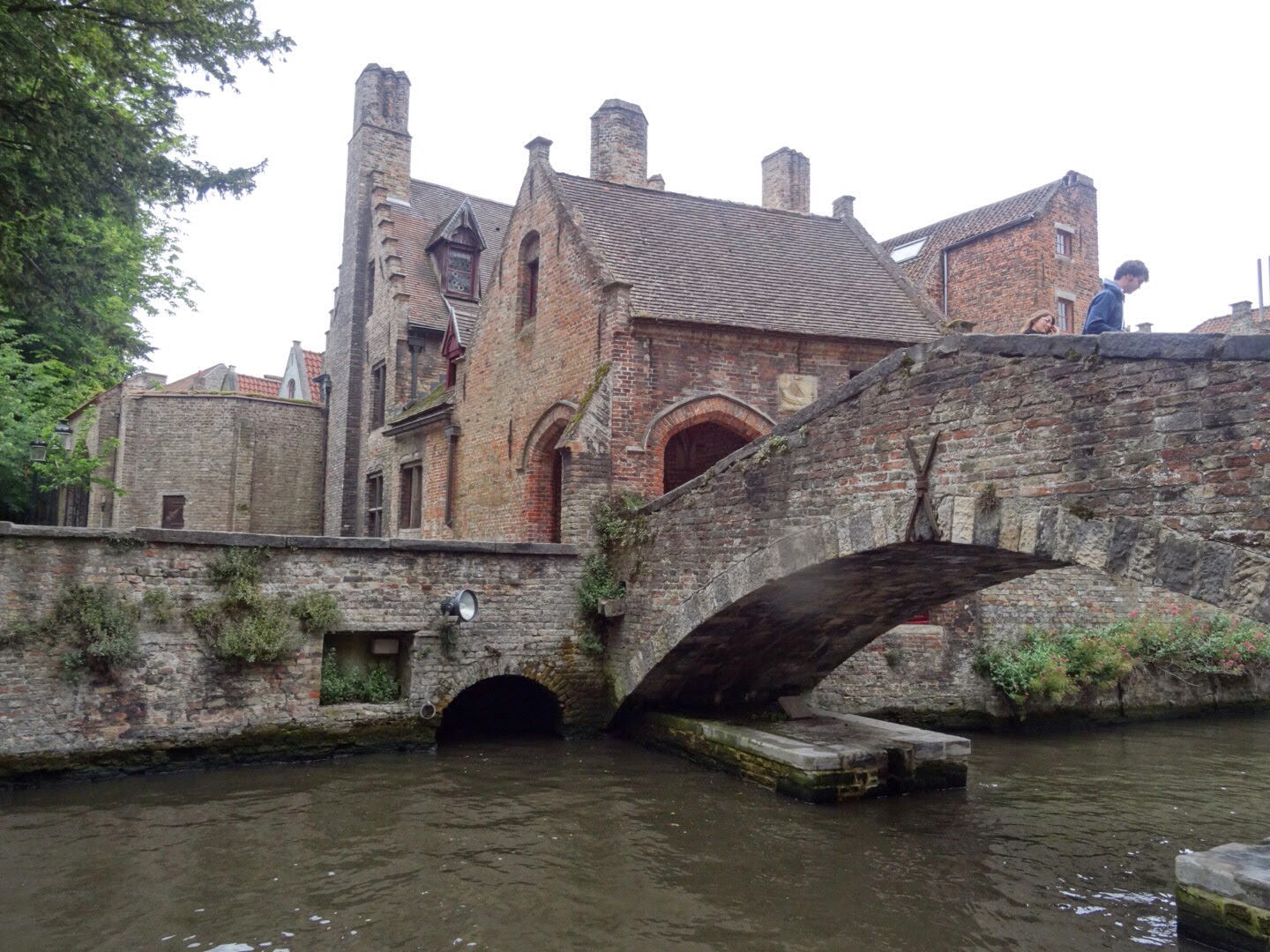
The town is almost an gallery in itself, a lasting tribute to the explosion of artistic invention that came out of Belgium and Holland in the 14th and 15th centuries. The work of the Flemish Primitives and the sacred art that came before it is celebrated in the Groeninge Museum, which houses a wealth of local masterpieces. Medieval art has always been a bit of a slog for me, to be honest: shonky anatomy, static, lifelike poses and occasionally shocking bursts of violence. The Death Of Marcus Lucinius Crassus by Lancellot Blondeel is a sweetly rendered pastoral scene with… hang on, what's that in the corner? Ah, there's Crassus, tied to a rough framework of branches, having hot lead poured into his screaming maw. The surrealists at the end of the show are more to my tastes, with pride of place going to a Magritte. His calm, dry wit is a welcome tonic to the shrieking gilt-caked lunacy of the Flemish masters.
A ticket to the Groeninge Museum also gets you into the Arentshaus, and I can't recommend this highly enough. Home to works by Frank Brangwyn, a member of the Arts And Crafts movement in the UK who studied under William Morris, I instantly felt at home. His etchings, prints and linocuts have a fluid, joyful muscularity that manages to blend a sympathy with the human condition with a celebration of the everyday achievements of the working man. As a comics fan, I was reminded of Joe Kubert and Barry Windsor-Smith. As an art-lover, I was brought almost to tears by his astonishing series of lithographs depicting the passion and crucifiction of Christ. A must-see, to my mind. Also visit the garden, which contains four statues of the Horsemen Of The Apocalypse. Armoured, insectile and terrifying, they're part Terminator, part Dark Judge, all mean.


A five minute walk brings you to The Onze-Lieve-Vrouwekerk (Church Of Our Lady), which houses a Michelangelo Mother And Child in marble. Her calm serenity is breath-taking, and seems a perfect fit in a building that, while imposing, serves as an engine of faith to the Roman Catholic community that use it on a daily basis. There's nothing uppity about Michelangelo's Madonna. She and her child are at peace with the world.
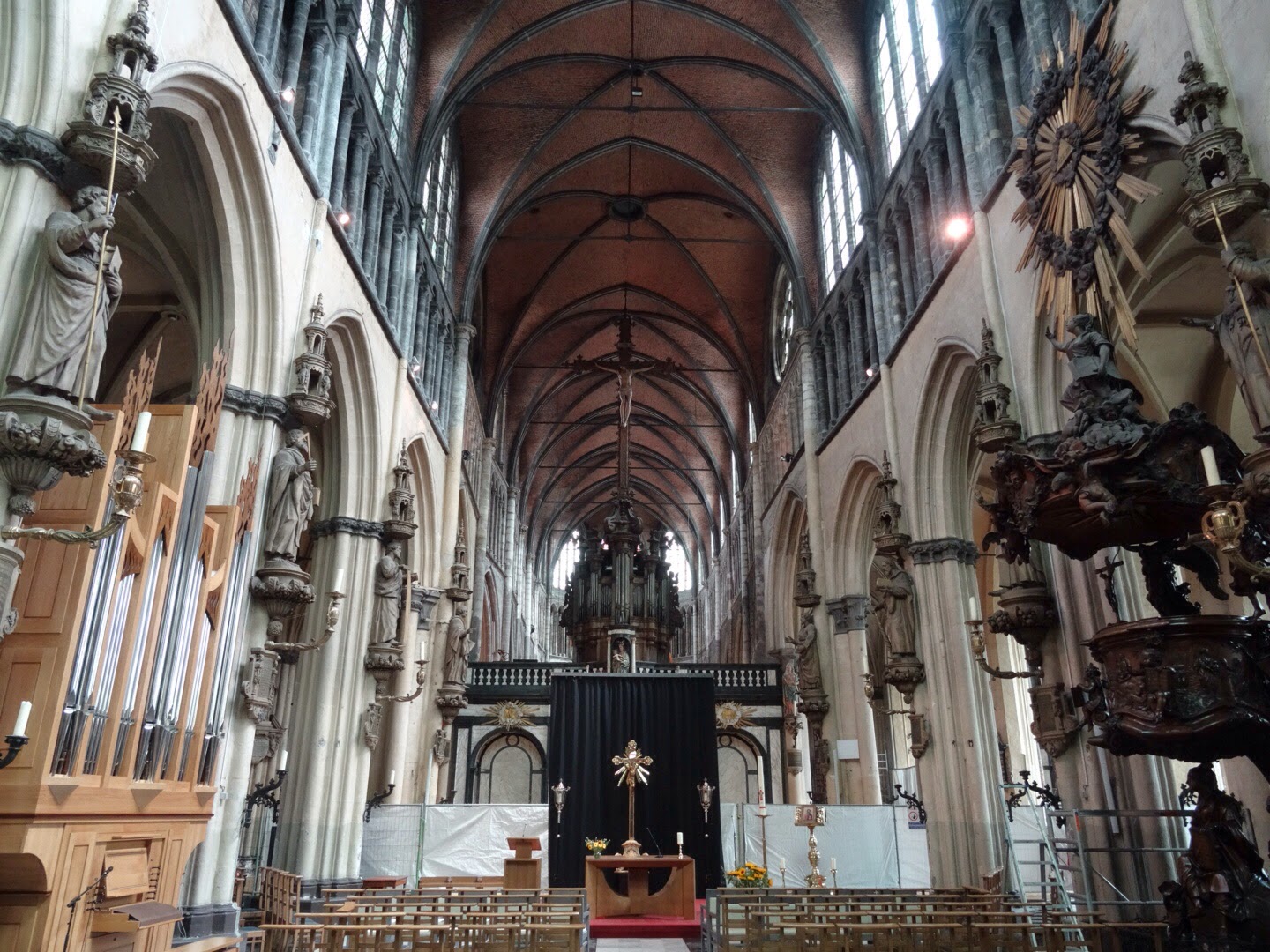

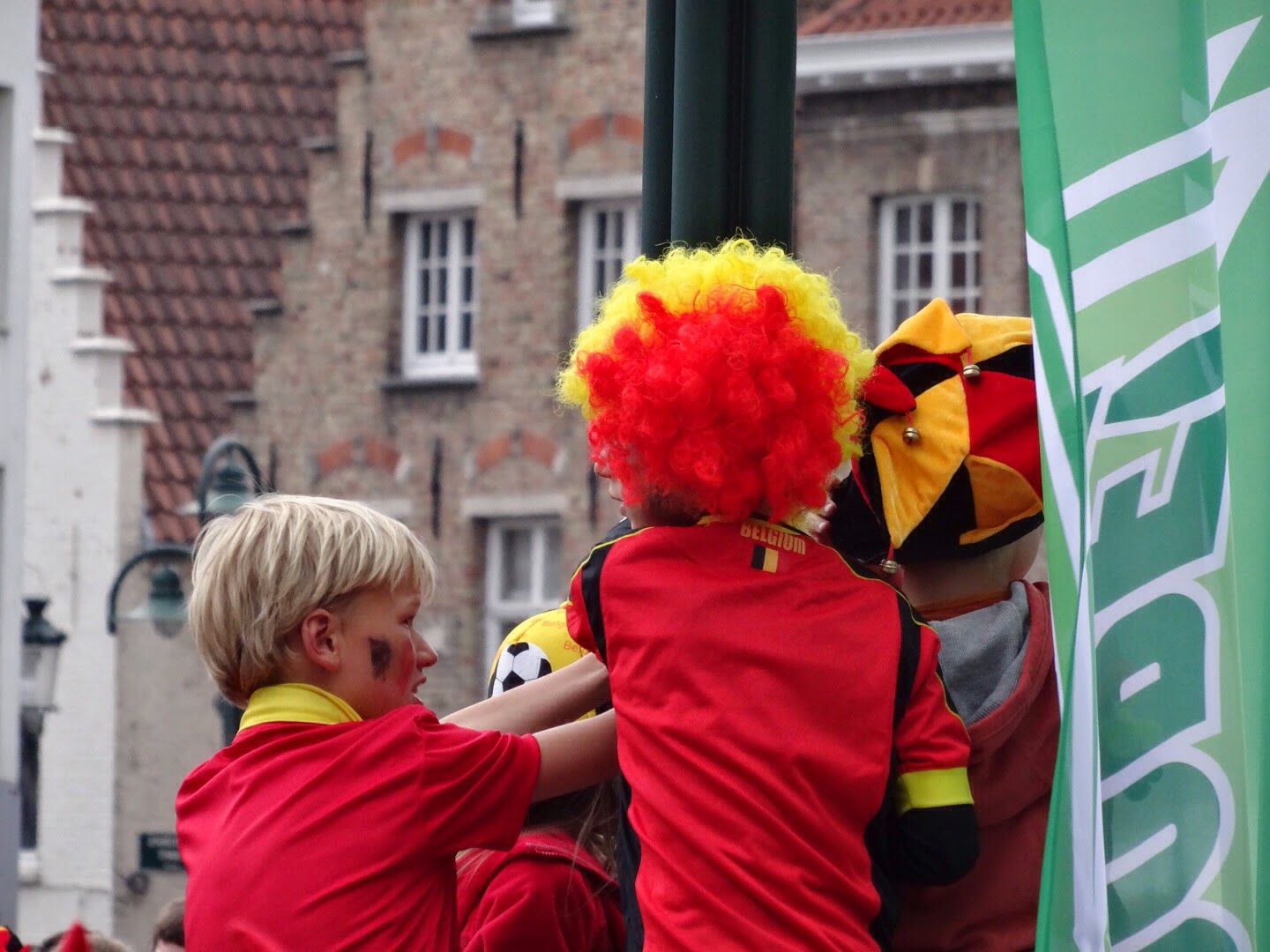
Modern art gets more of a showing than you might expect in an old town like Bruges. The old St. John's Hospital, next door to the Church Of Our Lady, has a permanent exhibition of Picasso and his contemporaries (featuring, at the time of writing, a showing of Andy Warhols). There's a Dali museum on the Markt, and a cluster of sharp-edged modern statues on t'Zand, to the west of the centre. This is also home to the new Concert Hall and, while we were visiting, a big screen showing Belgium's first World Cup match. The big square was full to bursting with football fans in black, red and yellow, draped in flags and wearing foam afros. An example, perhaps, of an art happening for and by the people.
I haven't mentioned comics yet. How silly of me. The Belgians love their comics–how could they not in the birthpace of the sainted Hèrge? On this visit we sadly didn't make it to Brussels, which wears its love of the Ninth Art firmly on its sleeve, to the point of hosting a Museum Of Comics History. But Bruges has its own little corner of comics nirvana; De Striep, on Kaeterinastrass. On the outside it looks a little underwhelming, but once inside the place opens up like a puzzlebox. There's a gigantic range of bande desineé in Belgian, French and yes, even English. Upstairs houses a great range of prints and artbooks, and the secondhand shelves at the back are a treasure-trove of goodies. If you're a comic fan, you owe it to yourself to visit and support De Striep. I certainly found it tough to drag myself away.


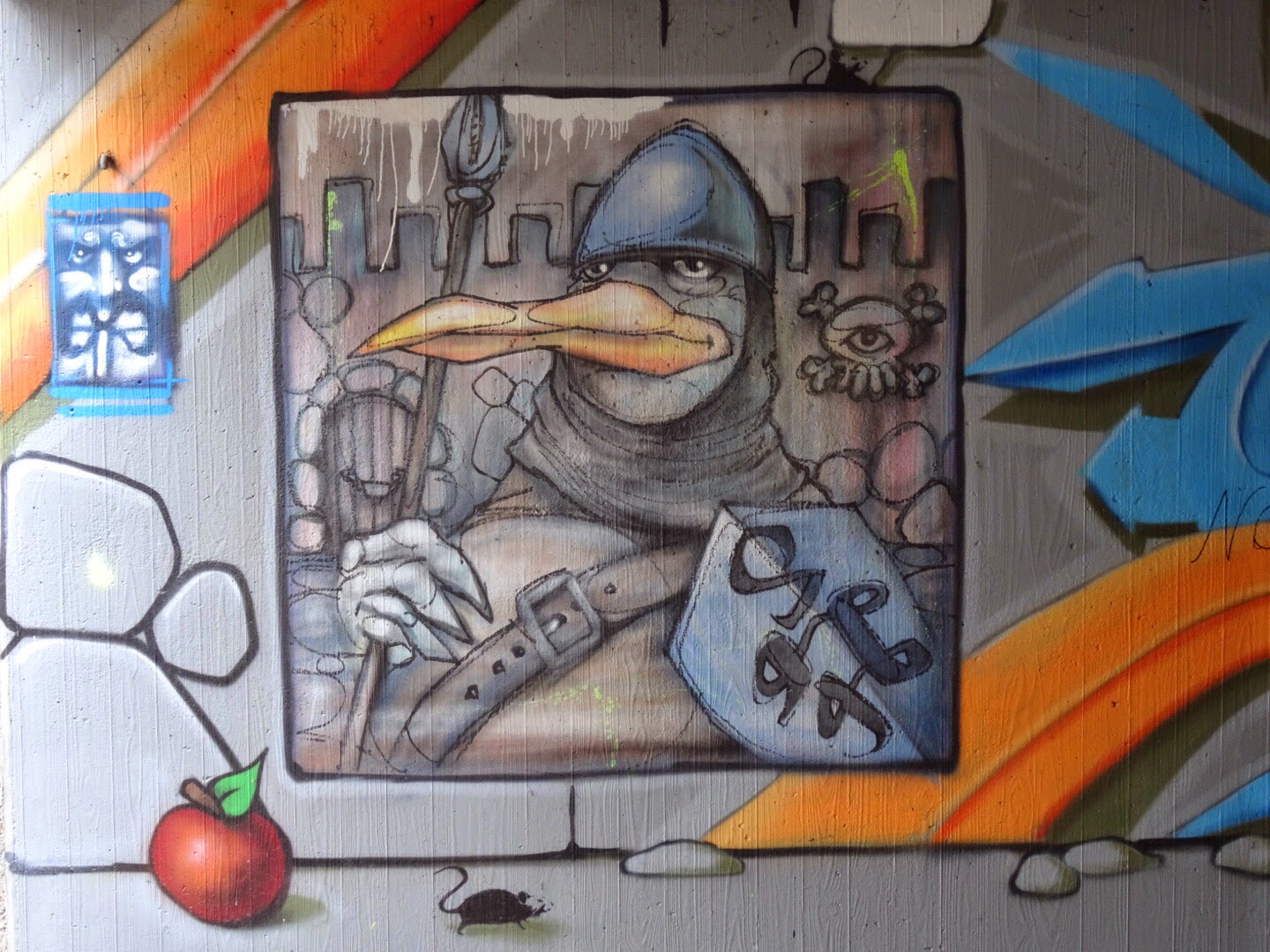
As I said at the start, Bruges is a curious place. It's easy to buy chocolate, yet surprisingly tough to get a pint of milk. The bars are full every night, yet there's no real sign of trouble even late at night. If anything, the streets are eerily quiet after hours. Apart from one sanctioned underpass on the way to the train station, there's no graffiti or street art to be seen. Possibly the odd sticker on a lamp-post. It's very clean and very friendly. You do get the feeling that there's an element of theme park about the whole place, particularly at weekends when coach parties and school trips descend and the streets clog.
Nevertheless, it's a fun place to visit, with plenty to see and admire. It's perfect for a long weekend, and very romantic. Just make sure to leave room in your luggage for the chocs and beer that you'll need to bring back with you.

TLC has posted an evocative Flickr set of our travels: check it out.

The Pod Of Future Cast!
X-Men: Days Of Future Past. You’ve read the book. You’ve seen the film. Now hear the podcast!
Rob and Clive are joined by comic fan and Wolverine lookalike Graham Williams as we go in-depth and full-bore into the Claremont/Byrne classic. Remember: in this episode, everybody dies!*
*disclaimer: no-one dies in this episode.


In Bruges
Next week, Excuses and Half Truths will be reporting from Belgium. A place where cultural boundaries blur and blend, a hub of European commerce, trade and co-operation.
We'll be looking at the culture and Art Nouveau architecture of historic Bruges and paying a visit to stunning, medievel Ghent. In the interests of our Fodderblog fans, we'll sample the best food and drink that Belgium has to offer. There's more to the place than beer and sausages, you know. Although I am looking forward to the beer and sausages.
We'll also take a look at the rich art scene in Bruges, home of the master of surrealism Rene Magritte. And it wouldn't be Excuses And Half Truths without a focus on one of Belgium's great passions: comics. From the birthplace of Hergé, how could it be otherwise?
Join us, whydoncha, and TLC and I take a week off… in Bruges!

Killing With Kindness: X&HT Saw Swans
In 2002, I was was swimming in Australia when I was caught in a riptide. Continue reading Killing With Kindness: X&HT Saw Swans

Killing Logan
Superheroes are notorious for not staying dead. Continue reading Killing Logan

“Koftas” and “Tzatziki”
A recent discussion about authenticity in food banging about on Twitter got me thinking.

Goin’ South: BraineHownd Shows Code Grey
It’s been a while since I visited a film night. Nice to get out every once in a while. Continue reading Goin’ South: BraineHownd Shows Code Grey
 EXCUSES AND HALF TRUTHS